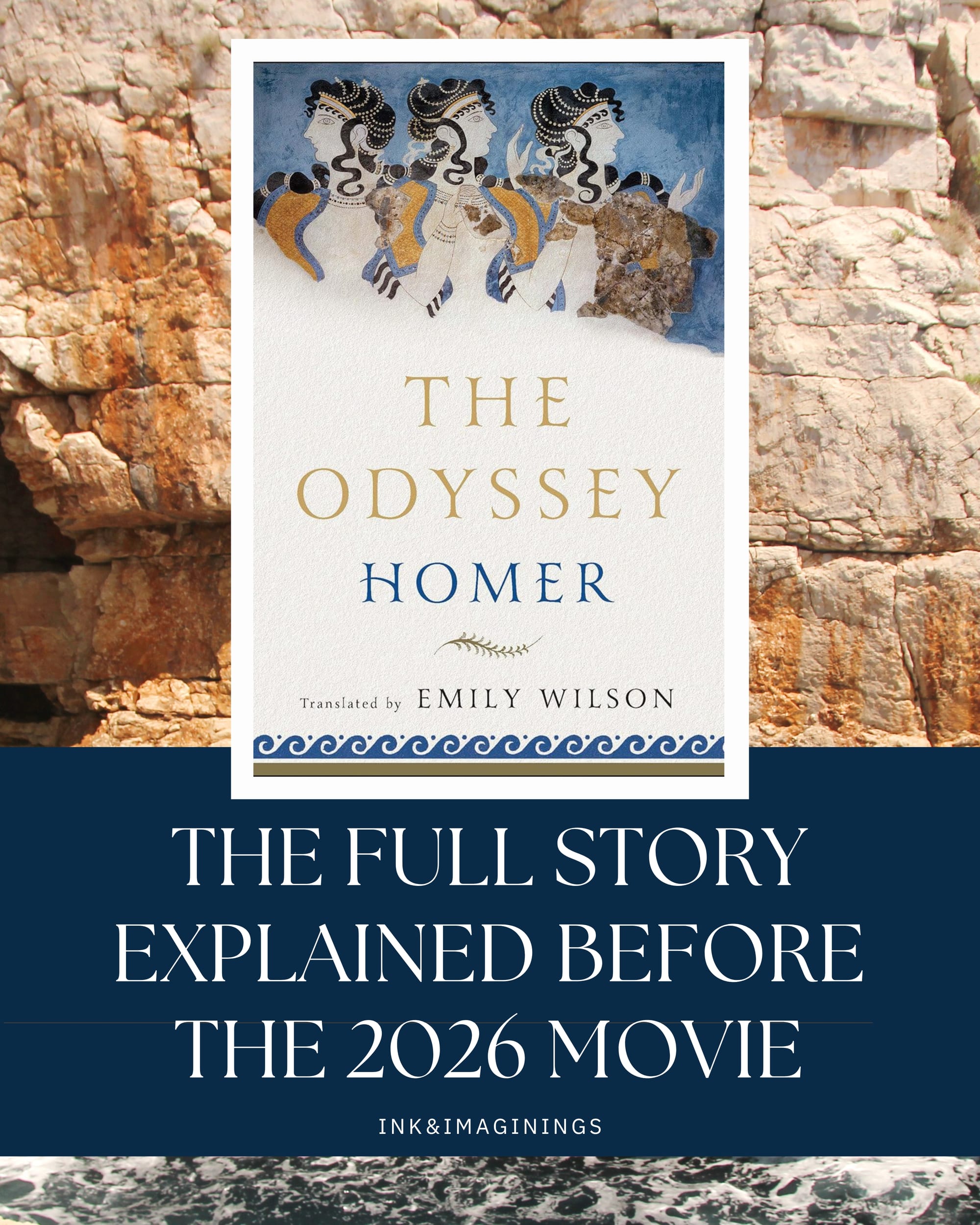
Christopher Nolan's The Odyssey lands in theaters on July 17, and it is about to send a whole new wave of people to one of the oldest stories we have. If you want to walk into that theater knowing exactly what is happening, or you just keep hearing about this three-thousand-year-old poem and want the real story without a dense translation, you are in the right place.
Here is the whole Odyssey, explained in plain language: who everyone is, what actually happens from start to finish, what it all means, and what to expect from the movie. No prior reading required, and no dense footnotes. Just the story, the way it would sound if a friend who loved it told it to you.
Heads up: this post uses affiliate links, so I earn a small commission if you shop through me, at no extra cost to you. I only recommend books I genuinely believe are worth your time.
The Odyssey at a Glance
The Odyssey is an epic poem by Homer, composed in ancient Greece roughly 2,700 years ago. It is the sequel to the Iliad, which covers the Trojan War. The Odyssey picks up after the war is over and follows one soldier, Odysseus, on his long and disastrous journey home.
Here is the setup. Odysseus, the clever king of a small island called Ithaca, spent ten years fighting at Troy. When the war ends, everyone else sails home, but Odysseus angers the sea god Poseidon and spends another ten years lost at sea, trying to get back to his wife and son. The poem opens near the very end of that second decade, with Odysseus still missing, presumed dead by many, while trouble piles up at home. It is a story about war's aftermath, about the pull of home, and about a man who talks and tricks his way out of situations that would kill anyone else.
Who's Who: The Main Characters
Before the story, meet the people who matter most. You will recognize a lot of these names from the movie's cast list.
Odysseus is our hero, the king of Ithaca. He is famous not for his strength but for his mind. He is cunning, curious, and a brilliant liar, which is exactly why the goddess of wisdom loves him and why he survives. Matt Damon plays him in the film.
Penelope is his wife, who has waited twenty years without knowing if he is alive. She is as clever as Odysseus, and she holds their kingdom together through sheer wit. Anne Hathaway plays her.
Telemachus is their son, a boy when his father left, now a young man trying to become one. Much of the early poem is his coming of age. Tom Holland plays him.
Athena is the goddess of wisdom and Odysseus's fierce protector, constantly nudging events in his favor. Zendaya plays her.
Poseidon is the god of the sea and Odysseus's great enemy, the one keeping him lost for a decade.
The suitors are a mob of local men who have moved into Odysseus's palace, eating his food and pressuring Penelope to marry one of them. Their ringleader is Antinous, played by Robert Pattinson.
Calypso and Circe are two powerful women Odysseus meets on his travels, each of whom keeps him on her island for a time. Charlize Theron plays Calypso.
The Story, in Three Parts
The Odyssey is long, but it moves in three clear movements. Here is all of it.
Part One: The Trouble at Home
The poem does not start with Odysseus. It starts in Ithaca, where things have fallen apart in his absence. More than a hundred suitors have taken over the palace, convinced Odysseus is dead, and they spend their days feasting on his livestock and courting his wife. Penelope holds them off with tricks, most famously by promising to choose a husband once she finishes weaving a burial shroud, then secretly unraveling her work every night so it is never done.
Their son Telemachus is nearly grown and furious, but powerless against the crowd of grown men in his home. Athena, disguised as a family friend, visits him and lights a fire under him. She sends him off on his first real journey, to the mainland, to ask old comrades of his father whether Odysseus might still be alive. He visits wise King Nestor and then King Menelaus and Helen, the very couple whose marriage started the Trojan War. He learns his father was last seen alive, trapped on a distant island. Meanwhile, back home, the suitors plot to ambush and kill Telemachus when he returns.
Part Two: The Wanderings
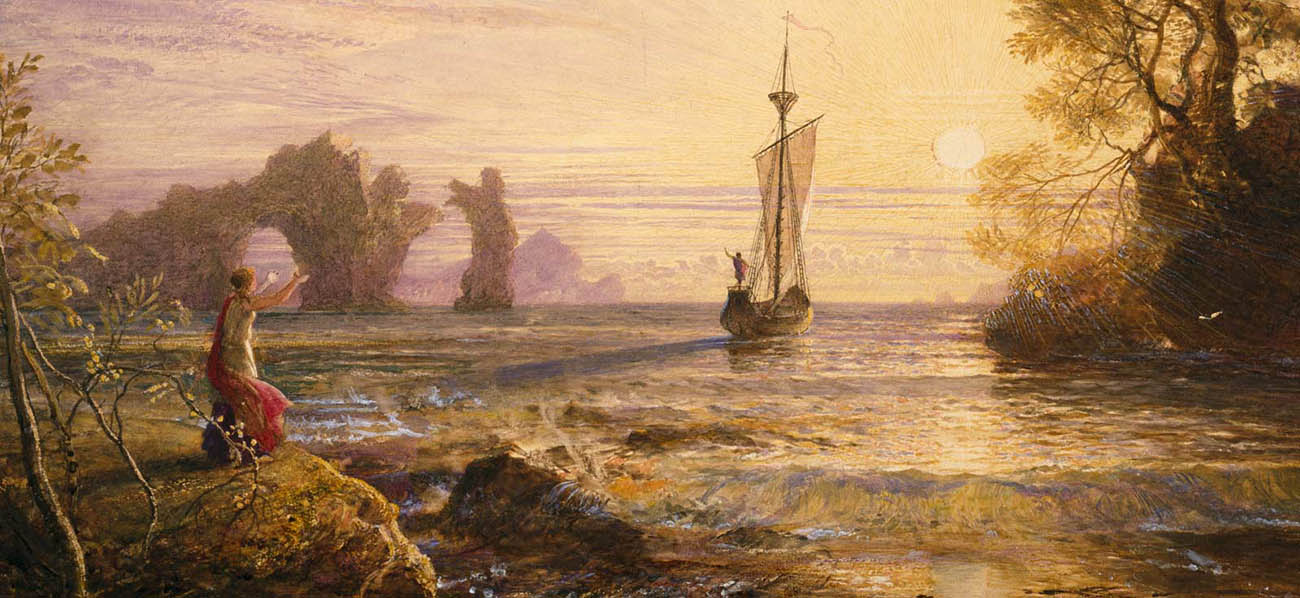
Now we finally reach Odysseus, and this is the famous part, the monsters and the magic. He has spent the last seven years stranded on an island with the nymph Calypso, who loves him and will not let him leave. The gods finally order her to release him. He builds a raft, sets sail, and Poseidon promptly wrecks it in a storm. Odysseus washes up, exhausted and naked, on the shore of a friendly people called the Phaeacians, who take him in. At their feast, they ask who he is, and he tells them the whole story of how he got there.
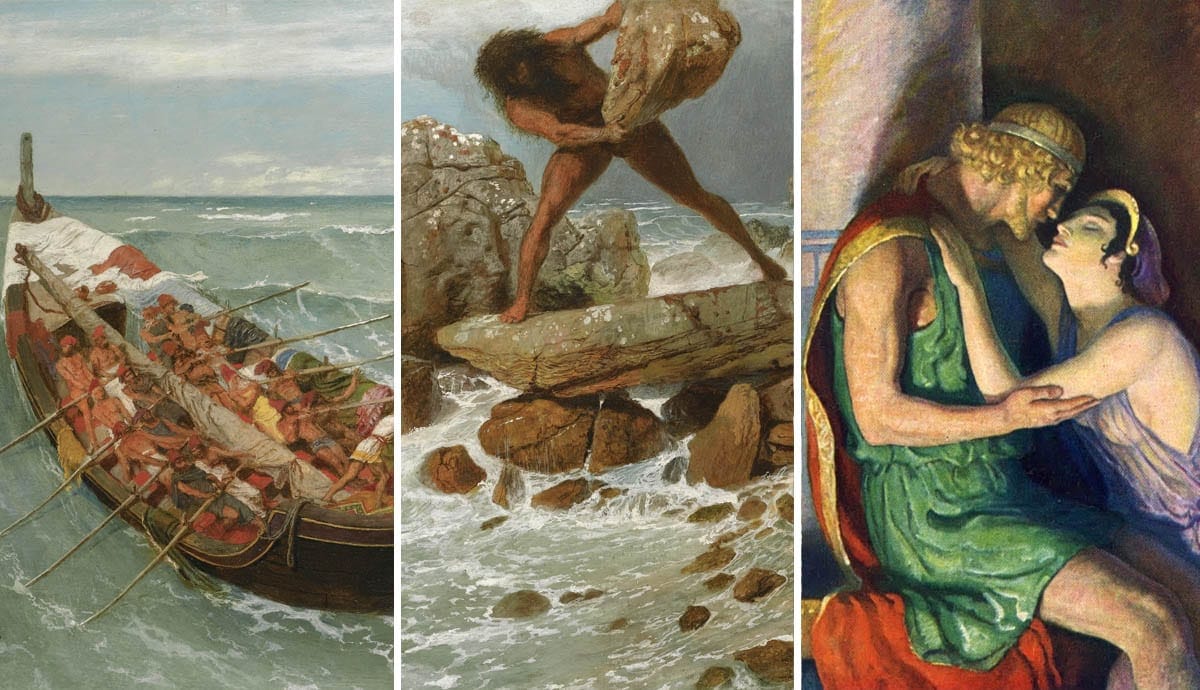
What follows is Odysseus narrating his own adventures, the greatest run of episodes in the poem. After leaving Troy, he and his crew face one disaster after another. They barely escape the land of the Lotus-eaters, where a single bite of a flower makes his men forget home entirely. They land on the island of a Cyclops, a one-eyed giant named Polyphemus, who traps them in his cave and eats several of the men. Odysseus escapes by getting the giant drunk, telling him his name is "Nobody," and then blinding his single eye with a sharpened stake. When the Cyclops screams that "Nobody" has hurt him, no one comes to help. It is Odysseus's cleverness at its best, but it comes at a cost: the Cyclops is Poseidon's son, and this is why the sea god torments Odysseus for the rest of the voyage.
The disasters keep coming. A god gives Odysseus a bag holding all the stormy winds, and his greedy crew opens it just in sight of home, blowing them all the way back out to sea. They lose most of their ships to giant cannibals. They reach the island of the witch Circe, who turns half the crew into pigs before Odysseus, protected by a magic herb, wins her over. They stay with her a full year. On her advice, Odysseus sails to the edge of the world and enters the land of the dead, where he speaks with the ghost of a blind prophet who tells him how to get home, and meets the shades of his own mother and fallen comrades from the war.
Then the final gauntlet. He sails past the Sirens, whose song lures sailors to their death, by plugging his crew's ears with wax and having them tie him to the mast so he can hear the song and live. He threads a narrow strait between two monsters, Scylla and Charybdis, and loses six men to Scylla's snapping heads. At last they land on an island belonging to the sun god, who has warned them not to touch his sacred cattle. Starving, the crew disobeys and eats the cattle while Odysseus sleeps. The punishment is total. The gods sink the ship and drown every last man. Only Odysseus survives, washing up alone on Calypso's island, which is exactly where his story began. The circle closes and the Phaeacians moved by his tale, agree to carry him home at last.
Part Three: The Homecoming
Odysseus finally sets foot on Ithaca after twenty years away, but he cannot just walk into his palace. It is full of armed men who want him dead, and he is one man. So with Athena's help he disguises himself as a ragged old beggar and he watches and waits.
He hides out with his loyal old swineherd, who does not recognize him but treats the stranger with kindness. He reveals himself to Telemachus, and father and son reunited at last, begin to plot. Odysseus walks into his own palace as a beggar and endures insults and abuse from the suitors, quietly taking their measure. In one of the most quietly devastating moments in all of literature, his old dog Argos, now ancient and neglected, lifts his head, recognizes his master after twenty years, and dies.
The ending turns on a contest. Penelope, still not knowing the beggar is her husband, announces she will marry whichever suitor can string Odysseus's massive old bow and shoot an arrow through a row of twelve axe heads. One by one, the suitors try and fail. Then the beggar asks for a turn. He strings the bow with ease, makes the impossible shot, and turns the weapon on the room. With Telemachus and his loyal servants beside him, and Athena at his back, Odysseus kills the suitors, Antinous first, and takes back his home.
Only then does he reveal himself to Penelope, and she does not fall into his arms right away. She is too smart for that. She tests him, casually ordering a servant to move their marriage bed, and Odysseus reacts with alarm, because he built that bed himself around a living olive tree and it cannot be moved. Only the real Odysseus would know that secret. That is how she knows him. Their reunion, earned through twenty years and one last clever test, is the true heart of the poem. The story closes with Athena stepping in to make peace between Odysseus and the grieving families of the dead suitors, so that Ithaca can finally rest.
The Big Themes
If you want to sound like you get it, these are the ideas the poem keeps circling.
Home is everything. The Greek idea at the center of the poem is nostos, the longing to return home, and it is where we get the word nostalgia. Odysseus turns down immortality with a goddess because he would rather grow old with his wife. The whole epic argues that an ordinary human life, with the people you love, is worth more than paradise.
Brains beat brawn. Odysseus survives not by being the strongest but by being the cleverest. His defining trait is cunning, and nearly every escape he makes is a trick rather than a fight. In a genre full of muscle-bound heroes, the Odyssey quietly says that wit is the real superpower.
Hospitality is sacred. Again and again, the poem judges people by how they treat strangers. The good hosts feed and shelter the wanderer with no questions asked, while the monsters and villains are the ones who abuse their guests. It was a core value of the ancient world, and it drives much of the plot.
Loyalty is tested and rewarded. Penelope waiting twenty years, the old swineherd's kindness, the dog who waits to die until his master returns: the poem is obsessed with who stays faithful and who does not, and it makes sure loyalty is repaid.
Why Nolan Chose It, and Why It Still Hits
It makes complete sense that the biggest filmmaker of our time picked this story. The Odyssey is the original blockbuster. A war veteran fighting monsters and gods to get home. It has survived three thousand years because those stakes are so human. Everyone understands wanting to get home, missing someone for years, and trying to hold your life together while the person you love is far away.
It is also a perfect Christopher Nolan story. He loves a hero who thinks his way out of impossible situations, he loves playing with time and memory, and the poem itself is famously non-linear, told partly in flashback. A tale about a soldier haunted by a long war and desperate to come home is squarely in his wheelhouse.
The 2026 Movie: What to Know
Here is your quick briefing before opening night.
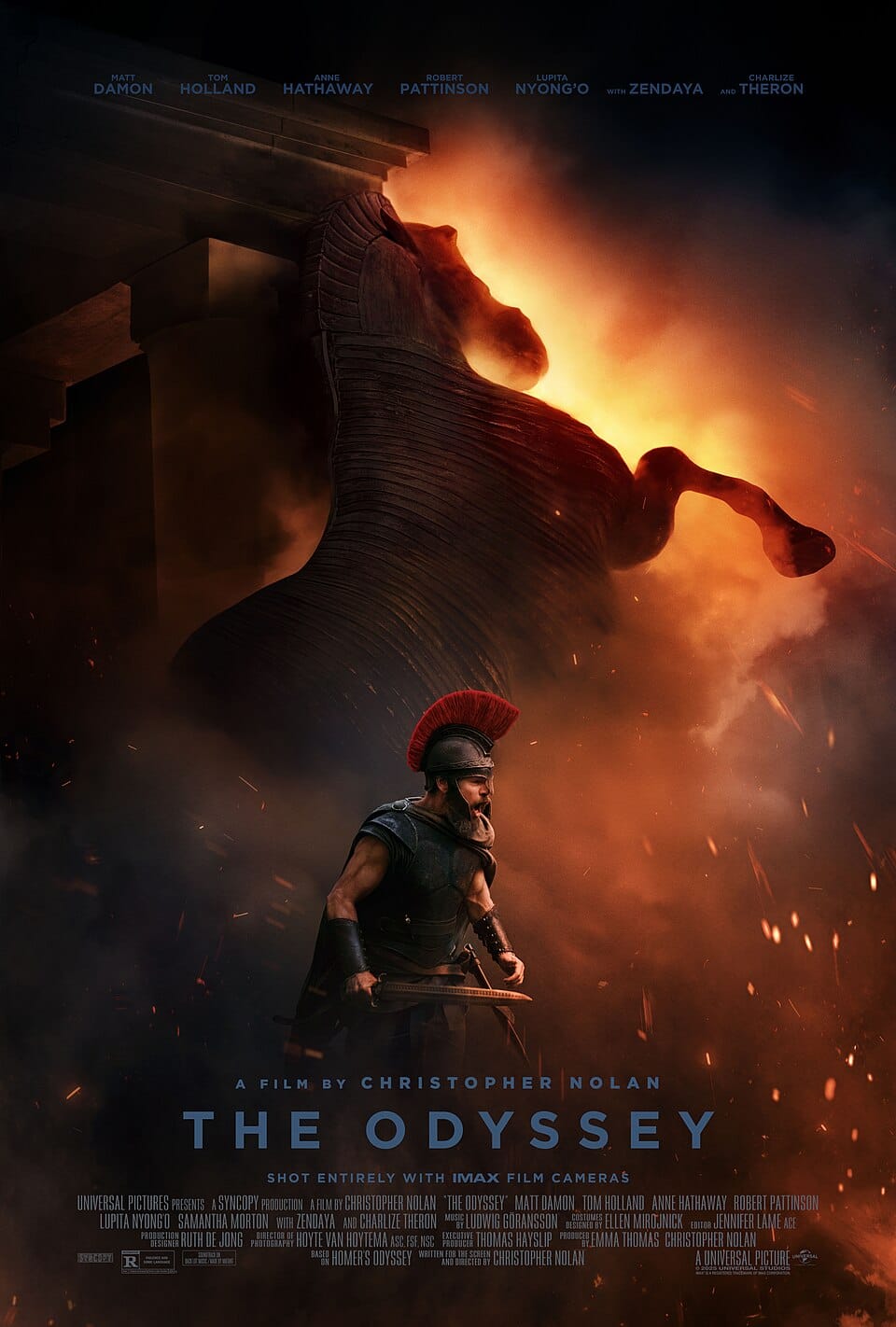
The Odyssey is written and directed by Christopher Nolan and released by Universal, hitting theaters on July 17, 2026, after a London premiere on July 6. Nolan shot it for the biggest screens possible, so if you can see it in IMAX, this is the kind of movie that format was made for.
The cast is enormous. Matt Damon leads as Odysseus, with Anne Hathaway as his wife Penelope and Tom Holland as their son Telemachus. Zendaya plays the goddess Athena, Odysseus's divine protector, and Charlize Theron plays Calypso, the nymph who holds him captive. Robert Pattinson plays Antinous, the sleaziest of the suitors crowding the palace back home, and the ensemble also includes Lupita Nyong'o and Samantha Morton.
One thing to keep in mind: Nolan is adapting, not transcribing. Expect him to reshape the order of events, lean into the spectacle of the monsters, and dig into the psychology of a man trying to come home from war. Knowing the real story, the version you just read, will only make it more fun to see what he keeps, what he cuts, and what he makes his own.
Should You Read It First?
You do not have to read the Odyssey to enjoy the movie, and now that you have the full summary, you are more than ready for opening night. But if this story has its hooks in you, the poem is genuinely thrilling to read, far more gripping than its reputation suggests.
If you do want to read it, the translation matters more than you would think. Emily Wilson's recent version is clear, fast, and modern, the easiest way in for a first-time reader. Robert Fagles's translation is grander and more sweeping, a gorgeous classic. Reading both side by side is a wonderful project, and I wrote a whole guide on exactly how to do it: How to Read The Odyssey in Two Translations at Once, with a free kit to help you along.
Frequently Asked Questions
Do I need to read the Odyssey before seeing the movie? No. This summary gives you everything you need to follow the film. Reading it first is a bonus, not a requirement.
Is the Odyssey a sequel to the Iliad? Yes, in a sense. The Iliad tells the story of the Trojan War, and the Odyssey follows one of its heroes, Odysseus, on his journey home afterward. You can read or watch the Odyssey without knowing the Iliad.
How long is the Odyssey? It is a poem of 24 sections, called books, running a few hundred pages in most modern translations. It reads faster than you would expect, especially in a modern version.
Who wrote the Odyssey? It is credited to Homer, an ancient Greek poet, though it began as an oral story passed down and performed for generations before it was ever written down. We know almost nothing certain about Homer himself.
Is the Odyssey hard to read? It has a reputation for being difficult, but a good modern translation like Emily Wilson's is clear and quick. It is an adventure story at heart, full of monsters and cliffhangers.
Is the Odyssey based on a true story? Not really. It is a myth, mixing legend, folklore, and imagination. There may be faint echoes of real Bronze Age history, but Odysseus and his monsters are fiction.
What to Read Next
Caught the mythology bug? Here is where to go next.
📚 How to Read The Odyssey in Two Translations at Once: read the real thing, with a free kit to guide you.
📚 If You Loved The Odyssey, Read These: 25 Mythology Retellings: the whole shelf of modern retellings, grouped by what you are in the mood for.
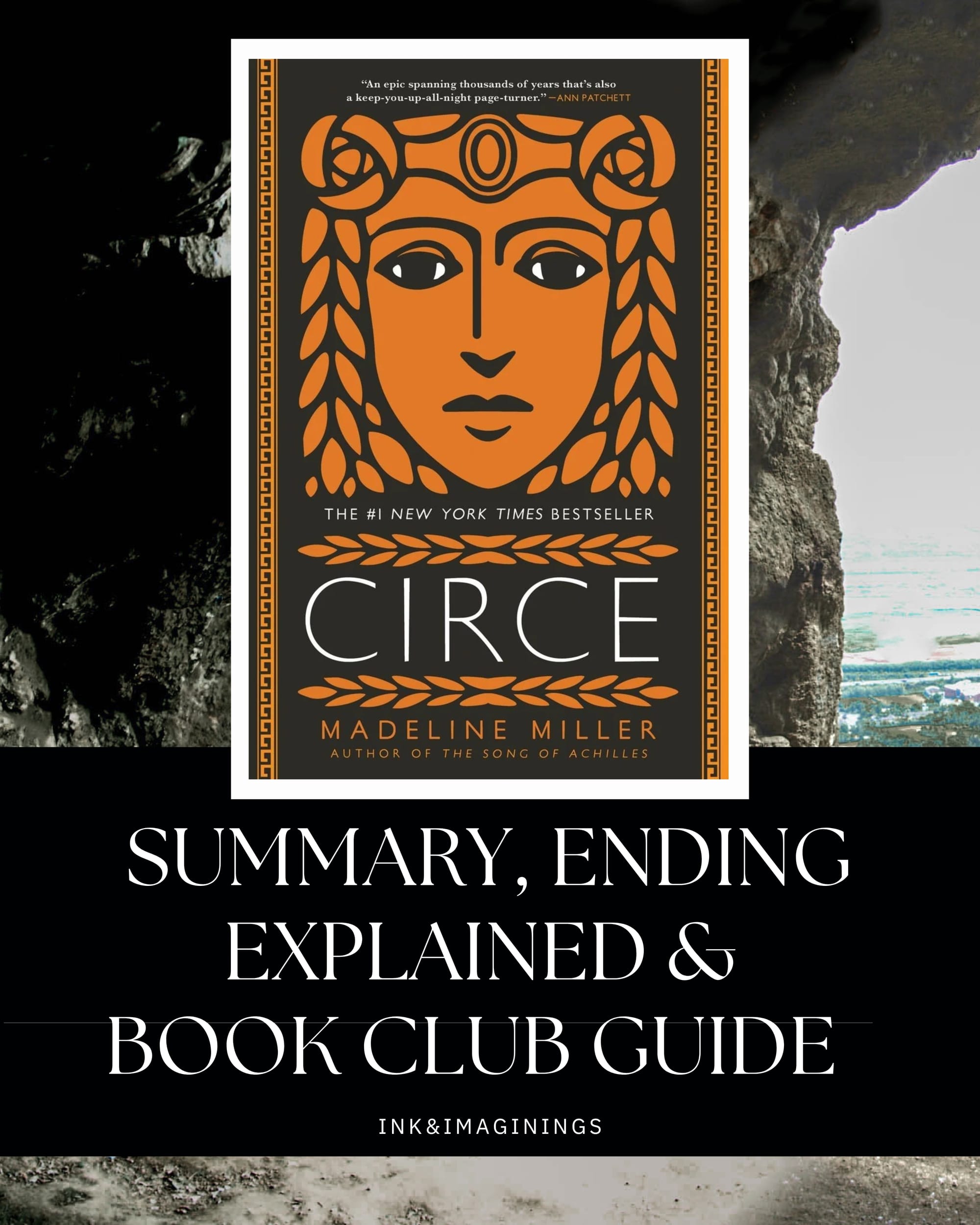
📚 Circe by Madeline Miller: the witch from the Odyssey, given her own glorious life. (coming soon)
📚 The Penelopiad by Margaret Atwood: the same story, told by the wife who waited. (coming soon)
📚 The Song of Achilles by Madeline Miller: the love story hidden inside the Trojan War. (coming soon)
Want a new great book picked for you every month? Try your first month of Book of the Month for $5
Ready to read it? My two favorite translations of The Odyssey: Emily Wilson Amazon | Bookshop and Robert Fagles Amazon | Bookshop.
Want more guides like this one, plus honest takes on what is worth your time? Join the Weekly Bookmark, stay up to date, and pick your next great book.