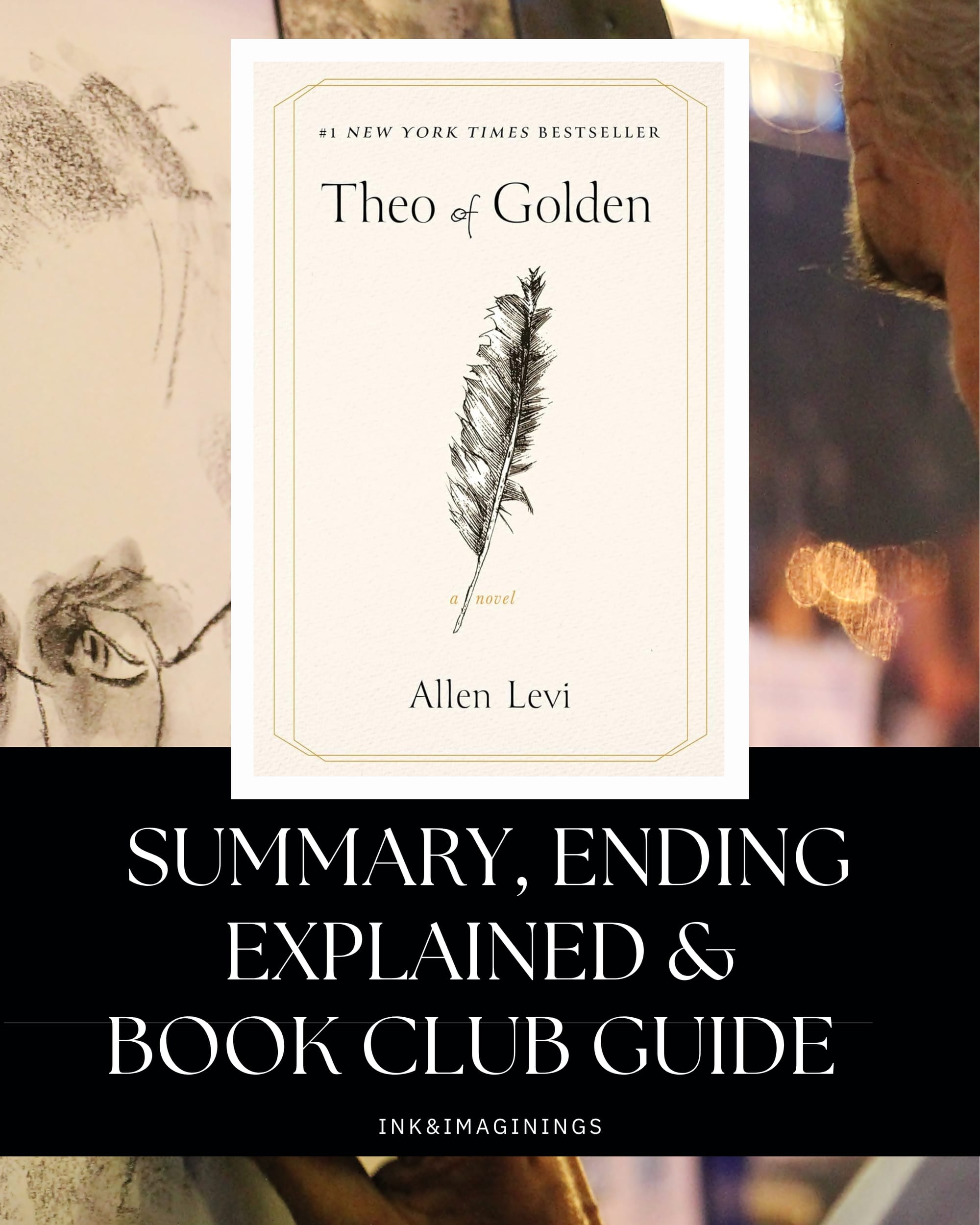
I fell hard for the first hundred pages of this book, and then it became a different book entirely. That's where I landed when I closed it. I'll explain below, but first, here's everything you need to know about Theo of Golden by Allen Levi.
Theo of Golden is the word-of-mouth phenomenon of 2026 that nobody saw coming. A debut novel by a 69-year-old singer/songwriter that started as a self-published book in 2023 and somehow climbed to #1 on the New York Times bestseller list.
The Theo at its center is 86 years old and newly arrived in Golden, Georgia. Allen Levi lives on 1,600 acres of family pine forest in the middle of Georgia, keeps honeybees, and posts homespun music videos. None of which prepared anyone in publishing for the scale of what happened next.
Katie Couric picked it for her February 2026 book club, Jen Hatmaker picked it for March 2026, the Washington Post called it “a soft-lit, allegorical” hit, and Hoda Kotb called it “a treasure.”
The premise is deceptively simple. A stranger named Theo arrives in the small Southern town of Golden, walks into a coffee shop called the Chalice, finds 92 unsold pencil portraits of locals hanging on the walls, and decides to buy them, one at a time, and give each portrait back to the person depicted.
In exchange, he asks only for their story. What follows is a quietly devastating book about generosity, grief, and the way one person's attention can reorder a community.
This guide covers the full plot summary, every major character, the ending explained, including the reveal of Theo's true identity and the final letter that changes everything for Asher, and my honest review.
This post contains affiliate links. If you buy through them, I may earn a small commission at no extra cost to you. Thanks for supporting Ink & Imaginings.
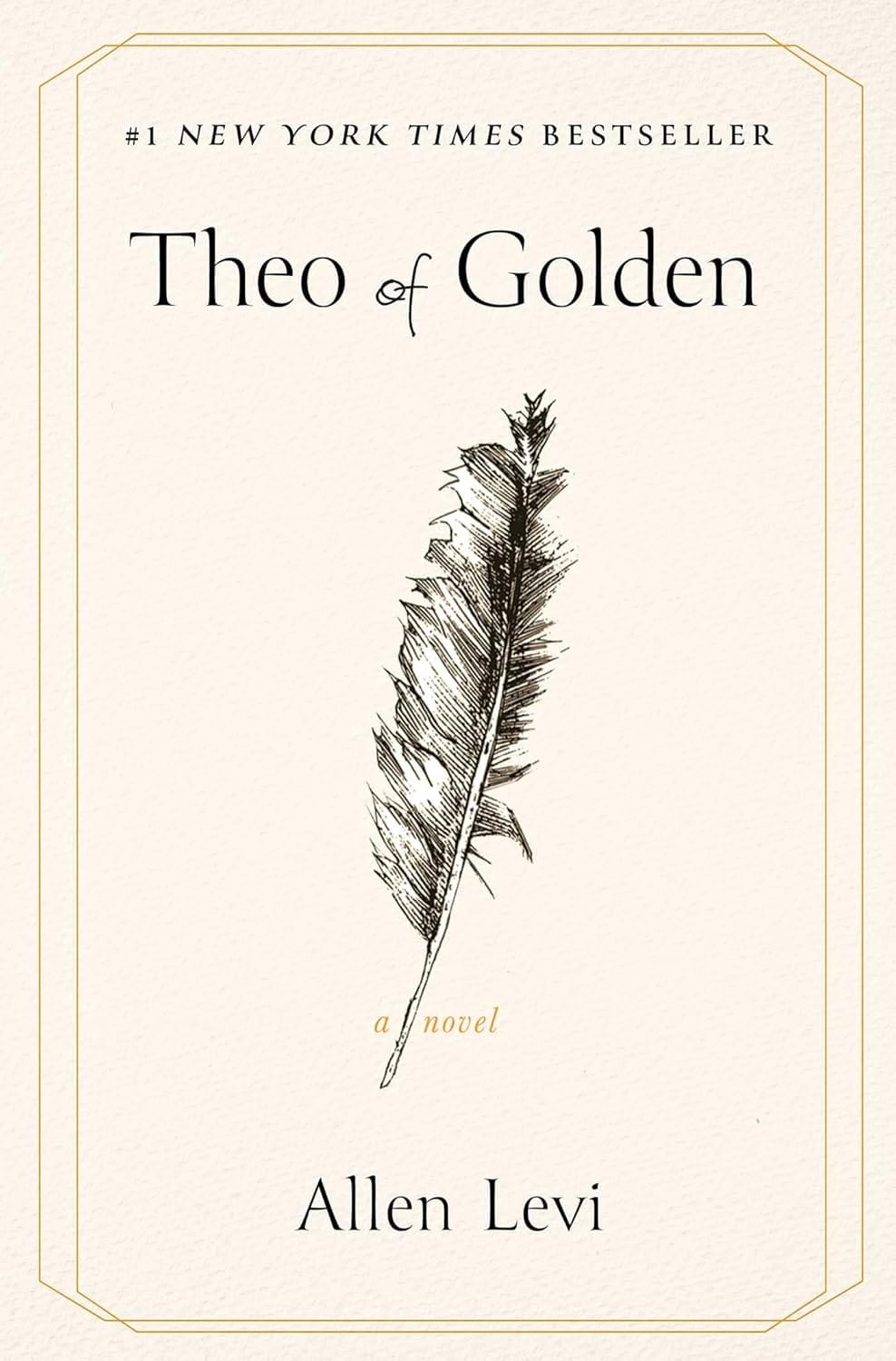
Theo of Golden by Allen Levi book cover
📖 Buy on Amazon | Buy on Bookshop.org | 🎧 Listen on Audible
Quick Take
Genre: Literary Fiction / Book Club Fiction (faith-adjacent allegory)
Setting: Golden, a fictional small Southern city in Georgia, on the Oxbow River
Released: Self-published 2023; republished by Atria Books (Simon & Schuster) October 2025
Length: 380 pages
Book Club Picks: Katie Couric Book Club (February 2026) + Jen Hatmaker Book Club (March 2026)
Status: #1 New York Times Bestseller, NYT “Surprising Hits of 2025,” word-of-mouth phenomenon
Read if you loved: A Man Called Ove by Fredrik Backman, A Gentleman in Moscow by Amor Towles, The Heaven & Earth Grocery Store by James McBride, The Music Shop by Rachel Joyce, The Storied Life of A.J. Fikry by Gabrielle Zevin, or Whistler by Ann Pratchett.
Audiobook note: Readers are especially high on the audiobook, narrated by David Morse, whose warm, unhurried delivery suits the book's slow-savor pace. If you're an audio person, this is a strong listen.
What Theo of Golden Is About
A Stranger Arrives in Spring
Theo arrives in the small Southern city of Golden, Georgia just as spring bursts into bloom. He's 86, Portuguese-born, traveling alone, and offers no explanation for why he's there or where he's come from. What he has is time, a deep affection for rivers, and a kind of childlike curiosity for architecture, daily life, and the small details of a town he's never seen before. He takes walks. He watches sunsets from a bench by the Oxbow River. He doesn't seem to be looking for anything in particular, which is precisely what makes him so unsettling to the people of Golden when they first meet him.
His daily walks lead him to the Chalice, a bustling coffee shop in the historic district. The walls of the Chalice are covered with ninety-two pencil portraits: diverse, expressive, achingly alive faces drawn by a local artist named Asher Glissen. The portraits are for sale, but no one has bought any. Theo is captivated.
The First Bestowal: Minnette at the Fountain
Moved by a particular portrait of a young woman named Minnette, Theo buys it and writes her a letter. The letter is formal, heartfelt, and mysterious: he'd like to give her the portrait as a gift, and asks if she would meet him at the town fountain.
Minnette and her husband Derrick, a careful, lawyerly prosecutor, debate the letter for days. Is this man dangerous? A scammer? A predator? They consult with Minnette's uncle Asher (the artist himself), weigh the risks, and decide that curiosity is worth more than fear. They will go to the fountain together. Derrick will watch from a distance.
The meeting changes everything. Theo's warmth, his attentiveness, and his quiet humor dissolve Minnette's apprehension. He explains his impulse: that beautiful art should belong to its “rightful owner.” In exchange, he asks for her story. What follows is the most honest conversation Minnette has had in years. By the time she walks away with the portrait in her hands, Theo has heard about her father, her wounds, the dreams she stopped naming aloud. A friendship is born.
The Mission Crystallizes
Inspired by what just happened, Theo decides he'll buy all 92 portraits and bestow them, one by one, to their subjects. Each bestowal follows the same ritual: a handwritten letter, a meeting at the fountain, a story exchanged, a portrait given. The recipients range across every social stratum of Golden: bartenders, retirees, children, the homeless, the wealthy, the wounded. Each one is moved less by the art itself than by Theo's attention. Being seen, it turns out, is a kind of medicine the town didn't know it needed.
Found Family at Ponder House
Theo rents an apartment on the top floor of Ponder House, an elegant historic building owned by the reserved and dignified James Ponder. Their relationship begins as a landlord/tenant arrangement and deepens into the closest friendship of either man's life. Theo entrusts Ponder with the logistics of his portrait mission: the letters, the bookkeeping, the discretion required. Mrs. Gidley, Ponder's long-serving and ferociously protective secretary, begins as a suspicious gatekeeper and ends as a co-conspirator, handling correspondence with growing enthusiasm. The trio becomes a quiet engine of generosity.
Theo also befriends Tony, the sardonic owner of the Verbivore bookshop, a war veteran whose gruff exterior masks deep loneliness. The two share late-night drinks, sharp banter, and a kind of mutual recognition that doesn't need to be explained. Through Tony, Theo joins a circle of locals known as the Penny Loafers, and his social world widens.
The Marginalized Voices
The book widens its lens as the bestowals continue. Theo gives Ellen, a homeless woman known for her fierce intelligence, her eccentricity, and her hard-won independence, her portrait. Their conversation winds through her lost child, her struggles with mental illness, and the losses she carries. Theo affirms her worth without a shred of pity. It lands like dignity restored.
He gives Basil, a street musician haunted by the death of his brother, a portrait that becomes a turning point. He gives Simone Lavoie, a young cellist who has come to Golden from elsewhere, support and encouragement that helps him claim his place in the town. He gives Kendrick Whitaker, a custodian and single father, the kind of dignity-affirming recognition that hardships had been steadily eroding. Each bestowal is its own small story; together they form a quiet portrait of a town as it actually is, not as it pretends to be.
The Hidden History of the Promenade
Theo's walks lead him along the Promenade, Golden's central avenue, where an enormous oak tree the locals call the “Eye of God” has stood for centuries. Through conversations with longer residents, Theo learns the parts of Golden's history that the town doesn't put on its visitor brochures: the lynchings, the racial violence, the poverty that the genteel surface of the town has been quietly built on top of. He listens, doesn't deflect, doesn't perform shock, doesn't try to fix anything. The bestowals begin to feel like acts of witness as much as gifts.
The River and the Daughter
Beneath every act of kindness lies Theo's own grief. He lost his daughter Tita years before in a tragic accident, and the loss has shaped everything since. The Oxbow River, the way it moves, renews itself, doesn't stop, becomes the metaphor he uses to carry her absence. He walks the river daily. He watches the sunset from the same bench. His bestowals are not just gifts to other people. They are offerings to her memory, and to whatever forgiveness and new beginnings he can still imagine for himself.
Thanksgiving and the Glissens
Theo is invited to Thanksgiving at the Glissen family home, where the warmth of chosen family bumps against the coldness of Minnette's father, Pearce. The meal is layered: joy, awkwardness, confrontation, generational divides. Theo's questions, gentle but pointed, surface things the Glissens have been talking around for years. By the end of the meal, a quiet recalibration has begun.
Theo of Golden Ending Explained: Spoilers Below
Stop scrolling now if you haven't finished the book. The next section reveals Theo's true identity, his death, the attack at the fountain, and the final letter to Asher.
The Attack at the Fountain
Late in the novel, around 2 a.m., after Simone's recital, Ellen is at the fountain when a group of drunken men attacks her. Simone happens by and steps in; he's savagely beaten, his hand crushed and his cello destroyed. Theo, watching from his third-floor balcony at Ponder House, leans over the railing to shout for help, loses his balance, and falls to his death on the sidewalk below. Authorities rule the fall an accident, blaming the low balcony rail.
It is a devastating reversal, and a pointedly un-heroic one, the man who built the entire novel around gentleness doesn't die in a grand rescue but in a split second of leaning too far, trying to help. That restraint is the point: goodness doesn't get a cinematic exit.
The Town Mourns
Golden is stunned. Mrs. Gidley, Ponder, Tony, Minnette, Asher, Ellen, Basil, Simone, Kendrick: everyone who knew him is left raw. The fountain, the bench, the bookshop, the Chalice, every place that has been quietly central to the story is now haunted by his absence. The attack itself exposes a hard truth the bestowals had partly obscured: goodness is fragile, cruelty persists, and no act of kindness, no matter how patient, finally exempts a town from its own capacity for harm.
The Reveal: Theo Was Zila
News of Theo's death reaches beyond Golden, and the wider world's reaction tells the people of Golden something they did not know: Theo's full name was Gamez Theophilus Zilavez, and he was Zila, one of the most internationally celebrated artists of his generation. The reclusive man who had been buying their portraits and giving them away was a figure of immense fame and wealth, whose own work hangs in museums. He had been living among them in anonymity by choice. The simplicity of his life in Golden, the apartment at Ponder House, the bench by the river, the morning coffee at the Chalice, had been a deliberate stripping-away.
The final paintings Zila made before his death, all inspired by his time in Golden, are released to the public after the fact. They are received as masterpieces.
The Final Letter: Asher Is Theo's Son
After Theo's death, Asher receives letters from him along with a portrait: one Theo had been holding back. They reveal what neither of them had spoken aloud and what Theo had quietly come to Golden to find: Asher is Theo's biological son. Asher's mother (known as Gammy) was the great love of Theo's life; their relationship fell apart when Theo's fame consumed it, and she returned to Golden pregnant, married another man, and asked Theo never to come back. He honored that, for decades. He only came to Golden after her death, not to disrupt anything or claim anyone, but simply to be near the son he'd never been allowed to know. The 92 portraits hanging in the Chalice had been drawn by that son. In his final letter, Theo also owns his flaws and the wrongs he'd done: the thing readers consistently say made him feel human instead of saintly.
Asher inherits not just Theo's estate but also his mission. The bestowals continue, now carried forward by those whose lives Theo touched.
What Endures
Years later, the town of Golden has changed. The portraits Theo gave have become cherished family heirlooms. The bench at the fountain has been dedicated to his memory. The bestowals continue, no longer one man's project but a small, distributed practice that the town carries on its own.
The novel ends with the kind of resolution that doesn't pretend the world is okay. People are still cruel. The hidden histories of Golden are still hidden, mostly. Theo is still dead. And yet the portraits hang in the homes of the people they depict. The faith, the hope, and the love endure. Levi closes the novel on a line that echoes 1 Corinthians 13 without quoting it directly: the greatest of these is love.
The Characters of Golden
Theo / Zila (Gamez Theophilus Zilavez)
The mysterious benefactor and the novel's quiet center. Elderly, Portuguese, traveling alone, haunted by the death of his daughter Tita. Outside Golden, he is one of the most famous artists in the world, Zila, whose work is in major museums. Inside Golden, he is just Theo: the man at the bench, the man who pays for coffee, the man who writes letters. His decision to strip away the fame, the wealth, and even his own last name is a kind of penance and also a kind of grace. By the time the town learns who he was, he is already gone. The paradox at the heart of the book is his: that the largest version of him was the smallest, and that being seen was something he gave away rather than received.
Asher Glissen
The portrait artist whose 92 drawings hang on the walls of the Chalice, and, eventually, in the homes of their subjects. Sensitive, thoughtful, and quietly ambitious. Asher's drawings are extraordinary, but they have been hanging unsold because his town doesn't quite know what it has. His friendship with Theo deepens slowly; the revelation that Theo is his biological father comes only after Theo's death. The discovery reshapes everything: his understanding of himself, his work, the family he thought he came from. He inherits Theo's mission and carries it forward.
Minnette Prentiss
The first portrait recipient. A successful accountant whose outward composure has been built on top of unresolved wounds from her demanding father, Pearce. Her meeting with Theo at the fountain is the spark for the entire novel; through that one conversation she begins to reclaim parts of herself she had been quietly setting down for years. Her arc is one of self-acceptance: learning that being loved doesn't have to be earned.
Derrick Prentiss
Minnette's husband, a cautious prosecutor whose instinct is to protect. He is skeptical of Theo at first and is honest about it. His arc is gentler than Minnette's but no less real: learning to trust that not everyone with a strange offer is a threat.
Tony
The owner of the Verbivore bookshop. A war veteran whose sardonic exterior covers genuine loneliness. Tony's friendship with Theo softens him by degrees. He becomes, by the end, both a protector of Theo's legacy and an unlikely keeper of the bestowal mission's spirit.
Ellen
A homeless woman whose intellect, eccentricity, and resilience anchor some of the novel's most affecting scenes. Her portrait bestowal is a moment of dignity restored, and her lost child is one of the novel's quiet heartbreaks. Her presence is a reminder that the people most easily ignored are often the most worth seeing.
Simone Lavoie
A young cellist who comes to Golden from elsewhere. Disciplined, humble, gifted. His arc threads through injury, recovery, and a recital that becomes a community celebration. His friendship with Theo highlights one of the novel's quieter arguments: that art, like generosity, is a way of bridging distance.
Basil Cannonfield
A street musician haunted by the loss of his brother. His portrait bestowal becomes a turning point. He moves through grief into a kind of usefulness: teaching, partnering with Simone, finding a place in a town that had previously only allowed him a sidewalk.
James Ponder
The dignified owner of Ponder House. Theo's landlord, confidant, and the operational backbone of the portrait mission. His friendship with Theo opens him to a vulnerability he had spent decades managing away. After Theo's death, Ponder is the institutional memory of what happened: the one who knows where the letters are kept, who received which portrait, and what the mission was actually about.
Mrs. Gidley
Ponder's long-serving secretary. Begins the novel as a skeptical gatekeeper, ends it as the most enthusiastic logistical force behind the bestowals. Her arc is the small comedy at the heart of the book: proof that generosity is contagious, and that no one is too set in their ways to be drawn in.
Kendrick Whitaker
A custodian and single father whose daughter Lamisha is the light of his life. His portrait bestowal, and the quiet support that follows it, helps him through hardship and into a steadier footing. His story intersects with the novel's themes of mercy, dignity, and the difference between being helped and being seen.
The Portrait as Metaphor: Themes
Three threads run through Theo of Golden, and they all braid back to the same central question: what does it cost a community to actually see each other?
Seeing and being seen. The portraits are the literal mechanism of this theme. Asher's drawings already see the people of Golden; Theo's bestowals return that act of seeing to the subjects themselves. The exchange of stories at the fountain is the second half of the gesture. Every act of generosity in the novel is also an act of attention.
Grief turned into generosity. Theo's mission is, at its core, his answer to losing Tita. The bestowals are a way of metabolizing grief into something that produces meaning rather than absorbing it. Levi never sentimentalizes this; Theo is not “healed” by what he does. He carries the loss until the day he dies. But the loss becomes useful in a way it wasn't before.
The river. The Oxbow River is the novel's quiet third character. It moves. It carries away. It returns. Theo walks along it every day. His daughter is associated with it. His death is followed by a slow, patient continuation of his work, just as the river continues after he is gone. The river is Levi's image for endurance: not optimism, not denial, just the way that love and goodness keep flowing whether or not anyone is watching.
My Honest Take
Look, I am a sucker for an octogenarian with a purpose: give me an old man with a mysterious mission (or some amateur sleuthing skills) and I am in. Theo is exactly that, in the most unrealistically wholesome sense imaginable, and for the first quarter of this book I was completely sucked in. It's touching, it's heartwarming, it's beautifully written. Levi writes the way Theo lives: patient, attentive, willing to give a story room to breathe. I was ready to hand this to everyone I know.
And then, somewhere past that first quarter, it shifted on me. What started as a delightful (if wildly unrealistic) piece of literary fiction slowly turned into a Christian parable. Not with a bang, Levi's too gentle for that, but the tone tips, the allegory steps forward, and the book stops being a story about a kind stranger and starts being a story about something, in a way that reads very differently depending on what you brought to it.
I want to be upfront about that, because I don't think it's a flaw so much as a bait-and-switch of register, and whether it lands for you depends entirely on your relationship with faith-forward fiction. If you go in knowing it becomes a parable, the back half will feel intentional instead of like a swerve. If you're expecting the literary-fiction charm of those first hundred pages all the way through, you may feel the ground move. I did.
So: is it beautiful? Yes. Did it make me want to slow down and savor the little things: the morning coffee, the walk by the river, the conversation I almost rushed through? Also yes. Is it the effortless literary-fiction gem the first quarter promises? Not quite, it's something more openly spiritual than that, and you should know which book you're actually signing up for.
One more honest note, because I'd want to know going in: the book contains a lot of regressive character stereotypes. Characters use racial language and descriptions I don't condone. I don't think Levi intends it approvingly, he's trying to be honest about what a place like Golden is built on top of, but intent doesn't erase impact, and it's the kind of thing I'd rather flag than let land on you by surprise. Go in knowing that's in there.
Book Club Discussion Questions for Theo of Golden
1. The novel opens with a stranger arriving in Golden with no explanation and no agenda. How did you feel about Theo in the first 50 pages? Did your trust in him grow steadily, or were you waiting for a twist that never came?
2. The bestowal ritual, the letter, the fountain meeting, the story exchanged, the portrait given, is the heart of the book. What does Levi seem to be saying about what people actually need? Could any of those elements work without the others?
3. The reveal that Theo is Zila, a world-famous artist living in anonymity, recontextualizes everything that comes before. Did the secret enhance the book for you, or did the simpler reading of him as “just a kind stranger” feel like the truer version of the story?
4. The Promenade and the “Eye of God” oak carry the weight of Golden's racial history. How does Levi balance the gentleness of the town's surface against the violence in its past? Did the book feel honest about Southern history, or did it gloss?
5. Theo's grief for his daughter Tita is the engine of everything he does. Does the novel earn the connection between his loss and his generosity, or does it lean too heavily into the redemptive-suffering narrative?
6. Ellen, Basil, Simone, and Kendrick all come from the social margins of Golden. How does Levi handle their stories? Do you trust the book's portrayal of homelessness, mental illness, and economic precarity?
7. The attack at the fountain and Theo's death are sudden and brutal in a book otherwise marked by gentleness. Was the violence earned, or did it feel imposed?
8. Asher discovering that Theo is his biological father is a major revelation that arrives only after Theo's death. How did you feel about the timing: that Asher learns who Theo was, but Theo never gets to know that Asher knows?
9. The novel has been called allegorical and faith-adjacent without being explicitly religious. Where do you place it on that spectrum? Does it work as a book for readers across faith traditions, or does it feel like one tradition's text?
10. Theo of Golden became a word-of-mouth phenomenon and a #1 NYT bestseller before any major book club had touched it. Why do you think this book, in particular, broke through this way? What is it offering readers right now?
What to Read Next
Whistler by Ann Patchett: If you want the closest current companion read, start here. Katie Couric picked both Theo and Whistler for her 2026 book club, and they share the same DNA: a quiet, deeply felt story about an older man, buried family secrets, grief metabolized into love, and, fair warning, a good cry. Patchett's is a touch more literary and a touch less parable, if the faith turn in Theo wasn't your thing. My full Whistler guide breaks down the plot, the ending, and every character.
A Man Called Ove by Fredrik Backman: The closest tonal cousin to Theo. A grumpy older man hiding deep wells of grief, a community that slowly cracks him open, a death scene that earns its emotional weight. If you cried at Theo of Golden, Ove is the next stop.
A Gentleman in Moscow by Amor Towles: Another novel anchored to a single place by a single eccentric man with a hidden past. The Metropol Hotel is to Towles what Golden is to Levi. Both books trade in close observation and quiet generosity, both build a community around a protagonist who turns out to be carrying more than he lets on.
The Heaven & Earth Grocery Store by James McBride: Small Southern town, hidden histories, racial complexity told through interconnected lives. Strong book-club appeal and a closer match to Theo's interest in what a town hides than the lighter literary comps. If the Promenade thread is what stuck with you, McBride is the book.
The Music Shop by Rachel Joyce: Eccentric protagonist running a small shop in a community that has stopped noticing him. A small cast of friendships. The same patience and the same belief that art is a vehicle for connection. Rachel Joyce works in a similar register to Levi.
The Storied Life of A.J. Fikry by Gabrielle Zevin: A small island town, a bookshop, a curmudgeon who is opened up by a chosen-family kind of arrival. Less interested in the marginalized voices of Golden than Theo of Golden is, but the structural similarities are striking.
The Correspondent by Virginia Evans: another quiet novel that trusts letters to carry the whole story, with a final piece of mail that reframes everything before it. If Theo's ending got you, this one will too.
Where to Buy Theo of Golden
Theo of Golden by Allen Levi Book Cover
📖 Buy on Amazon | Buy on Bookshop.org | 🎧 Listen on Audible
📚 Want a Katie Couric or Jen Hatmaker book club pick delivered each month? Book of the Month often carries them in the same window the clubs announce. First book is $5
Frequently Asked Questions
What is Theo of Golden about?
Theo of Golden is a literary novel by Allen Levi about a mysterious 86-year-old Portuguese-born man named Theo who arrives in the fictional Southern town of Golden in spring. After discovering 92 unsold pencil portraits at the local coffee shop, he begins buying them and giving each one back to its subject in exchange for their personal story. The bestowals quietly transform the community before a sudden act of violence reveals everything Theo has been hiding.
Is Theo of Golden a Reese's Book Club or Oprah pick?
No. Theo of Golden is the Katie Couric Book Club's February 2026 pick and Jen Hatmaker Book Club's March 2026 pick. It was also named one of the New York Times' “Surprising Hits of 2025.” Reese, Oprah, and Read with Jenna have not selected it.
Who is Theo really?
Theo's full name is Gamez Theophilus Zilavez, known to the international art world as Zila, one of the most celebrated artists of his generation. He had been living in Golden in deliberate anonymity. His identity is revealed only after his death.
What is the connection between Theo and Asher?
Asher Glissen, the local portrait artist whose 92 drawings hang in the Chalice, is Theo's biological son. Asher's mother, Gammy, the love of Theo's life, left Theo when his fame consumed their relationship, returned to Golden pregnant, married someone else, and asked Theo never to come back. He stayed away for decades and came to Golden only after her death, to quietly be near the son he'd never been allowed to know. Asher learns the truth only after Theo's death, through letters and a held-back portrait Theo left for him, and inherits both Theo's estate and his bestowal mission.
How does Theo of Golden end?
Drunken men attack Ellen at the fountain late one night; Simone intervenes and is badly beaten. Theo, watching from his third-floor balcony at Ponder House, leans over the rail to shout for help, loses his balance, and falls to his death, a fall authorities rule an accident. After his death, his identity as the world-famous artist Zila is revealed, and Asher receives letters revealing they are biological father and son. The bestowal mission continues, carried forward by those Theo touched.
Is Theo of Golden sad?
Yes, bring tissues. Readers describe going through “many a Kleenex,” and the phrase that keeps coming up is that reading it “is like getting a big hug.” It's gentle and warm rather than bleak, but Theo's death and the grief threaded through the whole book (his own lost daughter, Ellen's lost child) make it a genuine tearjerker. If you cry easily at kind, quiet books, this one will get you.
Is Theo of Golden a good beach read?
It depends what you want out of a beach read. If you're after fizzy and fun, this isn't it; it's slow, tender, and it will make you cry on your lounge chair. But if your idea of summer reading is the heart book, the one you sink into and feel deeply, Theo of Golden has landed on plenty of 2026 summer and beach-reads lists (Barnes & Noble's included) for exactly that reason. Think of it as the beach read for people who don't actually want a fluffy beach read.
Is Theo of Golden a Christian novel?
The book is faith-adjacent and ends with a clear echo of 1 Corinthians 13, “faith, hope, and love endure, and the greatest of these is love,” but it is not marketed as Christian fiction in the genre-specific sense. Readers from any tradition (including no tradition) find it accessible. Jen Hatmaker's book club pick reflects the spiritual undertone; Katie Couric's pick reflects the broader literary appeal.
Who is Allen Levi?
Allen Levi is a 69-year-old singer/songwriter, attorney, and judge who lives on 1,600 acres of family land in middle Georgia, keeping honeybees and posting homespun music videos. Theo of Golden is his debut novel. He self-published it in 2023 with no marketing or social media campaign. It became a word-of-mouth phenomenon and was picked up by Atria Books (Simon & Schuster) for a 2025 republication. It went to #1 on the New York Times bestseller list largely on reader recommendations alone.
Before You Go
Want more book recommendations like this? Subscribe to The Weekly Bookmark: every Tuesday I send the books I'd text a friend about, plus the new releases worth catching this week. No spam, just the good stuff.
And if you've read Theo of Golden already, come tell me where you landed. Did the turn toward parable lose you, or was that exactly the book you wanted? I go back and forth on it, and I'd genuinely love to know. If you haven't read it yet, grab a copy below, make yourself a cup of something warm, and give it an afternoon. Even the parts that didn't fully work for me made me want to be a little kinder the next day, and there are worse things a book can do to you.