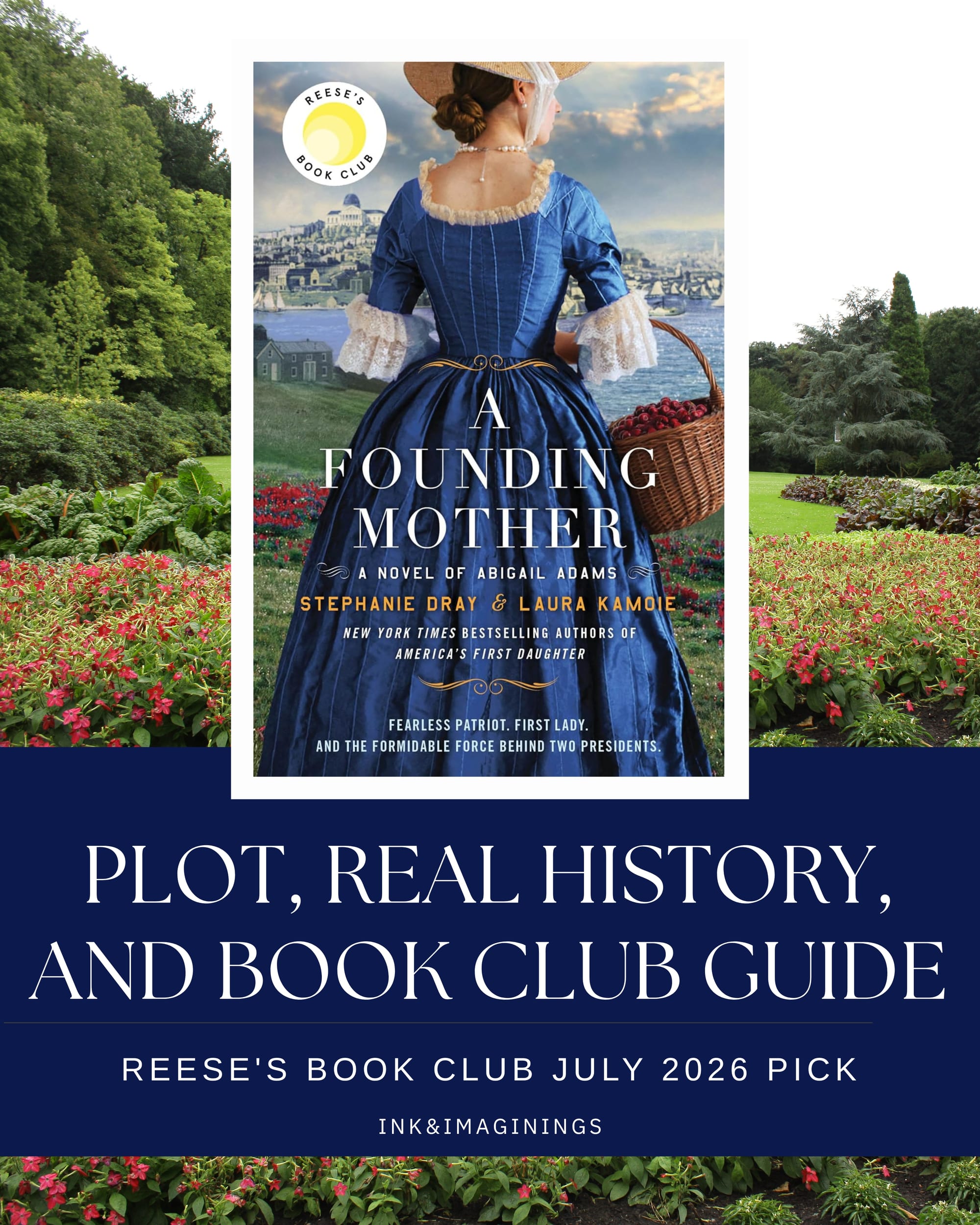
⭐ Reese's Book Club July 2026 Pick ⭐
When Reese Witherspoon named A Founding Mother her July 2026 pick, the timing could not have been more perfect: a story about one of the women who built America, chosen for the month we celebrate the country's 250th birthday. Stephanie Dray and Laura Kamoie, the bestselling duo behind America's First Daughter and My Dear Hamilton, turn their attention to Abigail Adams, wife of one president, mother of another, and one of the sharpest political minds of the founding era in her own right.
Below: the plot, the real history behind Abigail Adams, my honest take, book club discussion questions, and what to read next.
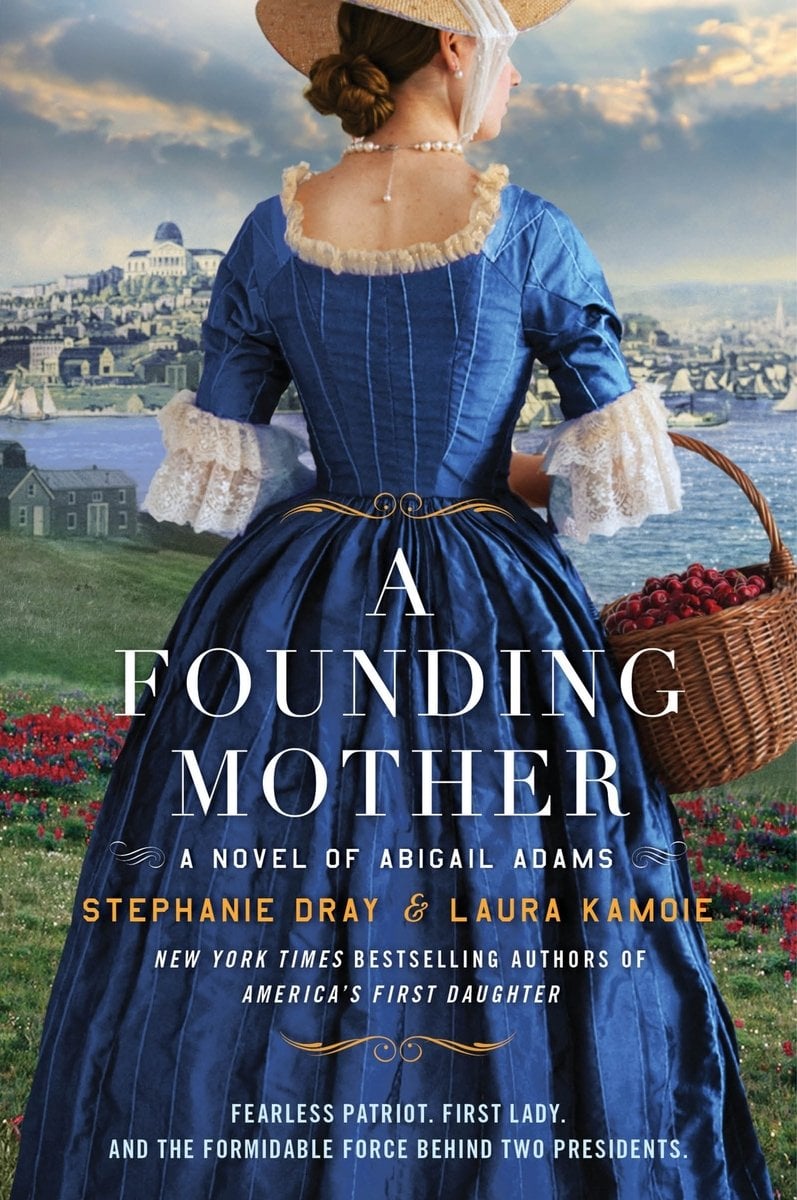
A Founding Mother by Stephanie Dray and Laura Kamoie book cover
📖 Buy on Amazon | Buy on Bookshop.org | 🎧 Listen on Audible
I received an advance copy of this book in exchange for my honest opinion, and all thoughts here are genuinely my own. This post also contains affiliate links; if you buy through them, I may earn a small commission at no extra cost to you. Thanks for supporting Ink & Imaginings.
Quick Take
- Genre: Historical Fiction
- Setting: Revolutionary and early-republic America (plus France and Britain), 1760s–1810s
- Released: May 5, 2026 (William Morrow)
- Length: 656 pages
- Book Club Pick: Reese's Book Club, July 2026
- Read if you loved: My Dear Hamilton and America's First Daughter (same duo), the musical Hamilton, and historical fiction rooted in real women's history
What A Founding Mother Is About (Spoiler-Free)
In the heart of revolutionary Boston, Abigail Adams raises her children amid riots, blockades, and the outbreak of war. Her husband, John, rises from country lawyer to nation-builder — which means he is away for years at a time and Abigail is left to run everything.
And she does. She manages the family farm, makes shrewd investments, builds up savings, battles plague and personal loss, and defends their home through the most dangerous years of the Revolution. Unafraid to speak her mind, she offers John fearless political counsel, most famously urging him to "remember the ladies" in the laws of the new government. She becomes his most trusted confidante and his indispensable ally.
When peace is won, Abigail steps onto the world stage: exchanging ideas with Thomas Jefferson in the French countryside, navigating court life as the wife of the American Minister to Great Britain, and later presiding over the parlor politics of the early republic in New York, Philadelphia, and Washington. Even after John's presidency, she keeps fighting political foes and working behind the scenes to secure a better future for her family and for the women in her life. From war-torn streets to the halls of power, it is the story of a woman decades ahead of her time.
The Real History Behind A Founding Mother
What makes A Founding Mother so satisfying is that so much of it is documented, largely because Abigail Adams was one of the most prolific letter-writers of her era. More than 1,000 letters between Abigail and John survive, which is why we can know her interior life in a way we rarely can with founding-era women.
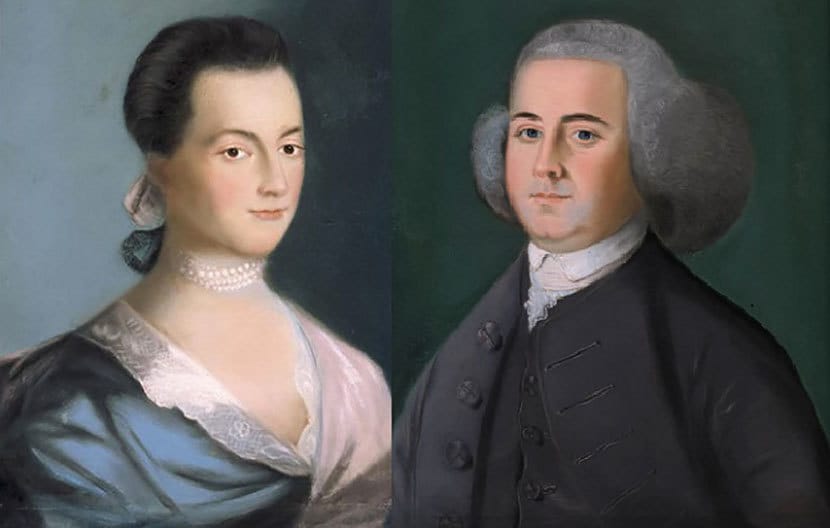
Abigail Adams (1744–1818)
Abigail Smith was born in Weymouth, Massachusetts, in 1744. Largely self-educated in a household full of books, she married John Adams in 1764. Over the next decades she raised their children, including future president John Quincy Adams, while John served the revolutionary cause far from home. She ran the farm, handled the family's money (often more successfully than John did), and kept up a correspondence that doubled as political counsel.
Her March 1776 letter urging John to "remember the ladies" is one of the earliest recorded appeals for women's rights in American history. She served as Second Lady during Washington's presidency and as First Lady during John's, and she lived to see her son elected to Congress, though not to see him become president. For much of American memory she was cast as a supportive wife; in recent decades historians have recognized her as one of the most influential of the founding mothers.
John Adams and the marriage
The Adams marriage is the spine of the novel, and it was, by the historical record, a genuine partnership of equals in an age that did not encourage such things. John relied on Abigail's judgment, forwarded her his political thinking, and trusted her to run their affairs for years on end. Their letters are by turns tender, funny, argumentative, and strategically sharp — exactly the register the novel works in.
Abigail, Jefferson, and the cost of politics
One of the richer historical threads is Abigail's friendship with Thomas Jefferson, which flourished during the family's years in Europe and later fractured over the bitter partisan politics of the early republic. Their eventual, partial reconciliation late in life is one of the quiet heartbreaks of the founding generation, and a reminder that the "founders" were people whose friendships bent and broke under political pressure just like anyone's.
The Main Characters
Abigail Adams
Abigail is the beating heart of the book: fiercely intelligent, practical, funny, and unwilling to make herself small. The novel lets her be a full person capable of pettiness, grief, and enormous resolve rather than a marble statue. Watching her manage a farm, a family, and a revolution simultaneously, while dispensing political advice sharper than most of the men in Congress, is the whole pleasure of the read.
John Adams
Ambitious, prickly, devoted, and frequently absent, John is drawn with real warmth and real flaws. The novel doesn't let him off the hook for the years he left Abigail to carry everything, but it also honors how completely he depended on her and, unusually for the era, knew it.
Supporting cast
The Adams children (including a young John Quincy), Thomas Jefferson as friend-turned-rival, and the wider circle of founding-era figures Abigail sparred and corresponded with. The women in Abigail's life — daughters, friends, and relations she fought to secure independence for — anchor the novel's argument about whose futures the Revolution was really being fought for.
Themes
The woman behind the founding. Like the best of Dray and Kamoie's work, A Founding Mother is an argument about whose contributions get remembered. Abigail's political influence was real and largely invisible in the official record; the novel makes it visible.
"Remember the ladies." Abigail's plea that the new republic account for women runs through the book as both hope and disappointment. Her ideas were radical for her social circle and, as the novel shows, went unheeded and it frames her as an early voice in a conversation that is still going.
Marriage as partnership. The Adamses model a genuinely equal partnership across decades and continents, largely conducted by letter. The novel asks what that kind of union costs and what it makes possible.
Independence, in every sense. National independence and women's personal and financial independence are braided together throughout A Founding Mother. Abigail's own money, her own opinions, and her insistence on both, become a quiet second revolution.
My Take on A Founding Mother
Full disclosure: I am a Stephanie Dray superfan. I will read anything she writes, and she has yet to let me down so take my glowing review with that grain of salt if you like. But I promise the love is earned.
Dray and Kamoie have done it again. If you loved the way My Dear Hamilton made you feel like you'd been handed the real, unvarnished woman behind a familiar name, A Founding Mother delivers exactly that for Abigail Adams and honestly, she may be their best subject yet.
It's a long book, and it earns its length. This is a whole life, from a spirited young woman through war, loss, power, and old age, and the authors don't rush it. Abigail comes off the page fully formed: spiky, clever, tender, and tougher than almost everyone around her. It's a perfect pick for the 250th, the kind of book that makes you want to go read her actual letters the moment you finish. Bring snacks and a highlighter.
And if this is your first Stephanie Dray book, oh, you are in for a treat and now is the perfect time to fall down the rabbit hole. Start with her solo novel The Women of Château Lafayette (three women, three centuries, one French castle, all connected to Lafayette himself). It's one of my all-time favorites and the ideal follow-up while you wait for whatever she writes next.
Book Club Discussion Questions for A Founding Mother
- Before reading A Founding Mother, how much did you know about Abigail Adams beyond her connection to two presidents? What surprised you most about her life?
- Abigail's "remember the ladies" letter is one of the novel's central moments. How did it feel to watch her articulate ideas about women's rights so far ahead of her time and to watch them go unheeded?
- The Adams marriage is conducted largely by letter, across years and oceans. How does that distance shape their relationship, and what does it reveal about both of them?
- Abigail managed the family's farm and finances while John built a nation. How does the novel treat that "invisible" labor, and how did it change your understanding of the founding era?
- Abigail's friendship with Thomas Jefferson deepens and then fractures over politics. What did that arc add to your sense of the founding generation as real, flawed people?
- The novel portrays Abigail as radical for her social circle but perhaps less so than women she later met in France. How does the book handle the limits of her worldview?
- Motherhood runs through the whole novel, including raising a future president. How does the book balance Abigail's public influence with her private role as a mother?
- Why do you think Abigail was remembered for so long primarily as a supportive wife, and what does it take to write a woman like her back into the center of the story?
- The novel is published for America's 250th anniversary. How does reading it in that context change what it's trying to say about the country then and now?
- If A Founding Mother became a film or series, who would you cast as Abigail?
If You Loved A Founding Mother, Read Next
📚 Historical Fiction About Women of the American Revolution If Abigail left you wanting more of the women history class skipped, this is the next stop: a full reading list of twelve novels and true histories — Deborah Sampson, Peggy Shippen, Mercy Otis Warren, and more — all built for the 250th. See the full list.
📚 My Dear Hamilton by Stephanie Dray and Laura Kamoie The same duo on Eliza Schuyler Hamilton, the woman who outlived the duel by fifty years and spent them guarding a legacy. If A Founding Mother is your first of theirs, read this next.
📚 The Women of Château Lafayette by Stephanie Dray If you're ready to go all-in on Dray (and you should be), this is my desert-island pick from her: three women across three centuries, bound together by one French castle and the legacy of Lafayette. Sweeping, immersive, and impossible to put down.
📚 America's First Daughter by Stephanie Dray and Laura Kamoie The novel that launched their partnership, about Martha "Patsy" Jefferson Randolph, who kept the secrets of her enigmatic father and shaped his legacy.
📚 Obstinate Daughters by Denise Kiernan For the true history: the rebels, writers, and renegade women who lit the fuse of the Revolution, published for the 250th. The perfect nonfiction companion to A Founding Mother.
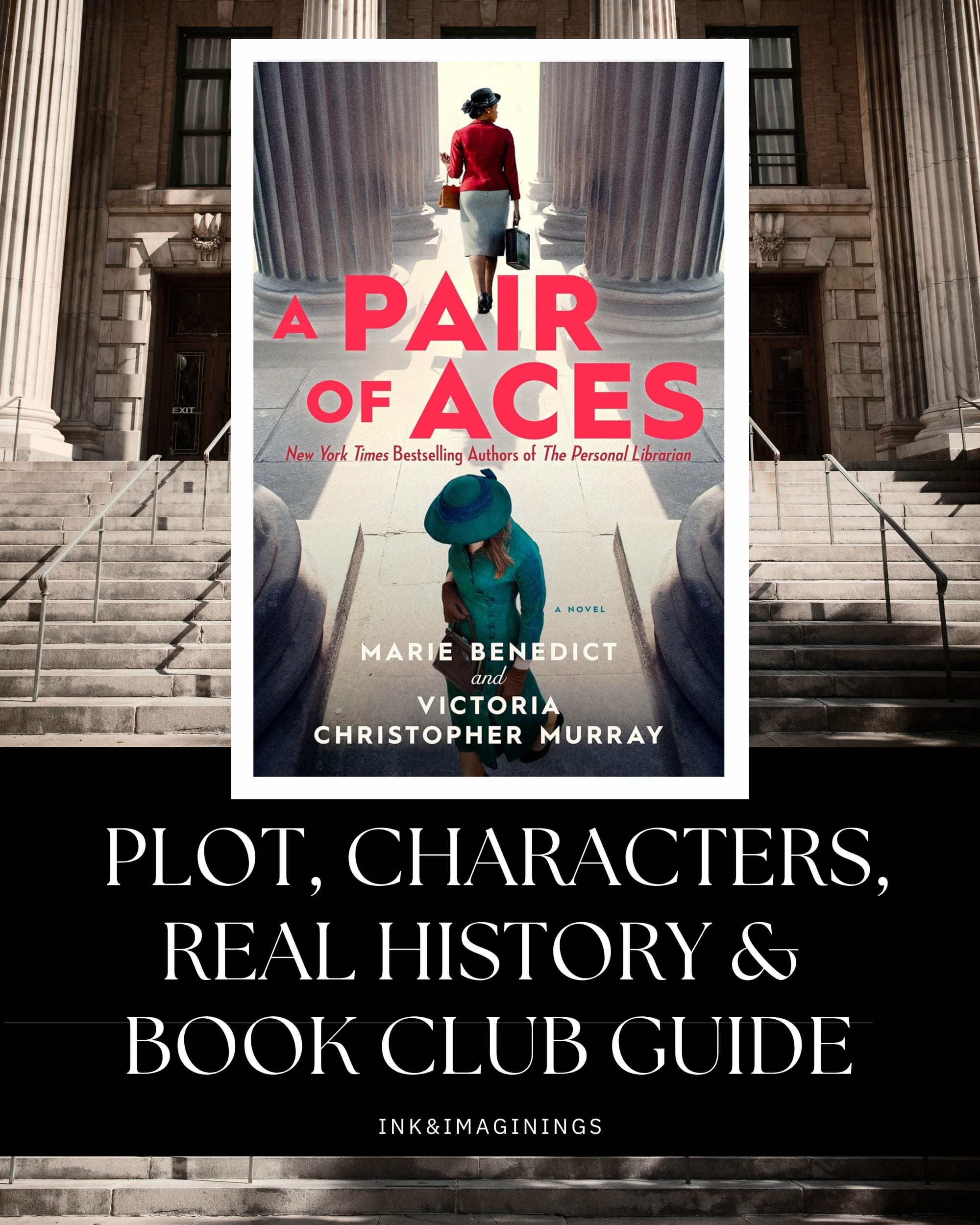
📚 A Pair of Aces by Marie Benedict and Victoria Christopher Murray Reese's June 2026 pick, in the same lane of historical fiction that restores real women to the record. Full guide here.
📚 The Correspondent by Virginia Evans If the 1,000 surviving letters between Abigail and John were the part that got you, here is a novel that asks what a life looks like when it exists almost entirely on paper.
Where to Buy A Founding Mother
A Founding Mother by Stephanie Dray and Laura Kamoie book cover
📖 Buy on Amazon | Buy on Bookshop.org | 🎧 Listen on Audible
📚 Want to make your next read (or any future Reese pick) easier on the budget? Join Book of the Month first book just $5, no commitment. It's how I find a lot of my picks.
Before You Go
Loved meeting Abigail? Subscribe to The Weekly Bookmark — every Tuesday I send the books I'd text a friend about, the new releases worth catching, and the next book club picks before everyone's talking about them. No spam, just the good stuff.
Frequently Asked Questions
Is A Founding Mother based on a true story?
Yes. A Founding Mother dramatizes the real life of Abigail Adams, wife of President John Adams and mother of President John Quincy Adams. The novel fills in interior life and dialogue, but the major events — her management of the family farm and finances during the Revolution, her famous "remember the ladies" letter, her years in France and Britain, and her role as John's closest adviser — are grounded in the historical record and her surviving letters.
Is A Founding Mother a Reese's Book Club pick?
Yes. A Founding Mother by Stephanie Dray and Laura Kamoie is Reese Witherspoon's July 2026 Reese's Book Club selection, chosen to coincide with the 250th anniversary of American independence.
Who are Stephanie Dray and Laura Kamoie?
Stephanie Dray and Laura Kamoie are New York Times, Wall Street Journal, and USA Today bestselling co-authors of historical fiction. Their previous collaborations include America's First Daughter (about Martha Jefferson Randolph), My Dear Hamilton (about Eliza Schuyler Hamilton), and Ribbons of Scarlet. Dray also writes solo; her novels include The Women of Château Lafayette and Becoming Madam Secretary. Kamoie holds a doctorate in early American history from the College of William and Mary.
What is the "remember the ladies" letter?
In March 1776, Abigail Adams wrote to her husband John, then serving in the Continental Congress, urging him to "remember the ladies" in the new laws of the republic and warning that women would not hold themselves bound by laws in which they had no voice. It is one of the earliest documented appeals for women's rights in American history and is a central thread of the novel.
How long is A Founding Mother?
656 pages.
Do I need to read America's First Daughter or My Dear Hamilton first?
No. A Founding Mother is a standalone novel. That said, it pairs beautifully with My Dear Hamilton and America's First Daughter, since all three center founding-era women from the same author duo and overlap in time period and cast.