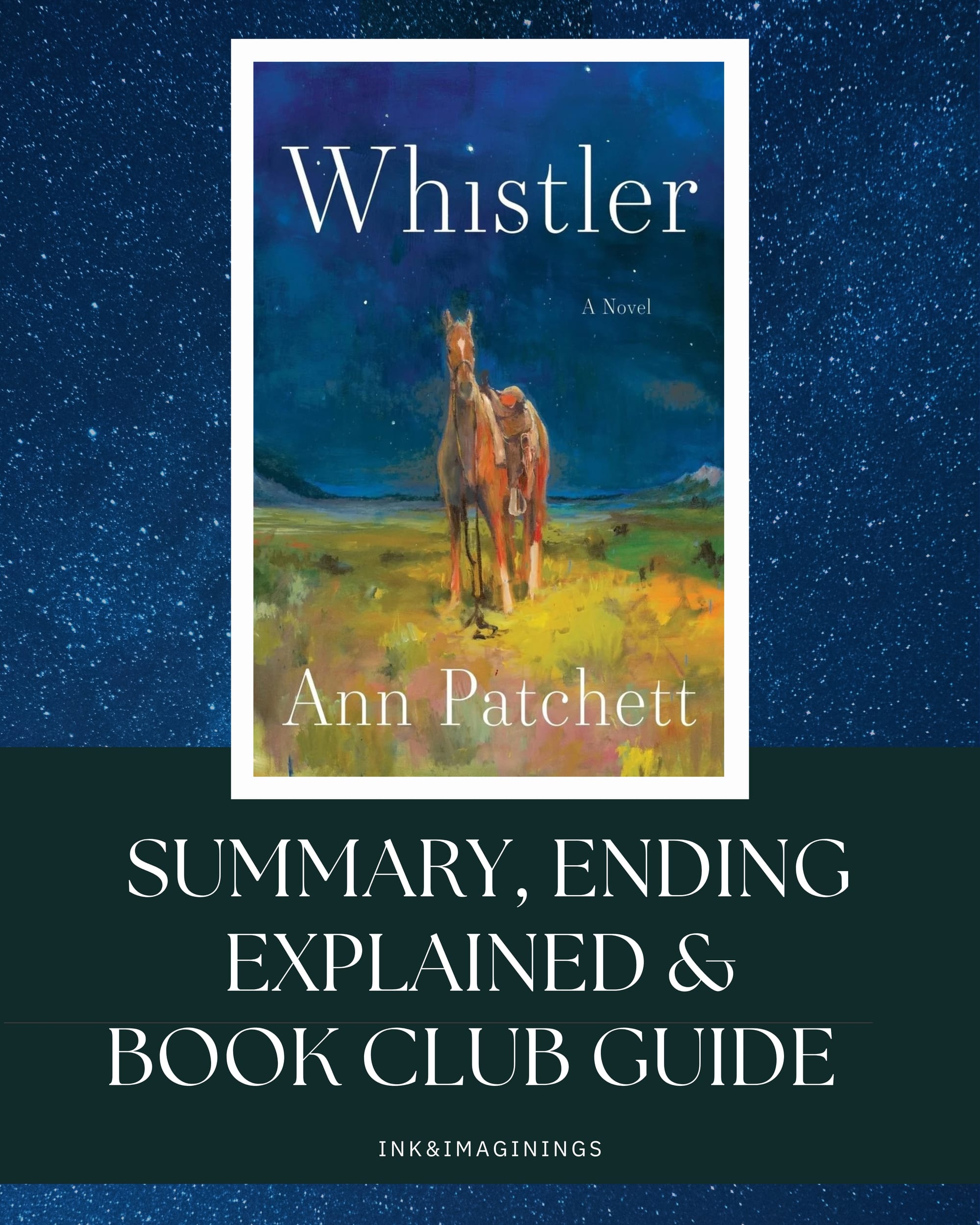
Some books grab you by the collar. This one just quietly sits down next to you, and by the last page you feel like Ann Patchett has been holding your hand the whole time.
Whistler is Ann Patchett's eleventh novel, and it's the kind of book I finished and then just sat with for a while before I could talk about it. This is a quiet tale about the impermanence of life, the choices we make, and the improbable connections that can form in a short span of time.
It's about family and all its messiness. There's no high drama here, no villains, no big twist you'll see coming a mile off, but the emotional punch is real, and it lands somewhere deep. If you loved Tom Lake or The Dutch House, you already know the Patchett spell. Ordinary people, rendered so precisely they feel like family, sitting in rooms and slowly telling each other the truth and Whistler might be her most tender yet.
Below you'll find a spoiler-light review up top, then a full guide, summary, characters, the ending explained, and book club questions, clearly marked so you can stop before the spoilers if you haven't read it yet.
(Heads up: these are affiliate links, so if you grab the book through one I earn a little at no extra cost to you. Thank you for keeping the lights on around here!)
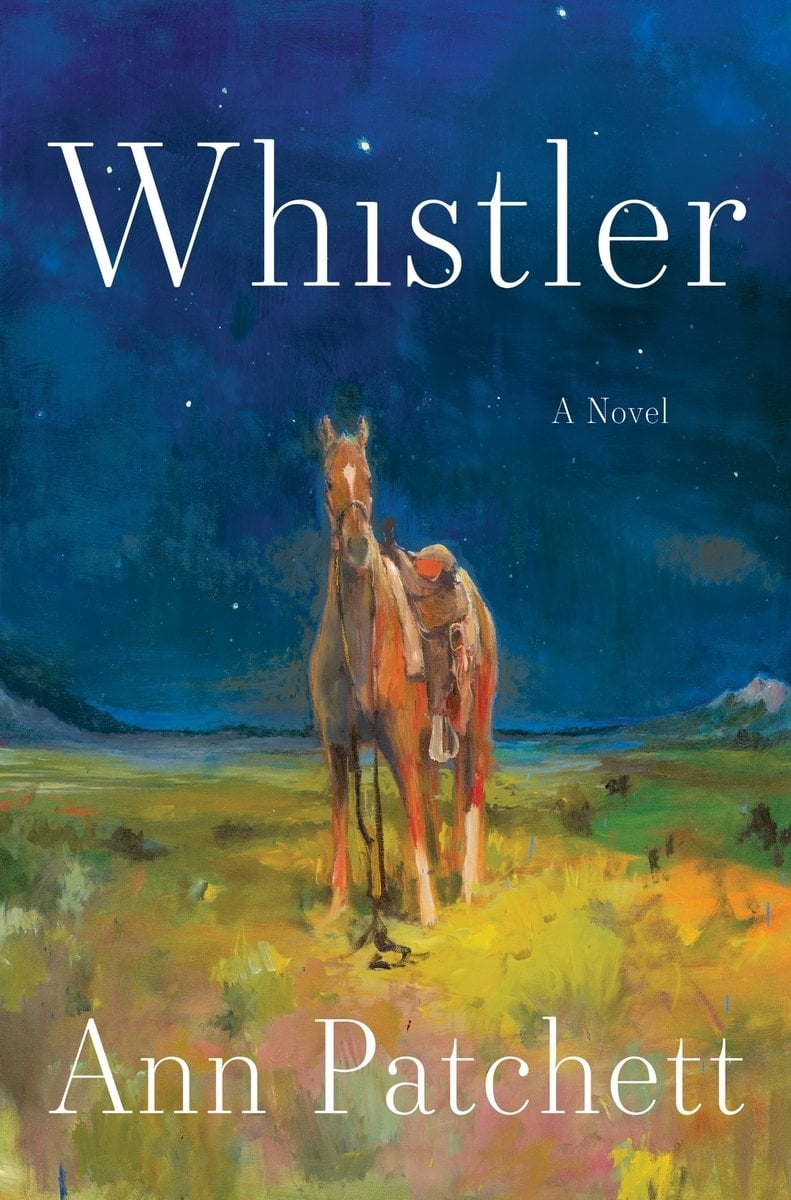
Whistler by Ann Patchett book cover
Buy it: Amazon | Bookshop.org
The Spoiler-Free Review
Here's the setup, and it's about as much as you should know going in: Daphne Fuller, a fifty-three-year-old English teacher at a girls' prep school on the Upper East Side, is walking through the Met with her husband Jonathan when they notice an older, white-haired man following them. He turns out to be Eddie Triplett, Daphne's former stepfather, who was married to her mother for barely a year when Daphne was nine, and whom she hasn't seen since. Something happened that winter that changed both their lives, and their reunion cracks it all open.
What makes the book work isn't the mystery of what happened (Patchett tells you fairly plainly that there was a car accident). It's the why underneath everything: why the marriage ended, why Eddie vanished, why a one-year stepfather stayed stitched to Daphne's heart for forty-four years. The novel moves between present-day New York and one snowbound night in 1980, and Patchett lets the two timelines lean on each other until the whole shape of this family comes into focus.
I'll be honest about the thing reviewers keep flagging: the ending is soft. It doesn't tie off with a bow. If you need resolution stamped and delivered, this might frustrate you a little. But I found the open-endedness right for a book that's fundamentally about how we never fully know anyone, and how we keep loving them anyway. It's also unmistakably personal; Patchett has said the spark came from missing a close friend who died, and readers familiar with her essay Three Fathers will catch the autobiographical echoes (Daphne, like Ann, had three dads). Some readers find that closeness moving; a few find it a touch too gentle. I land on the moving side.
My take: this is a book I'll be pressing on people all year. It's not the one to hand someone who wants fireworks, but if you want to feel known for 300 pages, start here.
Perfect for you if: you loved Tom Lake, The Dutch House, or Theo of Golden; you like family stories with secrets that surface slowly; you don't mind a good cry.
Maybe skip if: you need a propulsive plot or a clean, resolved ending.
Whistler by Ann Patchett e-book cover
Buy it: Amazon | Bookshop.org
Full Plot Summary (Spoilers Ahead)
Everything below this line spoils the book. Turn back now if you want to go in clean.
The reunion at the Met. Daphne and Jonathan spot Eddie following them through the museum. Jonathan, seventeen years Daphne's senior and a retired hospital administrator, teases her that “old guys love you,” a running joke from early in their marriage. But the man is Eddie Triplett, the stepfather Daphne last saw at nine. The three of them decamp to the café, and forty-four years fall away.
The winter of 1980. In the braided flashback timeline, we learn Eddie married Daphne's mother Abigail and, for a little over a year, was a warm and steady father figure to Daphne and her younger sister Leda. The pivotal stretch begins when Leda is hospitalized with appendicitis, leaving Eddie to look after Daphne.
The accident. Eddie picks Daphne up and, on a whim, they detour toward a raspberry farm to look at the stars on a clear, freezing night. On the way, the car slides off a snowy road and tips down a hillside onto its side. Eddie's ankle is crushed. Trapped, cold, and unlikely to be found, Eddie keeps Daphne calm through the night by telling her a story.
The story of Whistler. The tale Eddie tells is about a woman named Mary Carter who is thrown from her chestnut mare, Whistler, and has a near-death experience, visited by deceased loved ones in a liminal space, before the horse returns and brings her back. The story-within-the-story gives the novel its name and its emotional key. Eddie, a book editor, received Mary's manuscript years earlier; she considered writing it as a novel but never did.
Daphne's walk. At dawn, with rescue nowhere in sight, Eddie sends nine-year-old Daphne out alone to find help, telling her that “everyone's nice” and will want to help her. She marks the trees so she can find her way, treks through the snow, finds help, and saves them both. Eddie survives but his ankle is badly damaged. Almost immediately afterward, Abigail divorces Eddie and removes him from the girls' lives entirely.
The present-day thaw. Reunited, Daphne and Eddie resume their bond and refuse to be parted again. Through their conversations, and through Leda, now a clinical psychologist who gently pries the full story out of her sister, Daphne finally understands the buried reason for the divorce: Eddie is gay. The marriage ended not because of the accident but because Abigail learned the truth. Eddie had a lifelong love affair with his married best friend, Skip, an arrangement that shaped and constrained his whole life. Daphne meets the blended, chosen family that grew up around Eddie, Skip, and Skip's wife Polly.
Eddie's illness. Eddie is dying of leukemia. Daphne becomes his companion through chemo. He turns to Buddhist ideas, the bardo, the practice of instructing the dying spirit to move on, and asks Daphne to promise that when the time comes, she'll tell him he's dead so his spirit can move forward. Jonathan, off cleaning out his own late mother's house for much of the book, gives Daphne a small metal horse from his collection. Eddie gives her the original photograph of Whistler.
The Ending Explained
The novel closes on a conversation rather than an event, which is exactly why some readers find it abrupt, and why I think it's the right call.
In Eddie's final stretch, he lands on the idea that has quietly powered the whole book: he tells Daphne to write it all down. If she puts their story into a novel, it becomes immortal: the two of them, the accident, the night in the car, Whistler the horse, all of it preserved past the reach of leukemia and forgetting. This is the thematic payoff of a book that's obsessed with how stories both save lives and erase them.
There's a lovely ambiguity a lot of book clubs snag on: are we reading events in real time, or are we reading the novel Daphne wrote? Patchett never resolves it, and that's deliberate. The book you're holding may be Daphne's act of keeping Eddie alive on the page, the story he asked her to tell. The Whistler tale mirrors this exactly: a horse that comes back for its person, a story that returns someone from the edge of death. Eddie tells Daphne that story to get her through the worst night of her childhood; Daphne (maybe) writes this story to get herself through losing him.
So the “no resolution” ending isn't Patchett running out of road. It's the point. We don't get to know how everyone ends up because that was never the promise. The promise was connection, the almost unbearable gift of being truly known by one person, even briefly, and the way we make that connection outlast a life by telling it. Eddie was, Daphne realizes, her “third father,” filling the hole left by her absent biological dad Buddy and her well-meaning-but-distant later stepfather Lucas.
If you closed the book a little teary and a little unmoored, that's the intended landing.
Character Guide
Daphne Fuller: Our narrator. A fifty-three-year-old English teacher, married to Jonathan, no children of her own, three fathers over her lifetime. As a nine-year-old she saved herself and Eddie by walking through the snow for help, an act of childhood heroism that went unacknowledged for decades. The adult Daphne is the emotional glue of a scattered, blended family, carrying quiet guilt for a divorce she wrongly blamed herself for.
Eddie Triplett: Daphne's former stepfather, a longtime book editor (the kind of courtly New York publishing figure Patchett clearly loves). Married to Abigail for barely a year, exiled after the accident, and, we eventually learn, gay, in an era that gave him no safe way to live it. Gentle, funny, endlessly generous even as he's dying. His lifelong love was his married best friend, Skip. His arc is about forgiveness and the grace of loving inside impossible constraints.
Abigail: Daphne's mother. Practical, resilient, sometimes brittle; a survivor of multiple marriages who occasionally rewrites the past to keep her version intact. She divorced Eddie when she learned he was gay. Time softens her, and late in the book she reaches back toward old loves with letters and visits.
Leda: Daphne's younger sister, now a clinical psychologist. The family's analyst and truth-prodder, she's the one who gently extracts the full story of the accident from Daphne. Close, warm, and sharp.
Jonathan: Daphne's husband, seventeen years older, a retired hospital administrator and a widower with daughters. Steady, curious, unshowy. For much of the novel he's away clearing out his late mother's house, a parallel excavation to Daphne's own dig through memory.
Skip: Eddie's college roommate and lifelong secret love. Married to Polly. Emblematic of the compromises forced on gay men of his generation; drawn to Eddie but never able (or willing) to choose openly.
Polly: Skip's wife, hostess of the blended-family gatherings, by turns generous and willfully blind to the triangle at the center of her marriage. She personifies the cost of the illusions families agree to keep.
Buddy Zabriskie: Daphne's biological father, a deep-sea fisherman who left early. Mythic and flawed; he died on an airplane, which is why Daphne has avoided flying her whole life.
Lucas Ekker: Abigail's later husband, author of the relentlessly cheerful Positivity! self-help series. Well-meaning, a little hollow, a reminder that a marriage built for security can still fail to supply love.
Themes & What the Horse Means
Storytelling as survival and erasure. The beating heart of the book. Great stories save lives (Eddie's tale gets them through the night; Daphne's novel keeps Eddie alive). But Patchett won't let that stay sweet: stories also erase lives, the ones we edit out, the truths families agree never to tell. Eddie was erased from the girls' lives; his sexuality was erased from the family narrative for decades.
Whistler the horse. Neither Eddie nor Daphne has ever set foot on a ranch, the horse isn't about a love of horses, it's about a love of stories. Whistler comes back for her person. The image is a promise threaded through the whole novel: that someone will return for you, that a story can bring you back from the edge.
Impermanence and the bardo. As Eddie faces death, the book leans on Buddhist ideas about letting go and guiding the dying spirit onward. It's both literal (Eddie's chemo-center conversations) and a metaphor for the novel's larger work: accepting loss while insisting meaning survives it.
Chosen family and love without recognition. Serial marriages, step-siblings, a decades-long queer love that never got to be named out loud. Patchett refuses to simplify any of it. Belonging here is something people build, imperfectly, out of small acts of courage and compromise.
The unknowability of other people. “I wondered what anyone ever knows about another person's relationship,” Daphne says. “I realized the answer was nothing.” The novel both agrees and, by its very existence, gently argues back.
Book Club Discussion Questions
1. The novel withholds the real reason for Abigail and Eddie's divorce until late. How did your understanding of that winter shift once you knew? Did it change how you saw Abigail?
2. Eddie tells Daphne that “everyone's nice” before sending her out into the snow. How does that belief shape Daphne as an adult, and do you think it's true?
3. Why do you think Daphne and Eddie's bond survived forty-four years of total separation? What does that say about the relationships we form as children?
4. The story of Whistler the horse sits inside the novel like a nesting doll. What did Mary Carter and Whistler come to mean to you? Why does Eddie choose that story for that night?
5. The ending offers no tidy resolution. Were we reading events in real time, or reading the novel Daphne wrote? What did you make of it?
6. Eddie asks Daphne to tell him he's dead when the time comes, to help his spirit move on. How did the book's treatment of dying land for you?
7. Patchett has said the book is deeply personal. Did knowing that change your reading? Where's the line between using your own life and writing memoir?
8. There are no villains here, just people doing their imperfect best. Did you want the book to judge anyone more harshly? Who?
9. Jonathan spends much of the novel excavating his late mother's house while Daphne excavates her memory. What did that parallel add for you?
10. Which of Daphne's three fathers left the deepest mark, and why do you think Patchett gave her three?
What to Read Next
If Whistler hit the spot, here's where to go next: starting with the one nearly every reviewer names in the same breath.
Theo of Golden by Allen Levi: if you read one thing after this, make it this. Critics keep pairing the two, and it's easy to see why: both were 2026 Katie Couric Book Club picks, both are quiet stories about an older man, buried secrets, and radical kindness that leaves you teary. My full guide breaks down the plot, the ending, and every character.
Tom Lake by Ann Patchett: the closest cousin in her own catalog: quiet, warm, a mother telling her grown daughters the story of her past.
The Dutch House by Ann Patchett: siblings, a lost family home, decades of looking back. (Same cover artist, Noah Saterstrom, too.)
Signal Fires by Dani Shapiro: a family, an accident, and a secret that ripples across decades; reviewers name it right alongside Whistler for its structure.
Little Fires Everywhere by Celeste Ng: for the slow reveal of a secret at a family's center.
A Man Called Ove by Fredrik Backman: for a heartwarming, humorous, and deeply emotional novel about grief, unexpected friendship, and the quiet power of everyday kindness.
Looking for your book club's next pick? I keep a running list of the year's most discussable literary novels over in my 2026 book club reading guides, the quiet, secret-at-the-center kind that give a group the most to talk about.
The Correspondent by Virginia Evans: for the same late-life reckoning, an older woman reaching back toward the people she held at arm's length. Told entirely in letters, and it won the 2026 Women's Prize.
Frequently Asked Questions
Is Whistler by Ann Patchett based on a true story?
Not literally, but it's deeply personal. Patchett has said the spark came from missing a close friend who had died, imagining a different relationship with him. Like her narrator Daphne, Patchett had three fathers, a detail she wrote about in her essay “Three Fathers.” She's been clear that the events are invented but “all the love is there.”
Is Whistler sad?
It's tender and it will likely make you cry, but it's not bleak. It deals with a death, a long-ago accident, and buried family secrets, yet the overall feeling is warm and hopeful, a story about connection and kindness more than tragedy. Reviewers describe it as devastating but ultimately uplifting.
What is the meaning of the title Whistler?
Whistler is a chestnut mare in a story-within-the-story that Eddie tells Daphne while they're trapped in the crashed car. The horse returns for her injured owner and brings her back from the edge of death. It's a symbol of return, rescue, and the power of stories, the emotional key to the whole novel.
Do I need to read Ann Patchett's other books first?
No. Whistler stands completely on its own. If you've read Tom Lake, The Dutch House, or Commonwealth you'll notice her signature themes of blended families and buried secrets, but there's no reading order to worry about.
Is Whistler good for book clubs?
Yes, it's practically built for them. It was a Katie Couric and Good Housekeeping Book Club pick, and its themes of memory, secrets, forgiveness, and that open-ended finale give groups a lot to dig into.
When was Whistler published?
June 2, 2026, by Harper in the US (Bloomsbury in the UK, June 4). The hardcover runs 304 pages; a paperback edition is slated for 2027.
Before You Go
If you like the kind of reading that leaves a handprint on your heart, the quiet, character-driven, cry-in-the-good-way novels, come hang out in your inbox. Every week I send The Weekly Bookmark: the books I'd text a friend about, the new releases worth catching, and reader guides like this one. No spam, just the good stuff.
And if you've already read Whistler, come tell me where you landed on that ending. I'm still turning it over, and I'd love to know whether you read it as real, as the novel Daphne wrote, or a little of both.