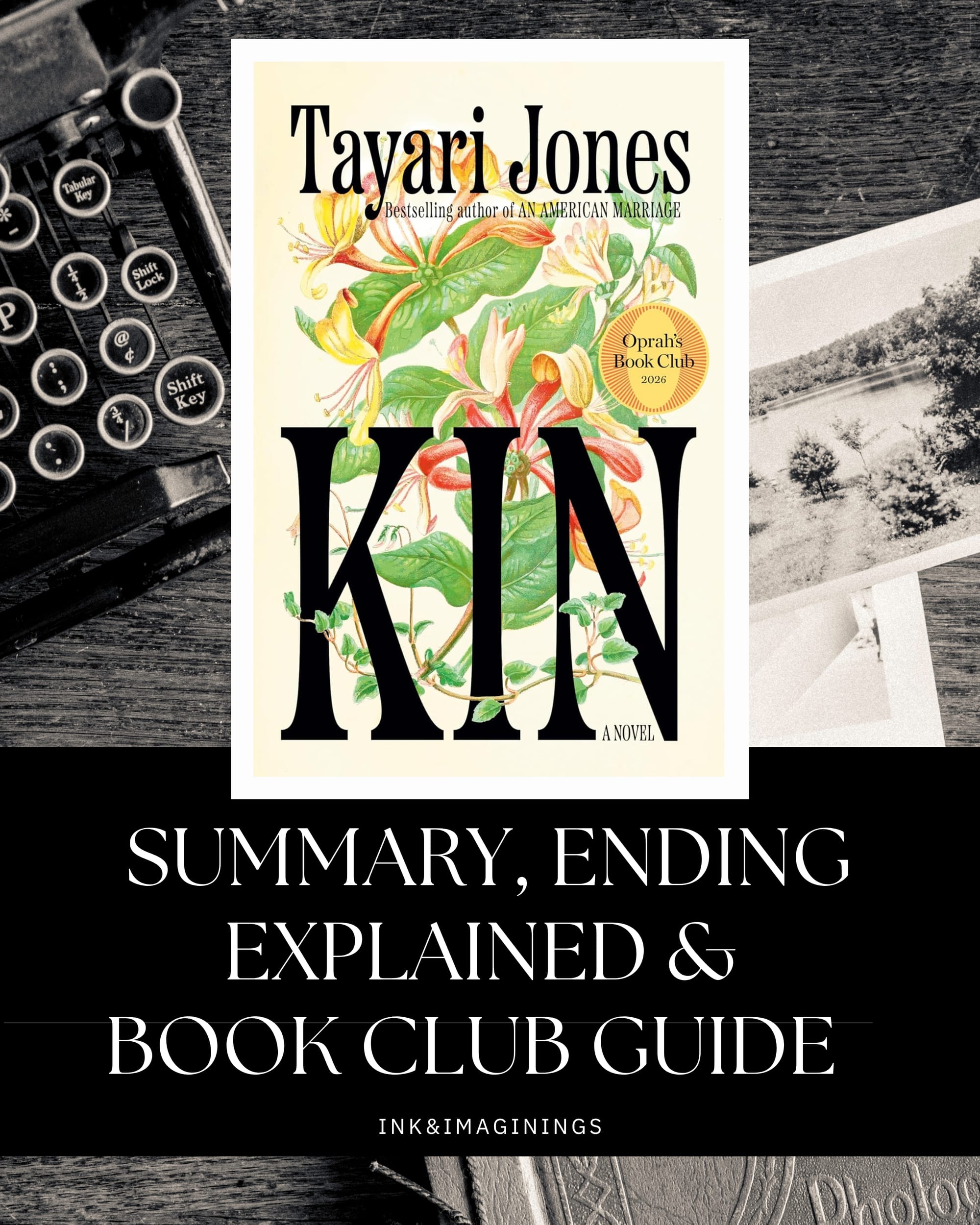
There's a kind of book that doesn't tell you it's going to wreck you until it's already wrecked you, and Kin is that kind of book.
Tayari Jones, who you probably know from An American Marriage, is back with a novel about two girls who share a cradle in Honeysuckle, Louisiana in 1941. Vernice's mother was murdered. Annie's mother walked out. They become each other's family before either of them can talk, and the book follows them across decades, across the Great Migration, through Spelman and Memphis and Mississippi and Atlanta, into the kind of women they have to become to survive what was done to them.
It's a 4.5-star read for me. The South is always vivid in Jones's work: beautiful, brutal, and inescapable. The dual POV gives you both girls voices, plus the letters they send each other across the years, and the effect is genuinely immersive. I had to put it down twice in the last fifty pages.
Below: the full plot, the themes worth fighting about with your book club, my honest take, and ten discussion questions designed to actually start arguments. Spoilers for the whole novel.
This post contains affiliate links. If you buy through them, I may earn a small commission at no extra cost to you. Thanks for supporting Ink & Imaginings.
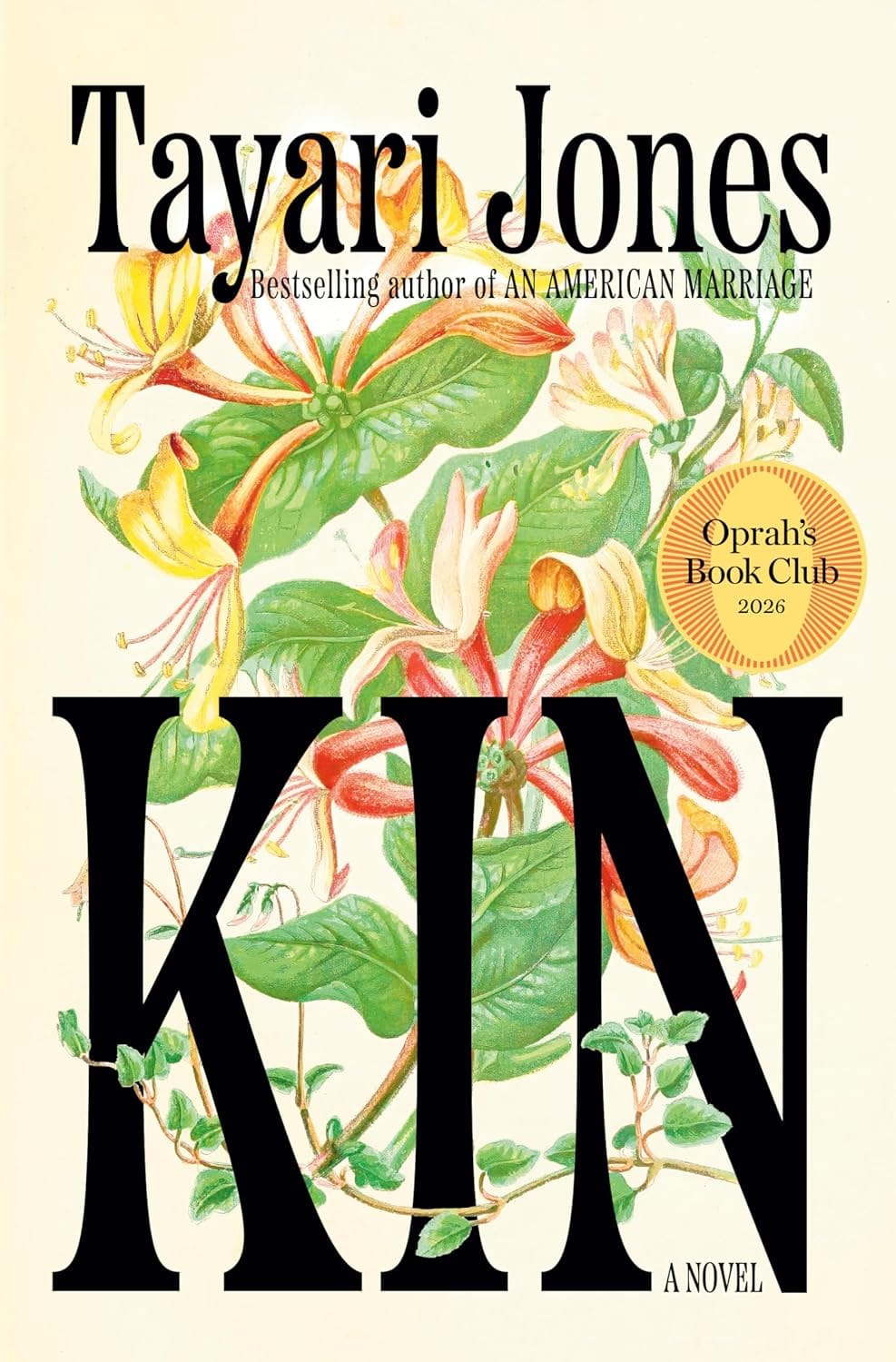
Kin by Tayari Jones book cover
📖 Buy on Amazon | Buy on Bookshop.org | 🎧 Listen on Audible
Quick Answers
How does Kin by Tayari Jones end? Annie dies from internal bleeding after a back-room abortion in Mississippi. Vernice, faced with scandal and the McHenry family's refusal to help, finally tells her husband Franklin the truth about her past with Joette. The underground waterfall of grief Vernice has been carrying since infancy finally breaks through, and she weeps.
Who is Niecy in Kin? Niecy is the nickname Annie gave Vernice when they were two babies sharing a drawer. At the end of the book, Annie lists "Niecy" as her next of kin on the form at Lulabelle's, choosing Vernice, who shared her cradle, over Hattie Lee, who shared her DNA. That moment is the thesis of the entire novel.
Is Kin connected to An American Marriage? No. Kin is a standalone literary novel, not a sequel. But it's by the same author (Tayari Jones) and explores similar territory: Black family life in the South, the moral compromises ordinary people make, and the cost of secrets across decades.
Is Kin an Oprah's Book Club pick? Yes. Kin is one of Oprah's 2026 picks, which means built-in book club conversation, discussion guides, and a national reading moment already underway.
What happens in Kin by Tayari Jones?
Spoiler warning: full plot ahead.
Honeysuckle, Louisiana. 1941. Vernice's father shoots her mother Arletha dead, then fails to kill himself. Vernice is six months old. Her Aunt Irene, who had escaped to Ohio years earlier and only come back to nurse her dying mother, finds herself raising a baby she never wanted.
Down the road, Annie's mother Hattie Lee unhooks her infant from her breast and hands her to Granny before walking out for good.
The two motherless girls share a cradle. They become inseparable before either of them can talk. At two and a half, Vernice, who has been mute since witnessing her mother's murder, bellows her first word: Mother. Annie, already a talker, goes quiet and sucks Vernice's thumb as though it were her own.
Fast-forward to graduation. Annie has Hattie Lee's Memphis address, courtesy of the Honeysuckle barkeep Mr. Daniel. On graduation eve she climbs out her window and finds Babydoll, her boyfriend Clyde's other girlfriend, already in the front seat of a stolen Packard. Bobo, Clyde's bookish cousin, is in the back. Annie wedges herself in. The four of them roll north with one working headlight, and Annie doesn't say goodbye to Vernice, her granny, or anyone. The next morning Vernice finds Annie's bed carefully made, suitcase gone, a note on the mirror. The devastation of being abandoned, again, cuts deep.
The runaways end up at Lulabelle's, run by a self-appointed preacher with a gold tooth who keeps a row of painted shacks for working women. Annie scrubs sheets. Babydoll cooks. Bobo and Annie become lovers after Bobo stumbles into a haunted shack and witnesses something that breaks him open. Lulabelle braids Annie's hair and reads Genesis with her, the closest thing to a mother's love Annie has ever felt.
Meanwhile, Vernice gets on a bus for Spelman College. She picks a seat she thinks is in the colored section. She's wrong by one row. The driver berates her with slurs, confiscates her hatbox, and throws her off the bus. Three pistachio-green suitcases, full of every dress she sewed for college, every item her community donated, speed toward Syracuse without her. The midwife Mrs. Ola Mae and her partner Miss Jemison eventually deliver Vernice to Spelman themselves. In the car, Mrs. Ola Mae warns her that she carries a whole waterfall of grief underground, and someday it has to break through.
At Spelman, Vernice's roommate is Joette Cunningham, a wealthy junior from a funeral home dynasty who arrives with a maid and calls Vernice Country Mouse. Despite opposite stations, they fall into a love affair. Joette confides that men don't appeal to her. In their slant-ceilinged dorm room they push their narrow beds together every night. Vernice discovers a passion she didn't know was possible, and understands immediately that it can't survive daylight.
Then Mrs. McHenry, wife of a prominent Atlanta civil rights attorney, pinches Vernice's stockings in the chapel line and recognizes a younger version of herself. She grooms Vernice for her son Franklin, a polio survivor who walks with a cane and practices law with fierce dignity. Franklin proposes at Piedmont Park's ghost stairs, with a ring his grandmother received from a dying Union soldier in 1863. Vernice says yes. Back at the dorm, Joette begs her to come to Washington instead, to live openly. Vernice refuses. She wants marriage. She wants a family name not stained by murder. She pushes their beds apart for the last time.
In Memphis, Annie spends years mistaking strangers at the Elektra bar for her mother. She finally gets up the courage to visit Hattie Lee's address, only to be told by a man named Isaiah that Hattie Lee died a month earlier in poverty. Annie grieves for twenty-eight days. Then a stranger at the bar tells her mothers in heaven love without obstruction, and Annie turns back toward Bobo and toward living. The same weekend Clyde proposes to Babydoll, Bobo proposes to Annie. She says yes.
Then Isaiah comes back. He confesses he made up Hattie Lee's death to protect his friend Sweet's feelings, because Hattie Lee had stolen money and disappeared. He hands Annie a scrap of paper with her mother's real address. Bobo, watching months of peace shatter, punches him. The three friends vote unanimously that Annie leave Hattie Lee alone.
On Palm Sunday, Annie and Vernice walk to the South Lauderdale address together. A teenage girl pads out in her socks, a baby brother on her hip. She introduces herself as Annie Kay. She's bright, dimpled, well-loved, everything the original Annie once wished to be. Through a peeled-back corner of newspaper covering the window, Hattie Lee watches her abandoned daughter's face. Then she smooths the paper back over the glass. The door claps shut. Annie tells the girl to pass along that Granny loves Hattie Lee, and that nobody needs to worry about her coming back. The walk home is soundless except for two women splitting apart at the seams.
Vernice marries Franklin in a society wedding. Annie buttons her into Mrs. McHenry's yellowed lace dress and tells her not to marry on top of secrets, to be honest with Franklin, to give Joette a proper goodbye. Vernice deflects. The wedding goes on. From that day forward she is Mrs. Franklin McHenry, with none of the names she was born with.
Bobo waits until after the wedding to leave Annie, a courtesy she doesn't appreciate. He's met someone, a professor's daughter named Regenia. Annie comes home early and finds him at the kitchen table with a yellow notepad reading My dear Annie Kay. His footsteps down the corridor are louder than any sound a man that small should make.
In the hollow weeks after, Hattie Lee herself walks into the Elektra, orders a Coca-Cola, confirms she's Annie's mother, says not everything can be fixed, and leaves three quarters on the bar. That's the entirety of the mother-love Annie will ever hold in her hands.
Lonely and unmoored, Annie falls into a brief affair with Mr. Wilson, the Elektra's married owner. She gets pregnant. Mrs. Wilson finds out, attacks Babydoll by mistake, and both women lose their jobs. Annie writes to Vernice in desperation. Vernice begs the McHenrys for a doctor's name and they refuse. The family reputation must be protected. Only Joette's nearly-white cousin Marylinda, a Spelman civil rights organizer recruiting for sit-ins, tears a page from her daybook and writes an address from memory.
Annie and Babydoll drive to Atlanta. They go to the address Marylinda gave them: a laundromat fronting a back-room clinic. Three white cops storm in before the procedure can happen. The women flee. The McHenrys are livid. That night, Vernice leaves the Cadillac keys on the third peg with a letter, money, and three pinches of yard dirt. She tells Annie to drive to Lulabelle's in Mississippi.
Lulabelle's twin Lurelia helps Annie prune the winter rose garden the morning the white doctor arrives from Meridian. Annie lists Vernice as her next of kin. Not my mother, she insists. Not Hattie Lee. Just write Niecy, the name Annie gave Vernice when they were two babies sharing a drawer, back when Vernice had too many letters for Annie's little mouth to hold.
Afterward Annie phones Vernice loopy from painkillers, rambling about fruit and trees and asking Vernice to keep three quarters safe. She and Babydoll drive the Cadillac back to Atlanta. Annie lays her head on the guest room pillow over the warm coins and falls asleep.
Nobody told her, nobody told any of them, that a woman could bleed to death from the inside without shedding a single visible drop.
How does Kin end?
With Annie dead in the guest room and scandal pressing at every door, Vernice goes to Joette and kneels in front of her desk at the funeral home. Joette agrees to help. But the price is the truth. Tell Franklin, Joette says. Not as revenge. Because dignity is the only thing that makes living worthwhile.
That night, Franklin asks Vernice to let him see her. She tells him everything: about Joette, about the dormitory, about the part of herself she buried to become a McHenry. And then, for the first time since Mrs. Ola Mae cradled her in a back seat on the road to Atlanta years ago, the underground waterfall that has been roaring inside Vernice since infancy finally breaks through.
She weeps.
What is Kin really about?
The title is the thesis. Kin: the people who are family by blood, by choice, by who actually stays. Annie names Vernice as her next of kin on the form at Lulabelle's. Not Hattie Lee, who shares Annie's DNA. Vernice, who shared her cradle. That's the whole book in one word on one form. The novel keeps asking: is family blood, choice, or the person who stays? And it keeps answering: the one who stays. Always the one who stays.
Two mothers, two abandonments, two different kinds of grief. Arletha was murdered. Hattie Lee chose to leave. The book sits with the difference between losing a mother and being left by one, and refuses to rank them. Vernice's grief goes underground because the woman she's grieving for is gone for good and there's no version of the story where she comes back. Annie's grief is sharper, more public, more shameful, because the woman who left her is still out there, and might be on the next stool at the bar. The two griefs shape two completely different women. Jones is doing the kind of work in this contrast that I haven't seen anyone else do this well.
The respectability politics will keep you up at night. Annie's death is not really about a botched abortion. It's about a Black family in 1960s Atlanta refusing to risk their name to save her, because the McHenrys had clawed their way into Southwest Atlanta society and weren't going to give it back for one girl from Honeysuckle. Mrs. McHenry, who Vernice loved like a mother, said no. Only Marylinda, the civil rights organizer who was already willing to risk expulsion at the Rich's sit-ins, said yes. The book is brutally clear about which kind of person saves which kind of woman in 1960s America.
Joette is the moral spine. She's the one who agrees to bury Annie but demands honesty from Vernice as the price. She tells her, in essence, that dignity is the only thing that makes living worthwhile, and that a life built on buried truths isn't one. She loved Vernice without apology, was dropped without explanation, and still finds the grace to ask Vernice to live a life she can actually stand to be in. The book quietly makes Joette into something close to a hero: a woman who refused to let Vernice off the hook even when letting her off would have been kinder in the short term.
The underground waterfall pays off. Mrs. Ola Mae warns Vernice about it on a car ride to Atlanta when Vernice is barely seventeen. Hundreds of pages later, after Annie's death, after telling Franklin the truth, it finally breaks through. That's the kind of slow-burn structural payoff that I love in a literary novel. It earns the wait.
My honest take on Kin
4.5 stars. This is a book I'll be pressing into a lot of hands this year.
What works:
- The writing is gorgeous. Jones has always known how to give you a sense of place with two sentences, and the South in this book is vivid: beautiful, brutal, inescapable in equal measure.
- The dual POV plus the letters is the right structural choice. You get both girls in their own voices AND the relationship as it lives between them on the page.
- The questions the book raises about kin, blood vs. choice vs. who stays, will fuel an entire book club meeting on their own. This is one of those novels where everyone in the group will land in a different place and nobody will fully back down.
- The ending is the right ending. The waterfall paying off. Annie's Niecy signature on the next-of-kin form. Joette's price for help. Earned, every one.
What to know going in:
- The pacing in the middle stretches. The Memphis section, where Annie is hunting for Hattie Lee, drags a little. There's some repetition that feels like filler more than build. If you hit a slow patch around the bar scenes, push through. The back half earns it.
- Some of the supporting characters (Bobo, Clyde, even Franklin's brothers) feel sketched rather than drawn. That's a function of the dual-POV structure (there's only so much page time), but you do feel it.
Who I'd press this into the hands of: anyone who loved An American Marriage and has been waiting for the next one. Anyone who's working through their own questions about chosen family. Anyone who reads to feel something specific.
Who I'd wait on: if you're in a slump and need something propulsive, this isn't it. Kin asks you to sit and feel. Pick it up when you are in the right head space for it.
A heads up before you start Kin
A few things to know if you're picking this up for your book club:
Kin is Oprah's pick, which means there's already a built-in book club conversation around it. Reading it now means you're inside the discussion, not catching up to it later.
If you read Strangers by Belle Burden and felt the generational-silence ache, Kin is doing similar work in fiction. And if Yesteryear by Caro Claire Burke wrecked you, this book is going to find the same chamber of your heart and keep going.
Book clubs that read this end up talking about their own mothers, their own chosen families, their own near-misses. So if your group has been holding things back, this is the book that's going to crack the door.
10 book club discussion questions for Kin
Warmup to heated. By question 6 things will be honest. By question 10 you'll know whose mother taught them what.
1. Vernice's first word, at two and a half years old, was Mother. What did you make of that, and what did it tell you about what she would spend the rest of her life looking for?
2. Annie and Vernice meet each other before either of them can talk. Do you have a relationship like that in your own life, someone who was there before language? How does that change how you love each other?
3. The book opens with two mothers gone, one murdered, one walked out. Did you find one absence harder to read than the other? Why?
4. Annie runs away to find Hattie Lee, and Hattie Lee watches her through the window and chooses not to open the door. What did you think of Hattie Lee in that moment? Has your opinion of her shifted by the end of the book?
5. Vernice falls in love with Joette at Spelman and chooses Franklin instead. Was that the right choice for her, the wrong one, or just the only one she could see at Spelman in the late 1940s?
6. Mrs. McHenry, who loved Vernice and groomed her for her son, refused to risk the family name to help Annie. What does the book seem to think about respectability politics in Black middle-class life in the 1960s, and where does your own family fit on that spectrum?
7. When Annie lists her next of kin at Lulabelle's, she gives Niecy, the name she invented for Vernice when they were two. What did that moment do to you? What does it say about how the book defines family?
8. Joette tells Vernice that dignity is the only thing that makes living worthwhile, and refuses to help her unless she tells Franklin the truth. Do you agree with Joette? And what does she risk by setting that condition?
9. Mrs. Ola Mae tells Vernice, when she's barely seventeen, that she's carrying an underground waterfall of grief that will someday have to break through. By the end of the book, has it? What do you think breaks open when she finally weeps in front of Franklin?
10. The book is called Kin. By the final page, what is Tayari Jones telling us kin actually is: blood, choice, the person who stays, or something else? Make a case.
What to read after Kin
If Kin did its work on you, these are the books I'd hand you next:
- Yesteryear by Caro Claire Burke: the fiction companion. Dual timelines, family secrets, and a generational-silence question Jones is also asking. The same chamber of the heart. Read the full guide
- Strangers by Belle Burden: the nonfiction companion. A Vanderbilt descendant and Babe Paley's granddaughter writing about the marriage that ended in sixty days, and the women in her family who taught her not to talk about it. Generational silence in memoir form. Read the full guide
- An American Marriage by Tayari Jones: if somehow you haven't, start here. Different premise, same author muscle.
- Remarkably Bright Creatures by Shelby Van Pelt: a quieter book about a woman in her seventies who's been carrying grief alone for too long. Different generation, same emotional terrain about who shows up and who stays.
Looking for your next book club pick?
Book of the Month sends you a new book every month for the price of a coffee. Try your first month for $5
If You Liked Kin, Read These Next
If Kin did its work on you, these are the books I'd hand you next:
📚 Yesteryear by Caro Claire Burke: the fiction companion. Dual timelines, buried family secrets, and the same ache about what one generation refuses to tell the next. If Kin's silences got you, this one lives in the same chamber of the heart.
📚 Strangers by Belle Burden: the nonfiction companion. A Vanderbilt descendant and Babe Paley's granddaughter on the marriage that ended in sixty days, and the women in her family who taught her not to talk about it. Chosen family and generational silence, in memoir form.
📚 Into the Blue by Emma Brodie: a decades-spanning bond between two people who keep orbiting each other through everything life throws at them. If you read Kin for the long arc of a relationship across time, this scratches the same itch.
📚 An American Marriage by Tayari Jones: if you somehow haven't, start here. Same author muscle, a different marriage, the same gift for putting you inside an impossible choice.
📚 Remarkably Bright Creatures by Shelby Van Pelt: a quieter read about a woman in her seventies carrying grief alone for too long. Different generation, same tender questions about who shows up and who stays.
Already read one of these? Come back and check out the full guides, we have ending explained posts, character breakdowns, and book club discussion questions for all of them:
→ Yesteryear | Strangers | Into the Blue
📚 The Correspondent by Virginia Evans: another novel where the letters carry what the people cannot say out loud. Quieter, and it builds to a confession that has been waiting forty years.
Never miss a book like this one
The Weekly Bookmark lands in your inbox every Tuesday with the books I'd text a friend about. No spam. Just the good stuff.
Frequently Asked Questions
What is Kin by Tayari Jones about?
Kin is a literary novel by Tayari Jones (An American Marriage) about two motherless girls, Vernice and Annie, who share a cradle in Honeysuckle, Louisiana in 1941 and grow up as each other's family. The novel follows them across decades, the Great Migration, Spelman College, Memphis, Mississippi, and Atlanta, as they navigate love, abandonment, respectability, and the meaning of chosen family.
Is Kin connected to An American Marriage?
Kin is a standalone novel, not a sequel to An American Marriage, though it shares An American Marriage's interest in Black family life, the South, and the moral compromises ordinary people make under pressure. Tayari Jones fans will recognize the prose, the structural ambition, and the willingness to sit with discomfort.
Is Kin an Oprah's Book Club pick?
Yes, Kin is an Oprah's Book Club pick, which means it comes with a built-in discussion infrastructure: guides, interviews, and a national book club conversation already underway.
Is Kin a sad book?
Kin is a heavy book but not a hopeless one. There is real loss, including the death of a major character in the final third, but the novel ends on a note of difficult, hard-won honesty. If you're going through your own grief, save it for when you have room. Otherwise, it's worth the weight.
Who dies in Kin?
Spoiler answer: Annie dies in the final third of the book, from internal hemorrhaging following a back-room abortion procedure in Mississippi. Her death is the catalyst for Vernice's reckoning with the secrets she has been carrying since childhood.
What books are similar to Kin by Tayari Jones?
Good readalikes include Yesteryear by Caro Claire Burke for the dual-timeline generational-silence work, Strangers by Belle Burden for the nonfiction companion to chosen family and identity collapse, An American Marriage by Tayari Jones for the author's earlier work, and Remarkably Bright Creatures by Shelby Van Pelt for a quieter take on grief and who stays.