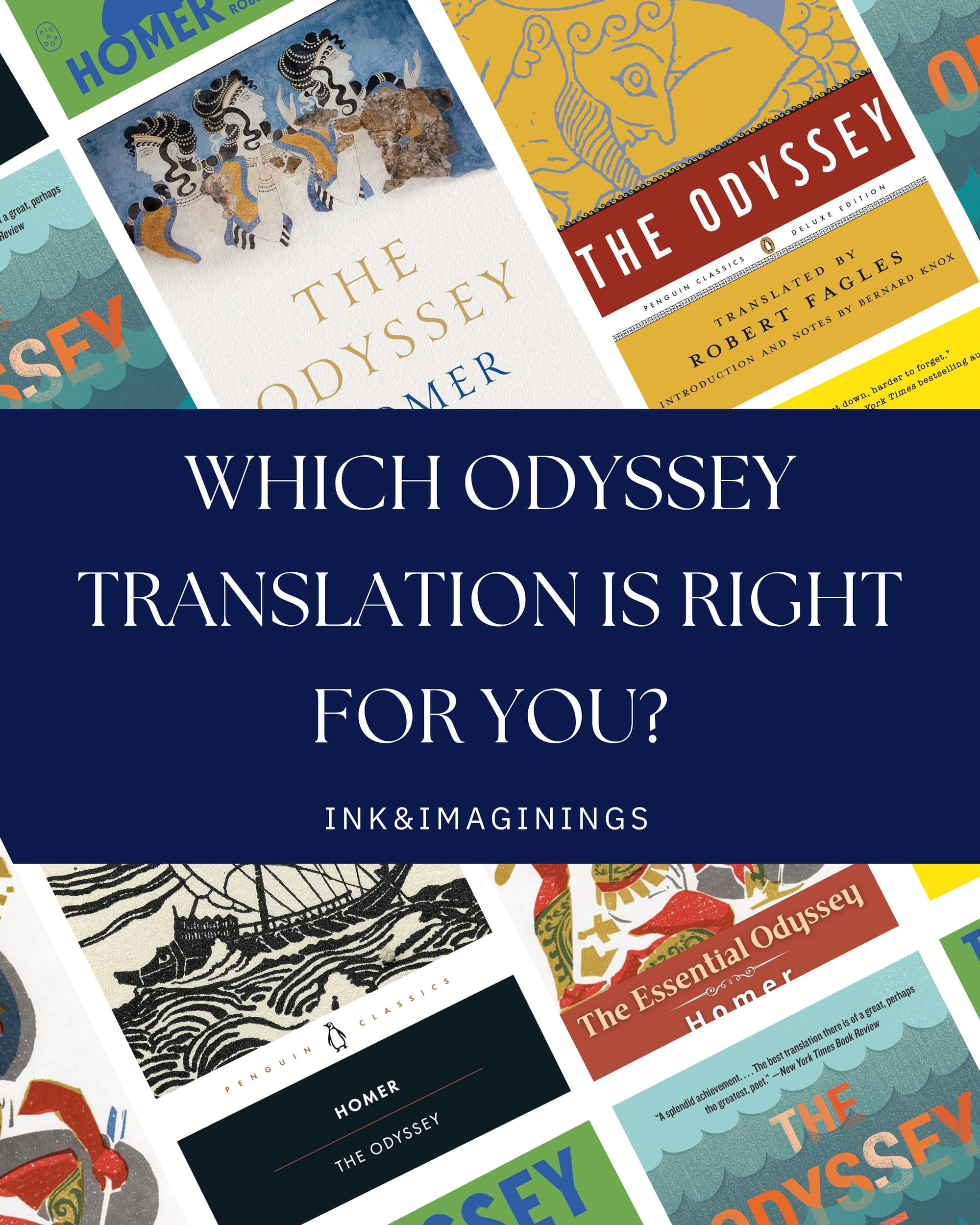
Here is a thing most people do not realize until they are standing in the bookstore holding four different copies of the Odyssey: the translation you choose completely changes the book you get. Same ancient poem, wildly different reading experience. Pick the wrong one for you and it feels like homework. Pick the right one and it is one of the best stories ever told.
With Christopher Nolan's film sending everyone back to Homer, a lot of us are buying our first Odyssey, so let me make this easy. Here is a simple guide to the major translations, who each one is for, and how to pick the one you will actually not only finish but enjoy.
The Short Answer
If you do not want to read the whole guide, here is the cheat sheet:
- Brand-new to the Odyssey and want it clear and quick? Read Emily Wilson.
- Want the big, cinematic, movie-night version? Read Robert Fagles.
- Here for the gorgeous poetry above all? Read Robert Fitzgerald.
- A student or purist who wants it closest to the original Greek? Read Richmond Lattimore.
- Want it punchy, blunt, and great read aloud? Read Stanley Lombardo.
- Intimidated by poetry and want it to read like a novel? Read the E.V. Rieu prose version.
Need more? Here is the fuller in depth version, so you can match the book to yourself with confidence.
First, Why the Translation Matters This Much
The Odyssey was composed in ancient Greek roughly 2,700 years ago, which means every English version you can buy is one translator's interpretation. They are all working from the same poem, but they make very different choices about tone, rhythm, and how modern to sound. There is no single "real" Odyssey in English. There are many, and they genuinely feel like different books.
The fastest way to see this is the very first line, where the poem introduces Odysseus. Watch how differently two translators handle the exact same Greek:
Emily Wilson: "Tell me about a complicated man."
Robert Fagles: "Sing to me of the man, Muse, the man of twists and turns."
Same hero. Wilson is spare, modern, and psychological, pinning him down in a single word. Fagles is grand and old-world, calling on the Muse and stretching into a man of twists and turns. Neither is wrong. They are two different doors into the same world, and multiply that choice across 12,000 lines and you can see why picking your translation matters.
It shows up in the small moments too. In the famous scene where Odysseus tricks the Cyclops by telling him his name is "Nobody," so that when the giant later screams for help no one comes, the translators even handle the fake name differently. Fagles keeps it plain as "Nobody," while Wilson reworks it into "Noman" so the wordplay still lands in English. Tiny choice, but it tells you exactly how each translator thinks about their job: Fagles keeps the drama simple and direct, Wilson works to make the cleverness survive the translation into modern English.
The Major Translations, and Who Each One Is For
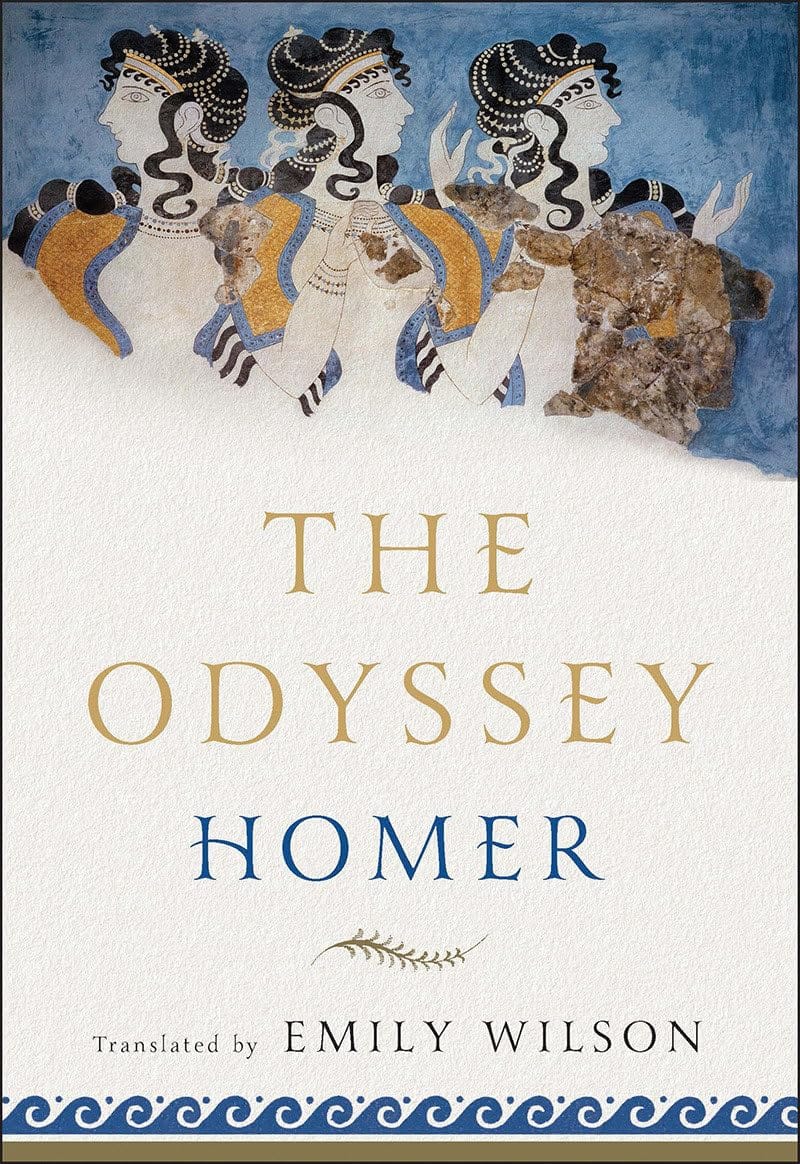
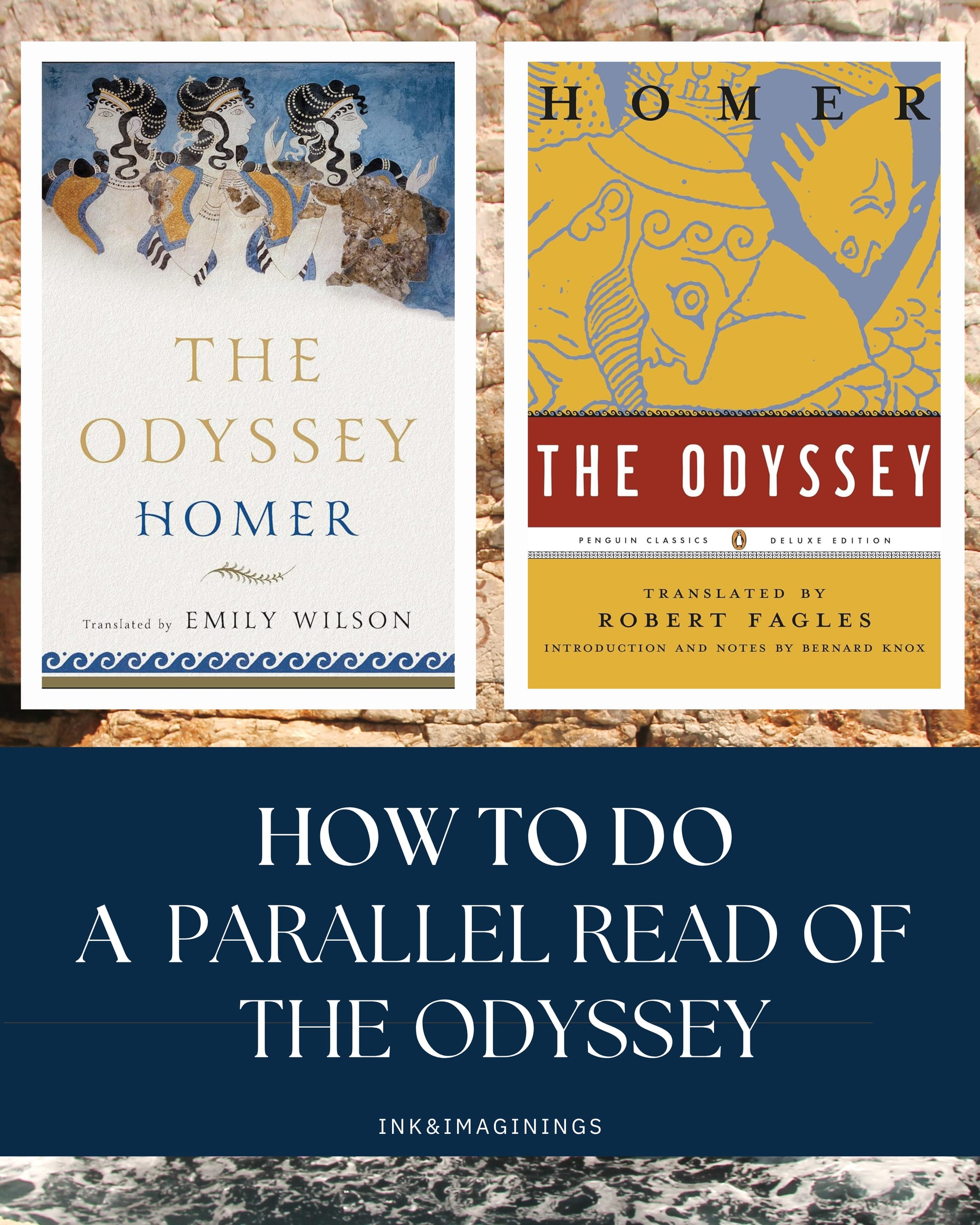
Emily Wilson (2017): Best for First-Time Readers
If you have never read the Odyssey and you want to actually enjoy it, start here. Wilson's translation is clear, fast, and modern. She writes in tight, regular lines that move quickly, and she never buries the story under fancy language. She is also honest about the poem's darker corners, including how it treats its enslaved women, which gives her version a bracing, contemporary edge.
Her famous opening, "Tell me about a complicated man," tells you everything about her approach. It is plain, it is human, and it pulls you straight in. If you want the easiest and most immediate way into the poem, this is my top pick, and the audiobook read by Claire Danes is wonderful.
Read Wilson if: you want clarity, speed, and a modern voice. Find it on Amazon or Bookshop.
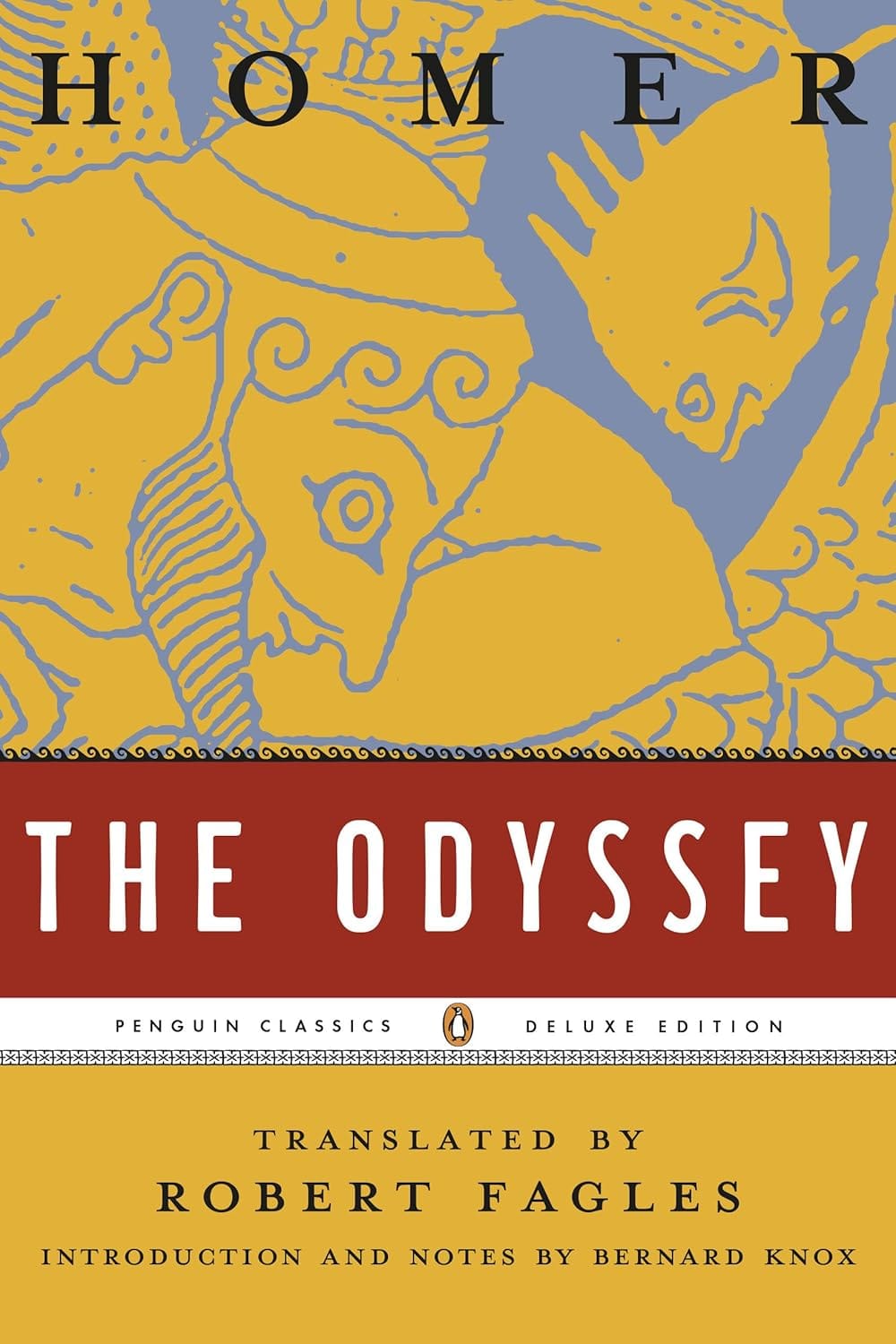
Robert Fagles (1996): Best for the Epic Film Experience
Fagles is the version most people (myself included) read in school over the last thirty years, and for good reason. His translation is dramatic, cinematic, and sweeping, written in rolling free verse that reads like an epic film. His opening, "Sing to me of the man, Muse, the man of twists and turns," has all the grandeur and momentum you want from a hero's tale.
This is the crowd-pleaser, and it pairs beautifully with a big-screen adaptation because it already feels like a movie on the page. The audiobook narrated by Ian McKellen is a genuine event. If you want spectacle and emotional heat, Fagles delivers.
Read Fagles if: you want drama, grandeur, and a version that feels like cinema. Find it on Amazon or Bookshop.
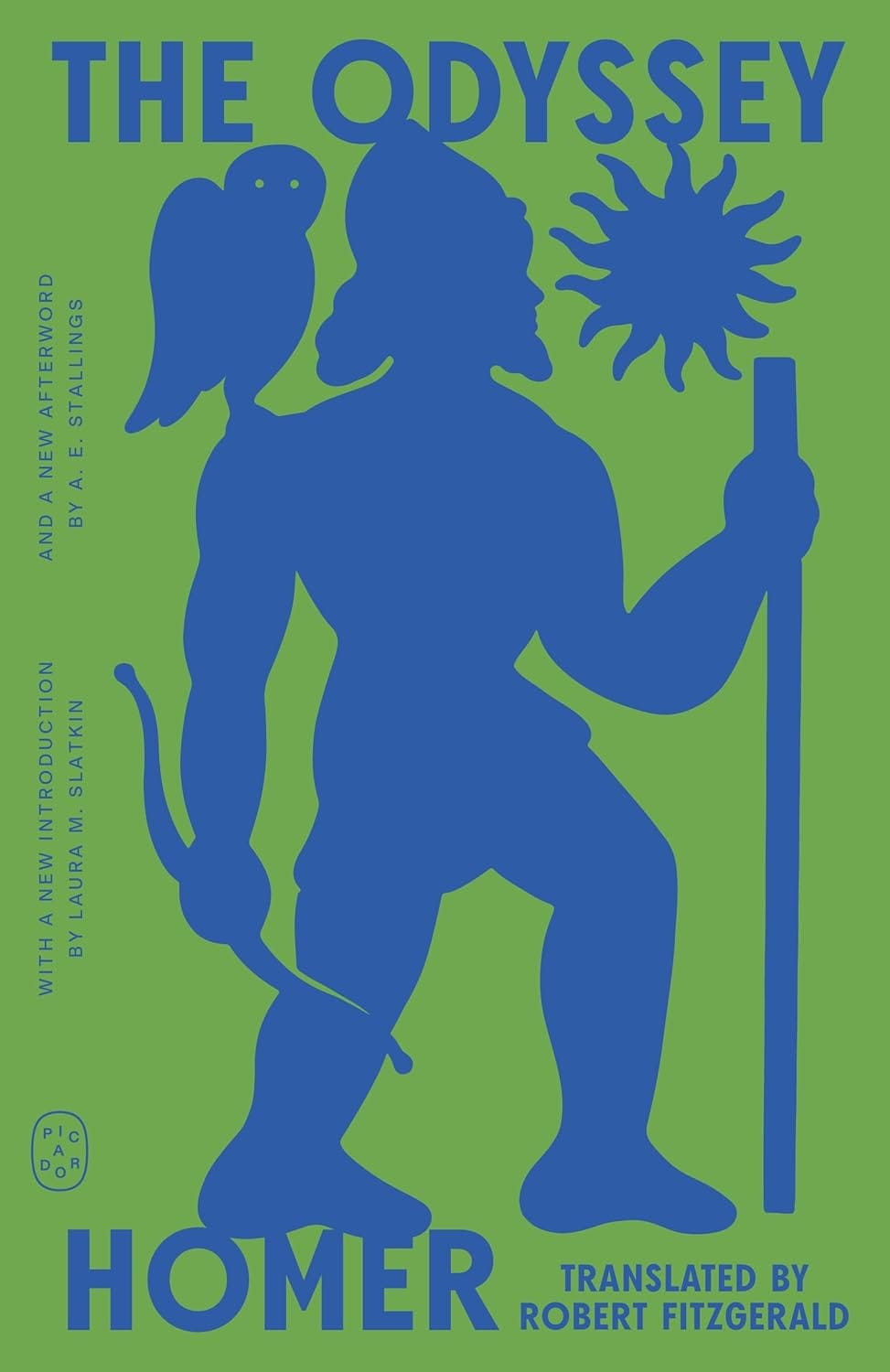
Robert Fitzgerald (1961): Best for Poetry Lovers
For decades, Fitzgerald's was the literary standard, and it is still the most beautiful. It is lyrical, elegant, and deeply attentive to the poem as poetry, with lines you will want to read twice just for the sound of them. His opening, "Sing in me, Muse, and through me tell the story of that man skilled in all ways of contending," shows you what you are getting with this translation perfectly.
The tradeoff is pace. Some readers find Fitzgerald a touch cool or slow next to Wilson and Fagles. But if what you love most is gorgeous language, this is the one for you.
Read Fitzgerald if: you read for beauty and do not mind a slower pace.
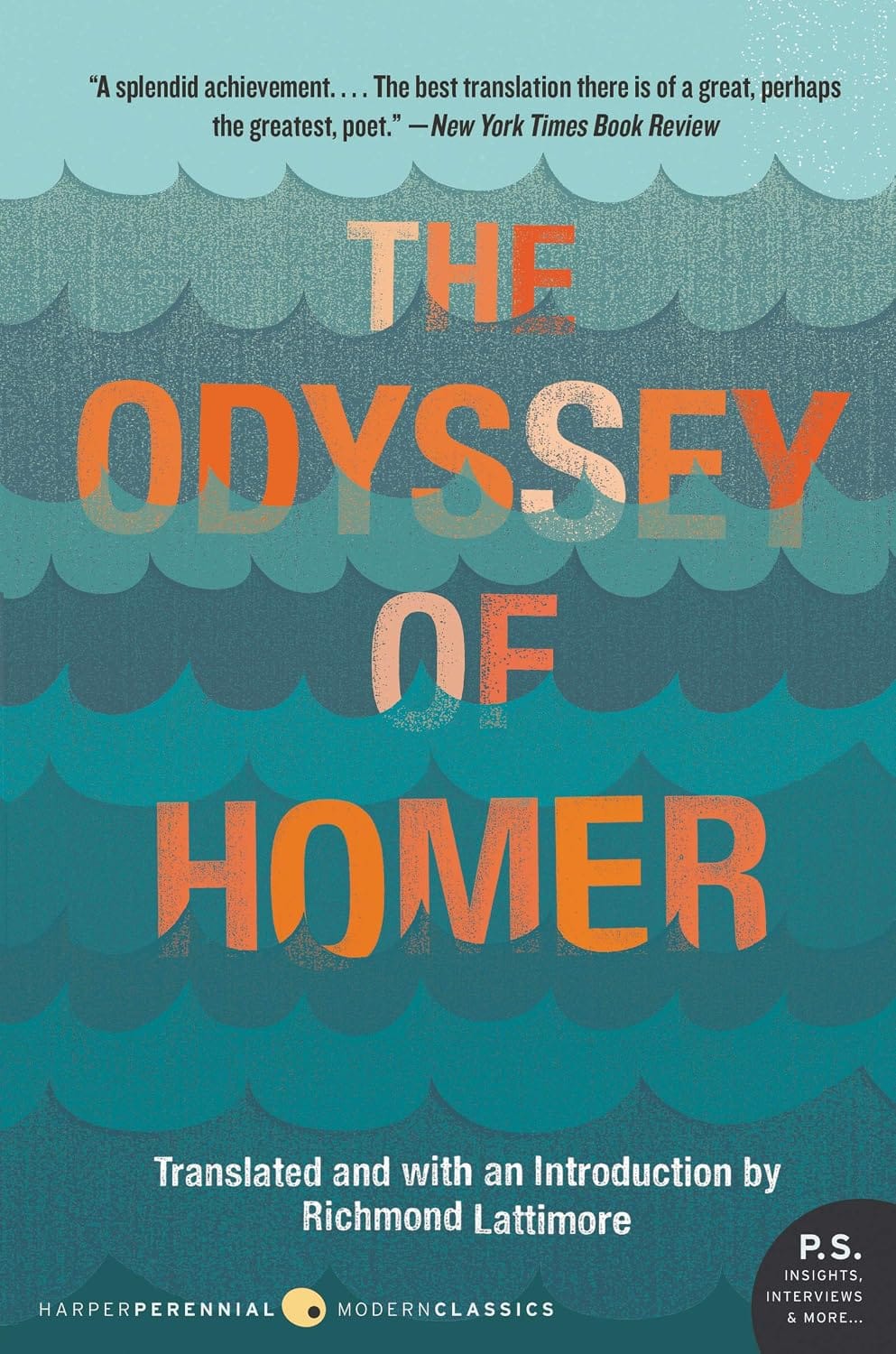
Richmond Lattimore (1965): Best for Students and Purists
If you want the version that stays closest to the original Greek, Lattimore is the scholar's choice for a reason. He preserves Homer's rolling six-beat lines and the repeated phrases, the "wine-dark sea" and "rosy-fingered dawn," that give the poem its ancient rhythm. His opening, "Tell me, Muse, of the man of many ways," keeps that formal, faithful feel.
Because it sticks so close to the structure of the Greek, Lattimore's is more demanding and slower going. If you are studying the poem or you want the truest sense of how Homer actually sounds, this is your version.
Read Lattimore if: you want maximum accuracy and do not mind working a little (or a lot) harder.
Stanley Lombardo (2000): Best for Reading Aloud
Lombardo's translation is lean and blunt. Written in a contemporary American style that hits hard and moves fast. He strips away all ornamentation and gives you a punchy, direct Odysseus. His striking opening, "Speak, Memory," announces right away that this is not your grandfather's Homer.
It is fantastic read aloud and a favorite for performance, though a few readers find it too casual for such an old poem. If you like your classics stripped down and energetic, Lombardo is a blast.
Read Lombardo if: you want speed, punch, and a version perfecting for reading aloud.
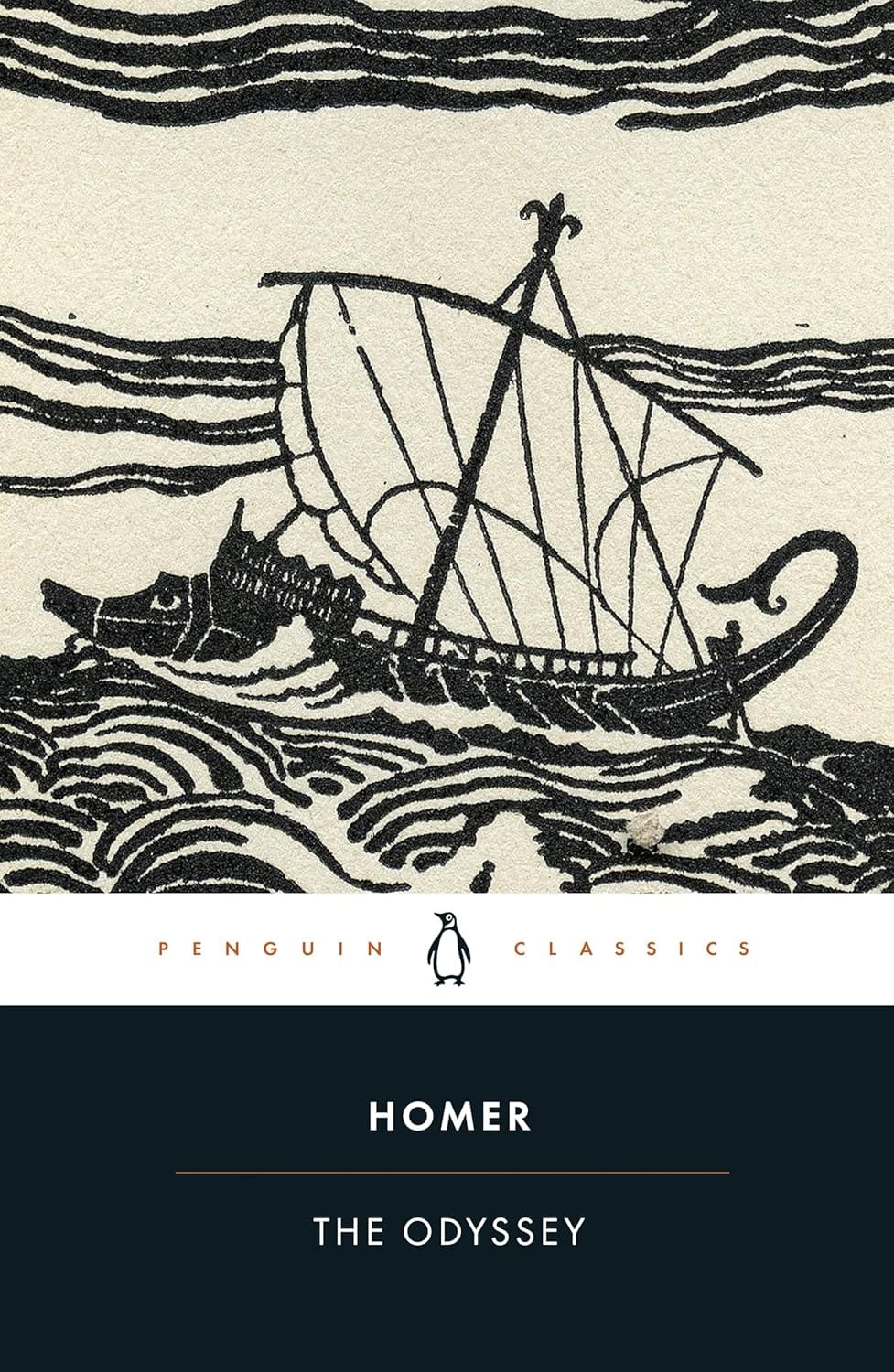
E.V. Rieu (1946): Best if Poetry Is Not Your Thing
Here is the one nobody tells you about. Rieu's translation is written in prose, not verse, which means it reads more like a novel. It was the very first Penguin Classic ever published, and it has gently introduced the Odyssey to more nervous readers than any other version. If lines of poetry make your eyes glaze, this removes that barrier entirely and just tells you the story.
It is not the most thrilling language on this list, but it is the most frictionless. For a lot of readers, the best Odyssey is the one you actually finish, and Rieu makes finishing easy.
Read Rieu if: you find poetry intimidating and want it to read like a story.
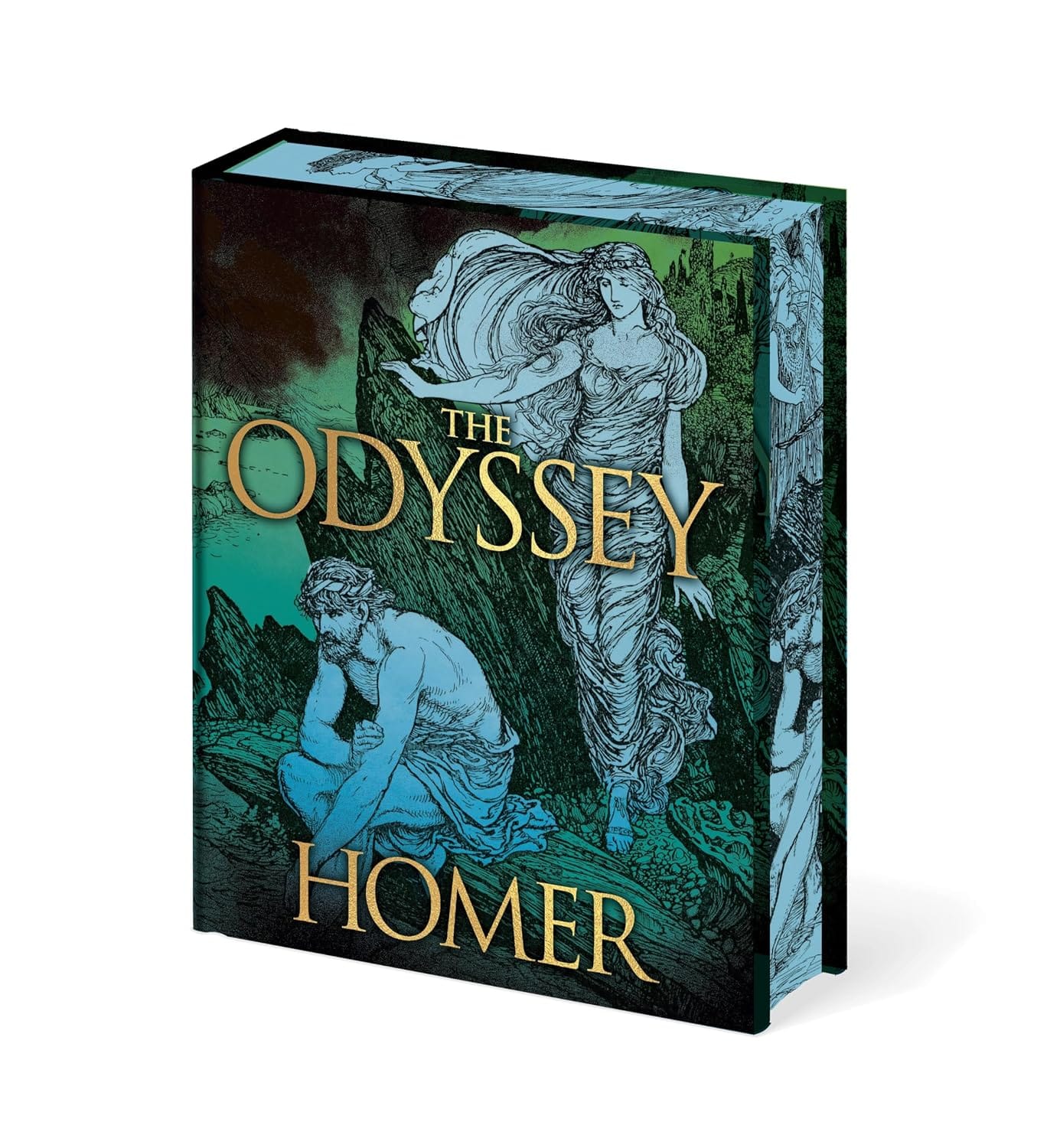
For Your Shelf: The Collector's Edition
Not every reason to buy the Odyssey is about the translation. Sometimes you just want a gorgeous object, one that looks like the three-thousand-year-old epic it holds. If that is you, this is your pick.
This magnificent hardback edition presents Homer's legendary epic in a form worthy of it, with deluxe cover embossing, printed page edges, and stunning neoclassical illustrations throughout. Between the gold embossed cover design, the beautiful page-edge artwork, and the illustrated endpapers, it is the kind of book you leave out on display rather than tuck away on a shelf. It makes a wonderful collector's item, and an even better gift for the reader or myth lover in your life.
One honest note, so you buy it for the right reason: beautiful collector's editions like this one usually use a classic, older translation rather than the newest scholarship. So get it for the artwork, the binding, and the sheer joy of owning something this lovely, and if you also want the clearest modern read, pair it with a Wilson or a Fagles for the actual reading.
Buy this if: you want a stunning copy to display, gift, or treasure.
The Emily Wilson Controversy, Explained
You cannot talk about Wilson's translation right now without talking about the argument around it, especially since Christopher Nolan has publicly pointed to her version, singling out that "complicated man" opening as the one that captures his Odysseus. That spotlight has made hers the most talked-about, and most argued-over, Odyssey in decades. Here is the debate, briefly, so you can decide for yourself.
Two of her choices sit at the center. The first is that opening word, complicated. Older translations reach for grand, heroic language, the man of twists and turns, the man of many ways. Wilson deliberately goes plain and human. Critics say complicated shrinks a legendary hero down to a modern anti-hero and imports a contemporary sensibility the ancient poem never had. Her defenders say the original Greek word is genuinely slippery, and that a plain rendering honors that ambiguity rather than flattening it into false grandeur.
The sharper fight is over the enslaved women. In the poem's final books, a group of young enslaved women in Odysseus's household are hanged. Many older translators used derogatory terms to describe them. Wilson translates the Greek simply as "girls," which is closer to the neutral original word, and the effect is to make their killing land as the horror it actually is instead of something the reader is comfortable gliding past. Critics call this a feminist rewrite of an ancient text. Her defenders point out that she is not adding anything at all: she is removing the editorializing that earlier translators layered on, and letting the brutality already in the poem show through.
So the real question underneath the noise is simple. Should a translation preserve the grand, heroic tone people expect from Homer (even if it was in fact not from Homer), or should it render the Greek as plainly and honestly as possible, even when that is uncomfortable?
Wilson chose clarity and honesty, and whether that is a strength or an overreach is exactly what everyone is arguing about. My own take: it makes hers the most interesting Odyssey to read right now, and reading her next to an older version like Fagles is the best way to judge the debate for yourself.
A Quick Word on the Old Classics
You may also run into much older translations, and they are worth knowing about even if I would not start there. Alexander Pope's 1700s version in rhyming couplets is a gorgeous poem in its own right, though it sounds more like Pope than Homer. George Chapman's 1616 translation is the one that inspired the famous Keats poem. And Samuel Butler's Victorian prose version is free and easy to find online. These are lovely for the curious, but for a first read, one of the modern versions above will serve you far better.
Still Can't Decide? Pick by What You Want
If you are torn, ask yourself one question about what you want most:
- I want it easy and modern: Wilson
- I want it big and cinematic: Fagles
- I want it beautiful: Fitzgerald
- I want it accurate: Lattimore
- I want it fast and punchy: Lombardo
- I want it to read like a novel: Rieu
Honestly, there is no wrong answer here. The best translation is the one that makes you want to keep turning pages, and any of these will get you home to Ithaca.
Or, the Fun Option: Read Two at Once
Here is what I am actually doing, and I cannot recommend it enough if you love a project. I am reading Wilson and Fagles side by side, comparing the same passages in both, and it is the most fascinating way I have ever read a classic. Seeing the two different versions of every famous scene turns the poem into a conversation, and it teaches you to notice how framing changes meaning. If that sounds like your kind of thing, I wrote a whole guide with a free kit: How to Read The Odyssey in Two Translations at Once.
What About the Audiobook?
The Odyssey began as a story performed out loud, so listening to it is not cheating, it is arguably the most authentic way to experience the poem. Two audiobooks stand out. Emily Wilson's translation is read by Claire Danes, whose warm, clear narration matches the modern feel of the text and makes it wonderfully easy to follow. Robert Fagles's version is read by Ian McKellen, and it is exactly as magnificent as that sounds, a grand, theatrical performance that turns the poem into an event.
My favorite trick, and the one I use on busy weeks, is to read one translation on the page while listening to the other. You get two voices working at once, you cover the story twice with almost no extra effort, and you catch the differences between the translations without even trying. If you have a commute or you like to read with your hands busy, start with one of these two audiobooks and you cannot go wrong.
Frequently Asked Questions
What is the best Odyssey translation for beginners? Emily Wilson's. It is the clearest, fastest, and most modern, which makes it the easiest way into the poem for a first-time reader.
What is the most accurate Odyssey translation? Richmond Lattimore's is considered the closest to the original Greek, preserving Homer's meter and repeated phrases. It is more demanding to read, which is why it is favored by students and scholars.
Which Odyssey translation is best for the movie? Robert Fagles's cinematic, dramatic version pairs naturally with a big-screen adaptation, though Wilson's is the easiest quick read if you just want the story before opening night.
Do I need to read the Odyssey in verse? No. If poetry is not for you, the E.V. Rieu prose translation reads like a novel and tells the same story without a single line of verse.
Is the Emily Wilson translation good? Yes, it is excellent and widely praised, and it is my top recommendation for most new readers. It is clear, quick, and honest about the poem's harder themes.
Which translation should I read before seeing the Odyssey movie? If you want speed, read Wilson. If you want the epic feel that matches the film, read Fagles. Either one will have you fully ready.
Which translation of the Odyssey is best? There is no single best translation, because the right one depends on what you want from the read. For most people, especially first-timers, Emily Wilson's 2017 version is the best overall pick: clear, fast, modern, and genuinely fun. If you want grandeur and drama, Robert Fagles is the favorite. If you want beauty, reach for Fitzgerald; if you want the closest thing to the original Greek, Lattimore. "Best" really just means best for you.
Which translation is Christopher Nolan using? Nolan has pointed to Emily Wilson's 2017 translation, telling Empire that his Odysseus comes from the version that opens "Tell me about a complicated man." So if you want the reading that shaped the film's take on the character, Wilson is the one to pick up. Keep in mind that a movie adapts the whole story rather than filming a single translation word for word, so expect Nolan to reshape and reimagine as he goes.
Does it matter which translation of the Odyssey you read? More than you would expect. Every translation is an interpretation, with its own tone, pace, and personality, so two versions of the same scene can feel like different books. A modern translation like Wilson's reads quickly and clearly, while a very literal one like Lattimore's is slower and more demanding. Picking the version that fits how you actually like to read is the difference between loving the poem and quietly giving up on it.
Which version of the Odyssey should I read? If you want one simple answer: read Emily Wilson. It is the easiest and most enjoyable way in for the vast majority of readers, and it is the version behind Nolan's film. If you already know you love sweeping, dramatic language, go with Fagles instead. And if poetry is not your thing at all, the E.V. Rieu prose version reads like a novel. You really cannot make a bad choice here.
What to Read Next
Picked your translation? Here is where to go next.
📚 The Odyssey Summary: The Full Story Explained Before the Movie: the whole plot in plain language, so you are ready either way.
📚 How to Read The Odyssey in Two Translations at Once: the parallel read, with a free kit.
📚 If You Loved The Odyssey, Read These: 25 Mythology Retellings: where to go once you finish.
📚 Circe by Madeline Miller: the witch from the Odyssey, given her own glorious novel. (coming soon)
📚 The Penelopiad by Margaret Atwood: the same story, told by the wife who waited. (coming soon)
Want a new great book picked for you every month? Try your first month of Book of the Month for $5
Want more guides like this one, plus honest takes on what is worth your time? Join the Weekly Bookmark, stay up to date and pick your next great book.
Ready to pick one up? My two favorites: Emily Wilson (Amazon | Bookshop) for a clear first read, and Robert Fagles (Amazon | Bookshop) for the epic experience.