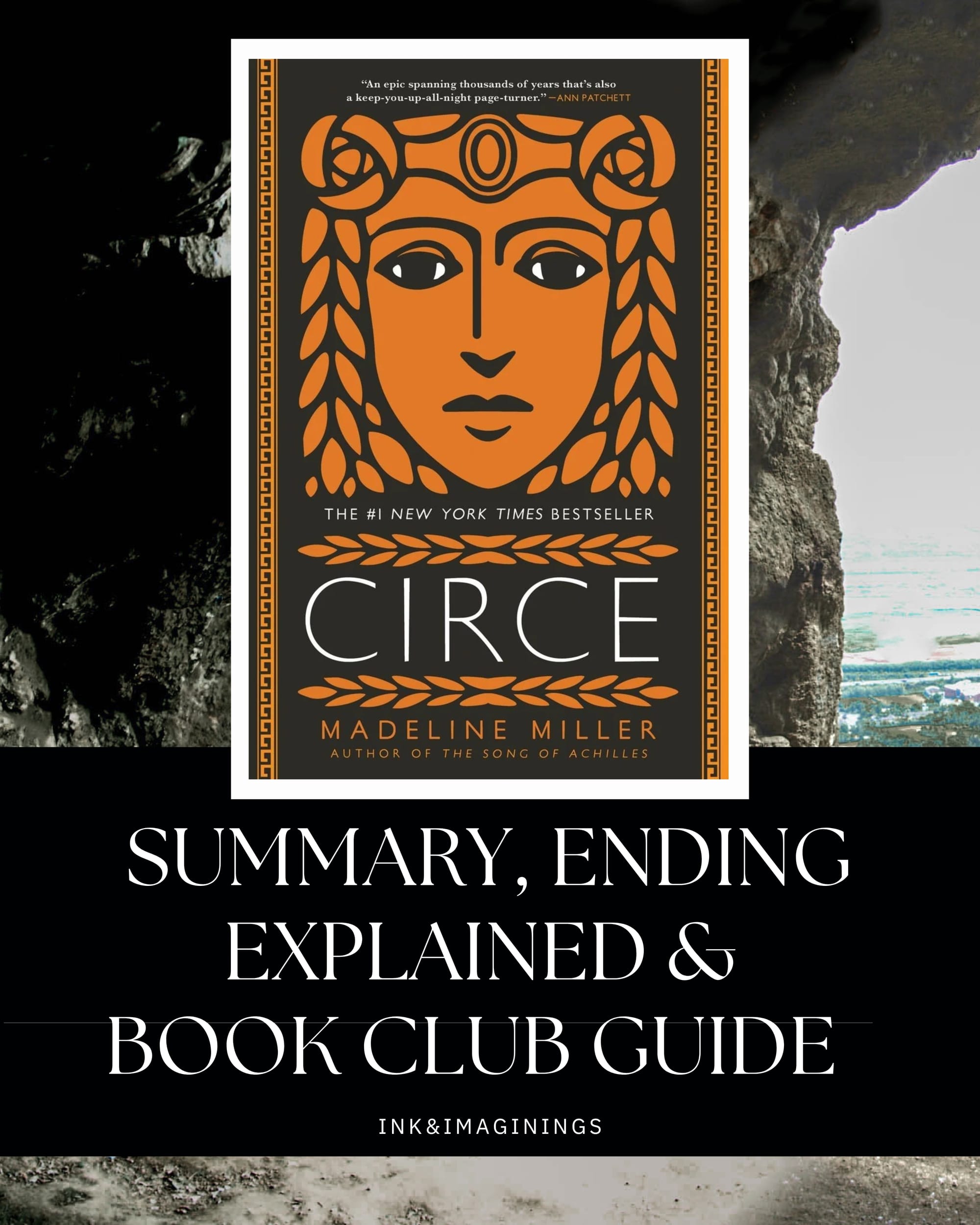
If there is one book that turned an entire generation of readers into mythology obsessives, it is this one. Circe took a minor witch from a single episode of The Odyssey, the one who turns Odysseus's men into pigs, and gave her four hundred pages of life so rich that she has quietly become one of the most beloved characters in modern fiction.
Whether you have just finished The Odyssey and cannot let go, or you keep seeing this cover everywhere and want to know if it lives up to the hype, this is your complete guide.
I will walk you through what the book is actually about, give you my honest take, explain the ending for those who want it, and hand you a stack of read-alikes and book club questions.
There will be a clear spoiler warning before we get into the ending, so you are safe until then.
Quick Facts
- Author: Madeline Miller
- Published: 2018 (Little, Brown and Company)
- Recognition: an instant number-one New York Times bestseller and a Women's Prize for Fiction finalist
- Length: around 400 pages
- Read it for: gorgeous prose, a slow-burn story of a woman coming into her power, and the book that launched the modern mythology wave
- Read it if you loved: The Odyssey, or any story about an overlooked woman who becomes someone to reckon with
What Circe Is About (Spoiler-Free)
Circe is the daughter of Helios, the mighty Titan who drives the sun across the sky, and a beautiful, cruel water nymph. Among the dazzling immortals of her father's halls, she is the disappointment: her voice is thin like a mortal's, her powers seem nonexistent, and her own family mocks her for it. She grows up lonely, watching gods behave monstrously and learning early that power is the only thing they respect.
Then Circe discovers something none of the other gods possess. She has a gift for pharmakeia, witchcraft, the patient art of transforming the world with herbs and will. It is a power you build rather than inherit, and it terrifies the gods precisely because any determined person could learn it. When her witchcraft finally frightens the Olympians, Zeus banishes her to a deserted island called Aiaia, alone, forever.
What happens next is the heart of the book. In exile, Circe becomes herself. She perfects her craft, tames wild animals, and crosses paths with some of the most famous figures in all of myth: her monstrous nephew the Minotaur, the inventor Daedalus, the witch Medea, and eventually a weary, clever mortal named Odysseus, on his long journey home.
Through it all, Circe wrestles with the question: what do you do with power once you have it? Is it better to be a god who never changes or a mortal who lives and loses and grows? And can a woman who has been underestimated her whole life finally choose her own life?
Along the way, Circe learns that her power has a shadow. Her very first act of witchcraft is one of love and jealousy. She transforms a poor fisherman named Glaucos into a god, and then, when he spurns her for a beautiful nymph. She turns her rival, Scylla, into the six-headed monster who will terrorize sailors for generations.
It is a mistake she can never undo, and it teaches her early that creation and destruction are the same craft. That knowledge shadows everything that follows, from helping her sister Pasiphae bring the Minotaur into the world to the parade of men who land on her shore expecting a beautiful woman alone and defenseless, and learn otherwise.
This is not a fast-paced adventure novel. It is a character study with the patience of a long exile and the sweep of three thousand years of myth, and it will completely suck you in.
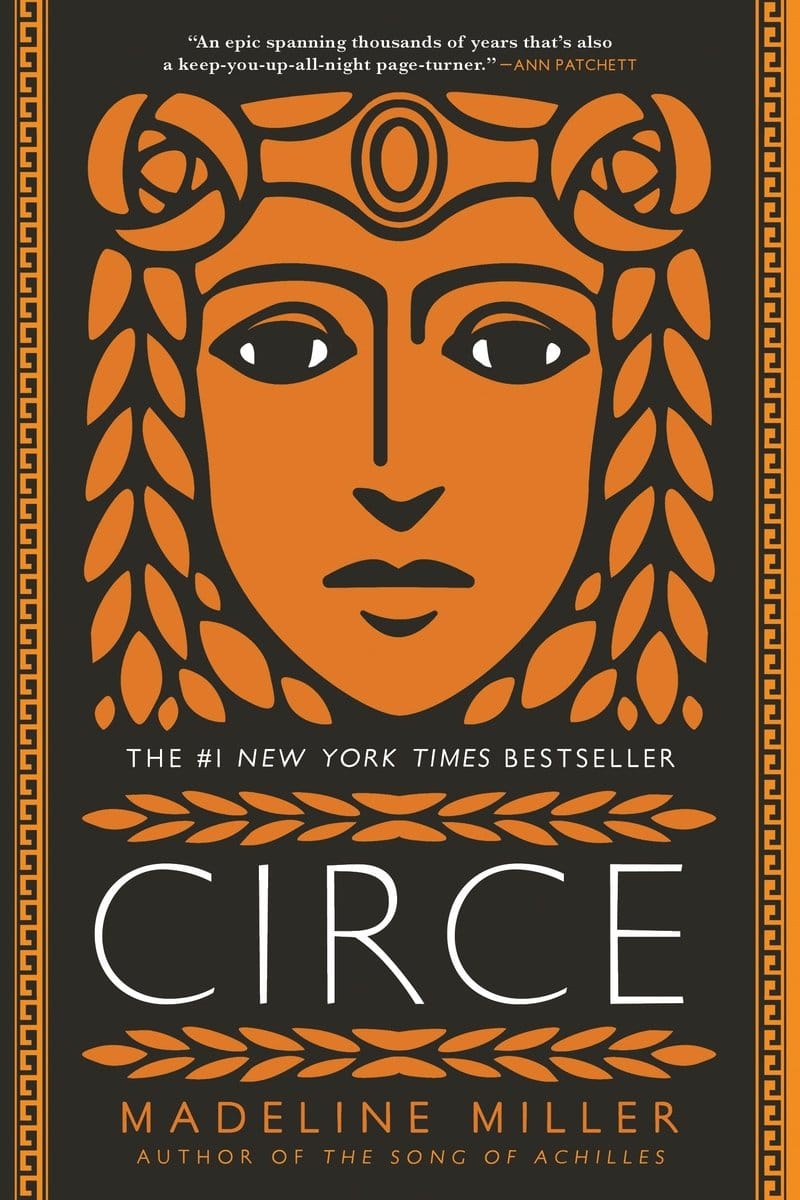
Circe By Madeline Miller Book Cover
Ready to read it? You can find Circe here: Amazon | Bookshop. (Affiliate links, at no extra cost to you.)
My Honest Take
Let me be straight with you, because that is what I am here for. Circe deserves all the hype, and then some.
Madeline Miller writes some of the most beautiful prose in contemporary fiction. She takes a figure the ancient poets treated as a footnote, a dangerous woman to be outwitted, and turns her into someone whose loneliness, anger, and hard-won strength feel completely modern and relatable. By the end you know Circe better than you know most real people, and you ache for her.
What I love most is that this is a story about becoming. Circe is not born powerful or wise. She earns everything. Slowly. Through work and grief and stubbornness. Watching her grow from a mocked, overlooked girl into a woman who frightens gods is deeply satisfying. It is a feminist story that never lectures, because it simply lets you live beside a woman who is finding out just what she is capable of.
A quick word on the prose, because it is the thing people either adore or leave over. Miller writes in long, luminous sentences full of sea light and herb smoke, and she trusts you to sit inside a mood rather than rushing to the next event. For most readers that patience is the whole pleasure. If you read primarily for plot and get restless in quieter passages, the first stretch may test you. I promise it is worth pushing through.
Now let's discuss fit because I would rather you read the right book at the right time. Circe is a slow burn. It is introspective and episodic, moving through centuries rather than racing through a single plot, and if you come in expecting nonstop action you may find the first stretch hard to get through. Trust the pay off, the emotional payoff in the final chapters is enormous. If you want gorgeous writing, a heroine you will never forget, and a story that rewards patience, nothing does it better.
Why Circe Became a Phenomenon
It is worth understanding why this particular book hit the way it did. Circe arrived in 2018, just as readers were hungry for old stories told from new angles, and it handed the genre a template that has defined it ever since.
Take a woman the myths flattened into a villain or a footnote, and give her the microphone. It became a number-one bestseller, a book club staple, and a BookTok obsession. Nearly every retelling on your radar right now, from A Thousand Ships to Clytemnestra to the whole wave of 2025 releases, is working in the space Circe opened up. If you have ever wondered why your feed is suddenly full of goddesses and monsters getting their side of the story, this is the book that started it.
Themes to Watch
- Power that is built rather than inherited, and why that terrifies those who inherit their power
- The choice between immortality and a mortal life that actually means something
- Motherhood, and raising a child in a world that wants to take them from you
- What it costs a woman to stop letting herself be underestimated
The Ending Explained (Spoilers Below)
Spoiler warning. Everything from here reveals major plot points, including how the book ends. If you have not finished, skip ahead to the read-alikes.
After Odysseus leaves Aiaia, Circe discovers she is pregnant, and she raises their son, Telegonus, alone on the island. Motherhood nearly breaks her. The goddess Athena wants the boy dead, and Circe spends years fighting off that threat with every scrap of witchcraft she has.
When Telegonus grows up, he sails to Ithaca to find his father, carrying a spear tipped with the venom of a monster. In a terrible accident that fulfills an old prophecy, he kills Odysseus without meaning to. Telegonus returns to Aiaia, and with him come Odysseus's widow, Penelope, and his other son, Telemachus. Circe and Telemachus, both weary of gods and grand destinies, slowly fall in love.
The novel closes on the choice the entire book has been building toward. Circe brews one last working, a potion that will strip her immortality and make her mortal. She envisions a human life ahead of her: growing old, living and losing alongside Telemachus, and finally dying, like the mortals she has always found more interesting than the gods.
The final pages leave her lifting the cup, choosing an ending over an eternity. It is Circe deciding, after three thousand years, that a life which can be lost is the only one worth living. Whether she drinks is left as the last hopeful image for the reader to decide and it is perfect.
Read-Alikes: If You Loved Circe
You are not going to want to stop, so here is exactly where to go next. For the full run of options, see my guide to mythology retellings to read after The Odyssey.
The Song of Achilles by Madeline Miller is the obvious next step, Miller's earlier novel and an even more devastating love story. A Thousand Ships by Natalie Haynes widens the lens to every woman of the Trojan War. Ariadne by Jennifer Saint gives you another overlooked princess who makes a hero's victory possible. Clytemnestra by Costanza Casati brings the same fierce energy to a queen bent on revenge. And if it is specifically the Odyssey connection you love, The Penelopiad by Margaret Atwood and Claire North's Ithaca trilogy take you straight back to Ithaca and Penelope.
Book Club Discussion Questions
- Circe is mocked by her family for seeming powerless, then becomes the most feared witch in the world. How does the book define real power, and how is it different from the gods' idea of it?
- Witchcraft in the novel is something Circe works for rather than something she is born with. Why does that frighten the gods so much, and what does it suggest about who is allowed to have power?
- Circe spends the book among immortals but is drawn again and again to mortals. What does she see in a mortal life that the gods cannot?
- Motherhood transforms Circe. How does raising Telegonus change her, and what does she learn from how ferociously she protects him?
- Circe is punished for turning men into pigs, but the novel asks you to question who the real monsters are. How did the book change your sense of her as a villain?
- The ending leaves Circe about to choose mortality. Do you think she drinks the potion, and why did Miller leave it there?
- If you have read The Odyssey, how did seeing Circe from the inside change the way you read her episode in the poem?
- Circe's first great act of power, turning Scylla into a monster, is an act of jealousy she can never undo. How does the book treat the idea that our worst mistakes can also be the making of us?
- The gods in the novel are beautiful, powerful, and often cruel, while the mortals are fragile and brief. Which characters did you find yourself admiring, and what does that say about the book's values?
Frequently Asked Questions
Do I need to read The Odyssey first? No. Circe stands completely on its own and gives you everything you need. That said, if you have read The Odyssey, her chapters with Odysseus land even harder.
Is Circe a standalone or part of a series? It is a standalone. Madeline Miller's other novel, The Song of Achilles, is set in the same mythic world but tells a completely separate story.
Is Circe young adult? No, it is adult literary fiction, though it is very accessible and widely loved by younger readers too. It deals with mature themes, including a scene of sexual violence, handled without gratuitous detail.
Is Circe worth the hype? Yes. It is one of the rare books that is both a critical darling and a genuine crowd-pleaser, and it is the ideal entry point to the whole mythology-retelling genre.
How does Circe end? She chooses to give up her immortality for a mortal life. See the ending section above for the full explanation.
How is Circe connected to The Odyssey? Circe appears in Book 10 of The Odyssey as the witch who turns Odysseus's men into pigs and then becomes his lover and ally for a year. Miller's novel tells that same encounter from Circe's side, and it makes up one memorable stretch of a much longer life.
Is Circe a feminist retelling? Yes, though it never lectures. It simply lets you live inside the mind of a woman who spends three thousand years being underestimated, and lets her power and her choices speak for themselves.
What to Read Next
Still in your mythology era? Keep going.
📚 If You Loved The Odyssey, Read These: 25 Mythology Retellings: the full shelf, grouped by where your obsession is pointing.
📚 How to Read The Odyssey in Two Translations at Once: the parallel read that started all of this, with a free kit.
📚 The Song of Achilles by Madeline Miller: read Miller's other masterpiece next, and bring tissues.
📚 A Thousand Ships by Natalie Haynes: the women of the Trojan War, all of them.
📚 Ariadne by Jennifer Saint: another princess the myths forgot.
Already read one of these? Come back and check out the full guides: → Mythology Retellings to Read After The Odyssey | The Odyssey Parallel Read | This Month's New Book Releases
Want a new great book picked for you every month? Try your first month of Book of the Month for $5
Want more guides like this one, plus honest takes on what is worth your time? Join the Weekly Bookmark, where I do the reading and thinking so you can just pick your next great book.