⚠️ MAJOR SPOILER WARNING: Full spoilers for Yesteryear by Caro Claire Burke. If you haven't read it yet, this will ruin every twist. You've been warned.
Yesteryear is the book everyone is going to be talking about this spring and for good reason. Caro Claire Burke's debut takes the tradwife influencer phenomenon and asks: what happens when the curated fantasy of pioneer domesticity becomes literal? The answer is darker, funnier, and more unsettling than you'd expect.
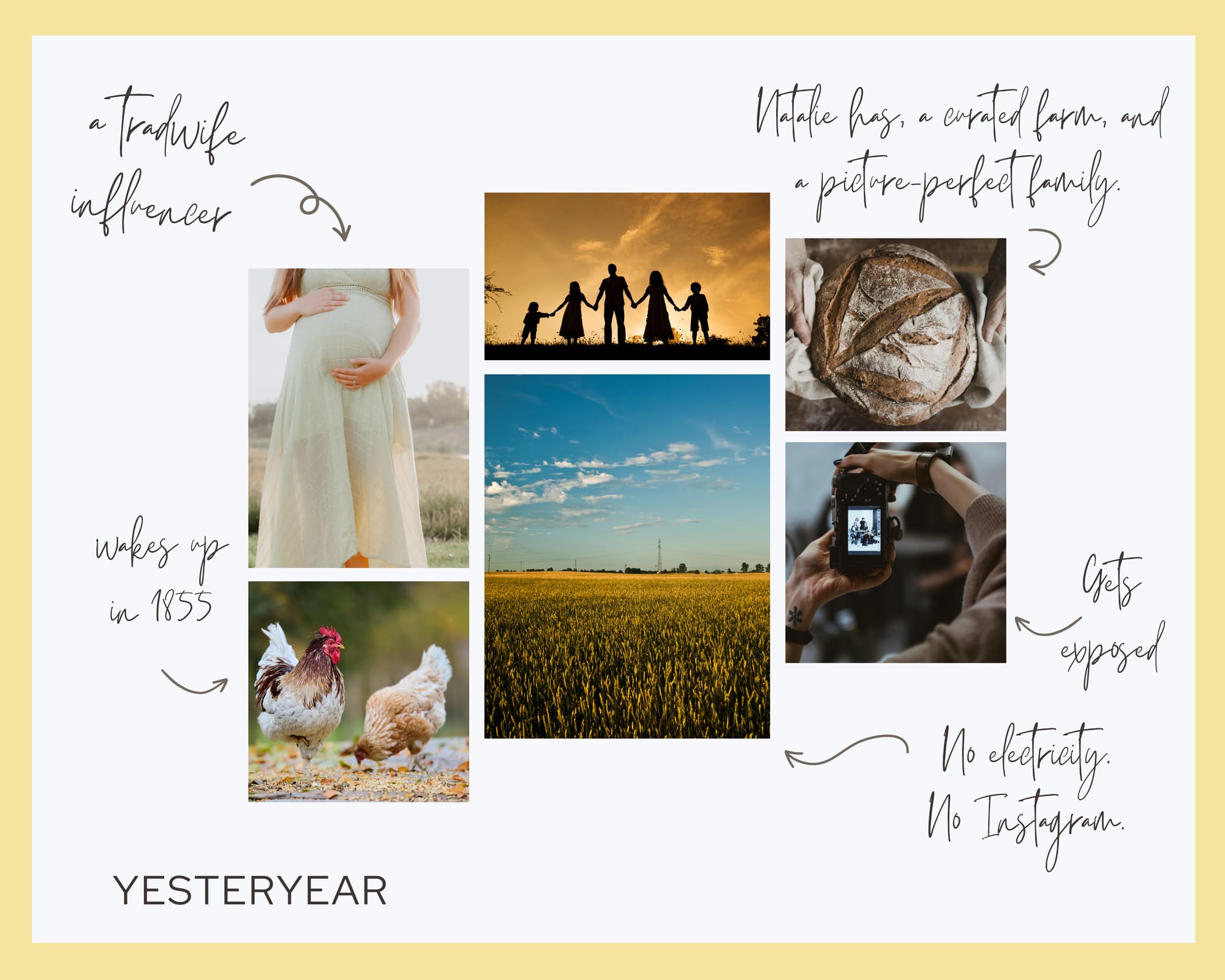
A GMA Book Club pick with a film adaptation already confirmed (Anne Hathaway producing and starring), Yesteryear has the kind of premise that sells itself: a tradwife influencer with millions of followers wakes up in what appears to be 1855, trapped in a pioneer version of her own life. Is it a reality show? Time travel? A test from God? The answer, when it comes, is so much more devastating.
This guide covers the full plot summary, every major character, the ending explained, and my honest review. If you want a more in depth option check out my chapter by chapter guide.
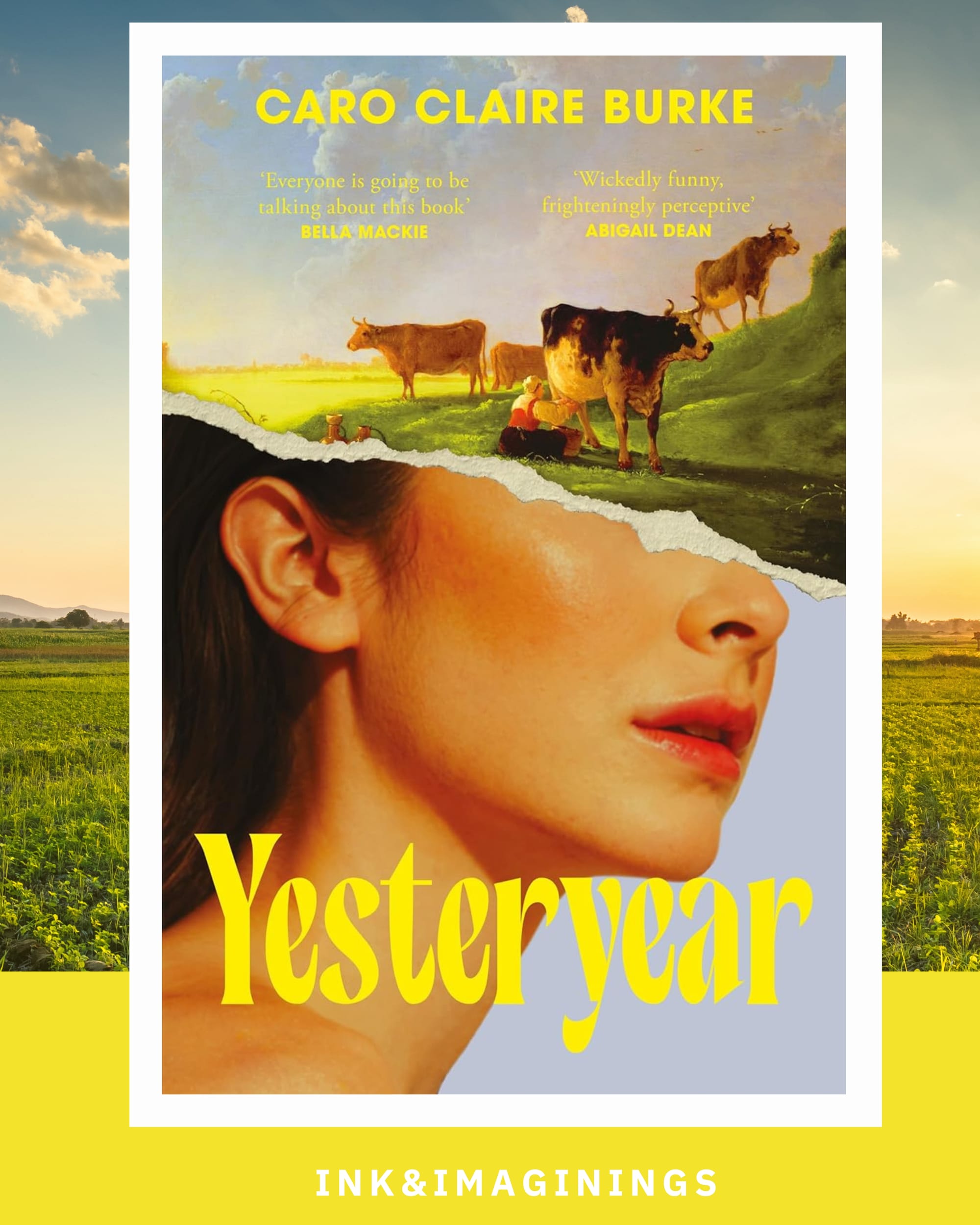
Yesteryear by Caro Claire Burke Book Cover
📖 Buy on Amazon | Buy on Bookshop.org | 🎧 Listen on Audible
Yesteryear Plot Summary
The Setup: Natalie's Perfect Life
Natalie Heller Mills is perfect at being alive. Five million Instagram followers (later eight million), pregnant with her sixth child, running a curated farm in Idaho's mountains.
She films sourdough tutorials, sells branded cookware, and shapes every frame of her family's public image. Behind the scenes: nannies, producers, industrial-grade kitchen equipment, and a husband who is the Republican equivalent of a Kennedy.
But the facade is cracking. Her producer Shannon has been sleeping with her husband Caleb. Her twelve-year-old daughter Clementine is asking questions she shouldn't be asking. And Caleb's senator father Doug who founded the whole thing is displeased. Natalie absorbs it all with a frozen smile, already calculating.
Waking Up in 1855
Natalie opens her eyes to the freezing cold and an unfamiliar quilt. Her phone is gone. She stumbles through a hallway identical to her own into a fire-lit kitchen where four children in homespun clothing sit watching her. Children who resemble hers but aren't hers. A teenage girl named Mary braids a younger girl's hair. The little one, Maeve, calls her Mama.
Carved into the doorframe: height measurements ending in MAMA, 1855. Outside, a man who looks like a harder, older version of her husband orders her inside. When Natalie runs, he catches her and slaps her unconscious. She wakes in bed with no phone, no mirror, and no baby in her womb. Her pregnancy has vanished.
Natalie's Theories
Natalie cycles through explanations. When she tries to escape, she steps into a steel animal trap that snaps shut around her ankle. Mary stitches the wound with a thick needle and coarse thread while Natalie passes out twice. During recovery, Natalie finds a small black pebble that resembles a broken lapel microphone. She constructs a new theory: she's a contestant on a reality television show. Someone, somewhere, must be watching.
This becomes her coping mechanism. The same one her mother taught her years ago. Imagine you're being watched. Imagine an invisible audience cheering you on. It's the advice that launched her entire career, and now it's the delusion that keeps her functional in a world she can't explain.
The Backstory: How Natalie Was Built
The novel alternates between the pioneer present and Natalie's backstory. We learn how she got here:
She arrived at Harvard on a full scholarship, a sheltered Idaho girl with unshakable contempt for the secular world. She met Caleb Mills at a Christian group meeting. He was sweet, aimless, and the youngest son of a powerful senator. He looked at her like she was fascinating. No one had ever found Natalie fascinating before.
They married. The wedding night was a disaster. Clementine was born when Natalie was twenty, and postpartum darkness nearly destroyed her. Her mother's advice, imagine an audience cheering you on, became her survival strategy. She began performing motherhood rather than enduring it. The strategy worked so well she would never be able to stop.
Caleb refused every job. His father Doug privately offered Natalie five million dollars for a cattle ranch in Idaho on the condition that she keep having babies. She signed. Buried in the paperwork: Caleb's name alone on the deed. Natalie purchased the project of a lifetime, but the receipt belonged to someone else. In reality she owns nothing.
The Rise of Online Natalie
For years her Instagram stagnated. Then a popular livestream host featured her account, and overnight she gained three hundred thousand followers. She developed a split persona. Online Natalie was always smiling, wholesome, and effortlessly maternal. The gap between the woman on screen and the woman off it widened each day, but the money was real, and it was hers.
Shannon arrived at nineteen, a pink-haired dropout. Her filmmaking talent transformed the account. But Shannon also turned her camera on what Natalie hid: the twenty farmworkers, the pesticide barrels, the children's misery off-screen. She grew close to Clementine, eventually slipping her a phone.
The Scandal
Caleb confessed he was in love with Shannon. Natalie confronted Shannon, who delivered a devastating assessment: Natalie doesn't have a family, she has a business. Something snapped. Natalie straddled Shannon on the bed, hands locked around her throat, squeezing until her knuckles went white.
Shannon survived. Then she appeared on national television in a prairie dress, tearful and poised, with footage Clementine had secretly recorded. Five million followers watched the curated world crack open. Doug's lawyers swarmed. Caleb slapped Natalie. Doug suggests a car accident on the mountain roads would be the simplest solution.
The Truth
In the pioneer world, Natalie escapes through snowy woods and stumbles upon a log cabin with the word MANOSPHERE etched above the door. Inside: a hot plate, ramen noodles, a mini-fridge plugged into an electrical outlet, a framed photo of her own family. A man sits with his back to her, peeling grocery store stickers off vegetables before dropping them into a wooden crate. He turns. He calls her Mama. It's Stetson, her grown son. Natalie runs away terrified and confused.
Then Clementine arrives in a red Subaru. The truth spills out:
Years ago, after the Shannon scandal, Natalie and Caleb stripped the ranch of all modernity and began raising toddler Mary in a fabricated pioneer world, telling her that her older siblings were dead. Clementine escaped at sixteen, walking the younger children to the highway. Left alone with Mary, the couple had three more children, all born into the nineteenth-century fiction.
Over the years, Natalie's mind fractured until she genuinely forgot creating this world. Her grown sons set up a nearby cabin to secretly supply food. Natalie is not pregnant. She is fifty years old and going through menopause.
Yesteryear Ending Explained
The ending works on two levels.
First, the immediate resolution: Clementine arrives with a warrant and takes the children. Natalie kisses each child goodbye, telling them she loves them. Words she realizes she has never spoken to this family before. Only Natalie and Caleb remain. She tells him they should have divorced years ago. He agrees. They reach for each other's hands and walk away from Yesteryear Ranch together.
Five years later, Natalie sits shackled at the ranch, now a television set she no longer recognizes. She is serving a thirty-year sentence for child abuse. Her interviewer is Reena Magliotti, her Harvard roommate turned news anchor. Reena hands her a book: The Book of Mary, her youngest surviving daughter's bestselling memoir.
Mary's memoir ends where her real life begins: the moment Clementine's car merged onto the highway, and Mary, terrified and clinging to her sister's hand, opened her eyes to discover she was hurtling forward into a future beyond anything she could have imagined. For the first time in her life, she smiled.
Second, the thematic resolution: Clementine is the one who breaks free, walking her siblings out to the highway before Mary is even born into the fiction. But Mary is the one who refuses to carry the performance forward and tells the story. Every generation before her passed the baton. Mothers teaching daughters to smile through pain, wives managing their husbands' failures, influencers selling captivity as liberation. Clementine ends her own captivity; Mary ends the silence, turning the family's hidden history into a bestseller that closes the cycle for good.
Yesteryear Characters
Natalie Heller Mills
A woman with a bottomless need for control. Harvard-educated, she channels her intellect entirely into performing domestic perfection. She views every relationship as a project: her husband is clay to mold, her children are content to curate, her followers are consumers to manipulate. Beneath the smile is someone who has never been genuinely liked, who confuses control for love, and whose deepest fear is being seen as she actually is. That fear drives every catastrophic choice she makes.
Caleb Mills
The youngest of five sons in a political dynasty, raised into a state of perpetual boyhood. He is gentle, aimless, and allergic to ambition. Genuinely happiest playing with babies and watching YouTube videos about chemtrails. Shannon correctly identifies that Caleb engineered the entire ranch lifestyle to avoid adult responsibility while Natalie believes she designed it. He drifts from church boy to conspiracy theorist to cowboy to pioneer patriarch.
Clementine
Natalie's firstborn daughter and the novel's moral center. She inherits her mother's intelligence but develops something Natalie never possesses: moral clarity. From infancy she watches her mother with unsettling directness. She quietly accumulates evidence and resolve across years, waiting for the precise moment to act on behalf of her siblings. She is the one who walks the younger children to the highway. She is the one who comes back with a warrant for the rest of them.
Mary
The second-youngest Heller Mills daughter and the eldest child raised inside Yesteryear, the fabricated pioneer world. She runs the homestead with steely composure, stitching wounds, managing the kitchen, disciplining siblings. She is the quintessential parentified child carrying the weight of a household that should never have been hers to bear. Her bestselling memoir, The Book of Mary, is the novel's final word. She is the one who refuses to perform any longer.
Shannon
A nineteen-year-old dropout with pink hair who initially sees Natalie's lifestyle as radical feminism. Her filmmaking talent transforms the account, but her growing awareness of the ranch's deceptions shifts her from disciple to documentarian. Her sharpest weapon is not seduction but perception: she sees what Natalie cannot admit about herself.
Doug Mills
Senator and patriarch. Effortlessly masculine, transactionally generous, and willing to threaten murder when his dynasty is endangered. He funds Yesteryear Ranch as a gilded corral for his least-useful son and leverages Natalie's social media reach for political messaging.
Maeve
The youngest child on the ranch and the youngest Heller Mills daughter overall. Chatty, affectionate, magnetically attached to Natalie. She names every chicken, makes sock-puppet friends, and perceives the world with a sweetness that survives even the horror around her.
Is Yesteryear Worth Reading? (Honest Review)
I'm giving Yesteryear 3.5 stars, and I want to explain why.
I think the premise deserves better than what the twist delivers.
The hook is irresistible. A tradwife influencer waking up in the brutal reality of actual pioneer life is a clever, biting setup that taps into exactly the right cultural moment.
Watching Natalie, a narcissist who has never done a genuinely hard thing in her life, try to survive 1855 is darkly funny and deeply satisfying. The backstory sections showing how Natalie built her empire and how it all fell apart are incredibly well done. Caro Claire Burke can write.
But the twist fundamentally changes what the book is about, and not for the better.
Once you learn that Natalie built Yesteryear herself and then forgot, she becomes a victim of her own mental illness rather than an active participant in the ideological system the book spent hundreds of pages critiquing. The tradwife-as-victim framing is more comfortable than the tradwife-as-willing-participant framing, and comfort is exactly what this book should be avoiding.
Without that deeper layer, the novel's themes are tepid. It exposes the illusion of the lifestyle but stops short of fully dissecting the structures and actions that sustain it. The scope is painfully narrow, turning a potentially sharp, satirical systemic critique into a more familiar narrative of individual collapse.
I really loved the premise. The idea of Yesteryear is undeniably intriguing, and it taps into a very current cultural conversation. But ultimately I was disappointed that it pulls its punches.
That said, this is going to be the book club book of spring 2026 for a reason. The reading experience is compulsive. The characters are vivid. And the conversation it generates about performance, motherhood, influencer culture, and what "traditional" actually means is exactly the kind of conversation that makes a great book club pick.
The Anne Hathaway Adaptation
A screen adaptation has been confirmed. Anne Hathaway has secured the rights and will both produce and star in the film. No release date, director, or additional casting has been announced. We'll update this section as details drop.
Is Yesteryear About Hannah Neeleman of Ballerina Farm?
Updated June 18, 2026 with Hannah Neeleman's official statement.
Almost from the day Yesteryear hit shelves in April 2026, readers started comparing Natalie Heller Mills to Hannah Neeleman, the Idaho mother of nine better known as Ballerina Farm. The surface overlap is hard to ignore: a curated farm aesthetic, a very large family, a husband from a wealthy political-adjacent dynasty (Hannah is married to JetBlue heir Daniel Neeleman; Natalie's husband Caleb is a senator's son), an empire built on performing traditional domesticity for millions of followers. Bookstagram and TikTok have spent months speculating that Natalie is a thinly veiled portrait.
In a Vulture interview published June 16, 2026, Hannah finally addressed the speculation directly. Her response: "I know what's going on."
She told Vulture she's had an online presence long enough to be unsurprised when she becomes the butt of jokes, reels, and now apparently fiction. Notably, she didn't deny being the inspiration. She framed the comparison as inevitable, pointing out that discourse around her large family and her business empire was already bubbling up into commentary, and she was honestly surprised it had taken this long to land in a novel. She also said she tries to stay away from the tradwife and Yesteryear discourse entirely, choosing instead to focus on what she described as supporting other mothers in whichever direction they choose.
The author's side is interesting too. In a Slate interview published in May 2026, Caro Claire Burke addressed the question from her end. Burke said she doesn't know Hannah personally and has no inside information on her life. What interested her was the broader phenomenon, the durability of the traditional ideal across generations, the way conservative media has amplified accounts like Ballerina Farm, and the fact that none of these ideas about womanhood are new. The novel, in Burke's framing, isn't about any one influencer. It's about why this lifestyle gets repackaged for every era and why audiences keep buying it.
So what's the honest read? Readers' instinct is half-right. The cultural moment Hannah occupies is unmistakably the source material, the tradwife aesthetic, the curated farm, the seven-figure brand built on selling pioneer domesticity. But Natalie is not a one-to-one portrait of Hannah. Natalie's specific backstory (the Harvard Christian-group meet-cute, the senator father-in-law, the postpartum spiral, the secret violent moment with her producer) is fictional and pointed at a different argument than Hannah's actual life. The book is using the type, not the person.
What makes the comparison sharper now is that Hannah herself has acknowledged the resemblance without quite confirming or denying it. That ambiguity is part of why the conversation isn't going anywhere this summer. If you came here looking for a definitive answer, this is the one available: the cultural moment is exact, the person is not.
📖 Yesteryear is also Pick #9 in our Best New 2026 Audiobooks for Your Summer Road Trip guide. The Rebecca Lowman narration is exceptional, and the Ballerina Farm conversation makes it the audiobook everyone is going to be talking about all summer.
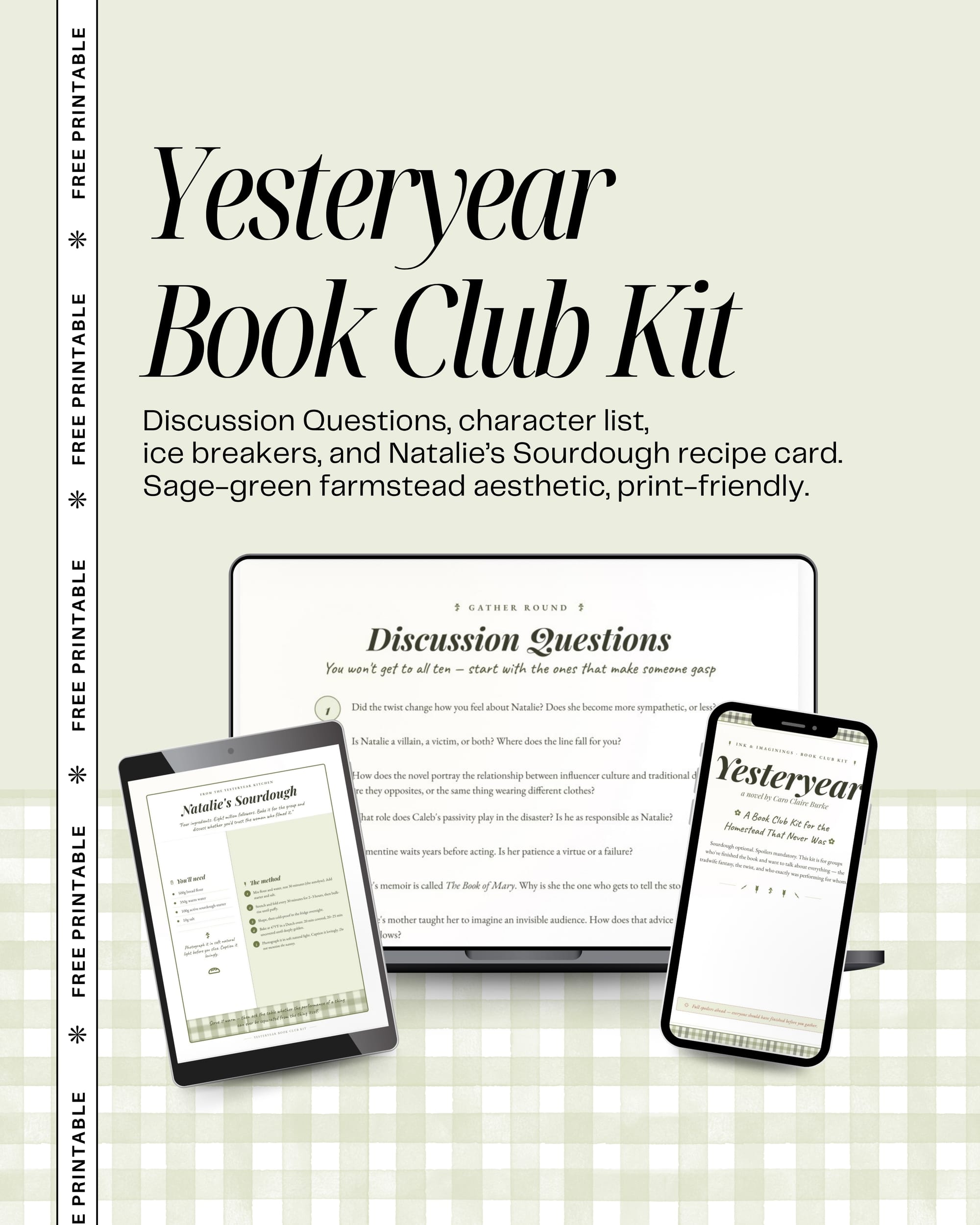
Book Club Discussion Questions
- Did the twist change how you feel about Natalie? Does she become more sympathetic or less?
- Is Natalie a villain, a victim, or both? Where does the line fall for you?
- How does the novel portray the relationship between influencer culture and traditional domesticity? Are they opposites or the same thing?
- What role does Caleb's passivity play in the disaster? Is he as responsible as Natalie?
- Clementine waits years before acting. Is her patience a virtue or a failure?
- Mary's memoir is called The Book of Mary. Why is she the one who gets to tell the story?
- Natalie's mother taught her to imagine an invisible audience. How does that advice shape everything that follows?
- The novel alternates between the pioneer timeline and the backstory. How does that structure affect your understanding of the twist?
- Doug tells Natalie a car accident would be the simplest solution. How does the Mills family's political power enable everything that happens?
- Yesteryear has been called a satire of the tradwife movement. Does it succeed as satire, or does the twist undermine the critique?
For a thriller with the same discussion potential try The First Time I Saw Him.
What to Read Next
📚Books Like Yesteryear what to read next if you're chasing the tradwife-influencer-meets-literary-horror lane.
📚 Strangers by Belle Burden The nonfiction companion to Yesteryear. Belle's memoir traces the abrupt collapse of her twenty-year marriage and her reckoning with the women in her family who'd been taught to quietly absorb men's bad behavior. If the generational-silence layer of Yesteryear hit you, this one will land in the same place.
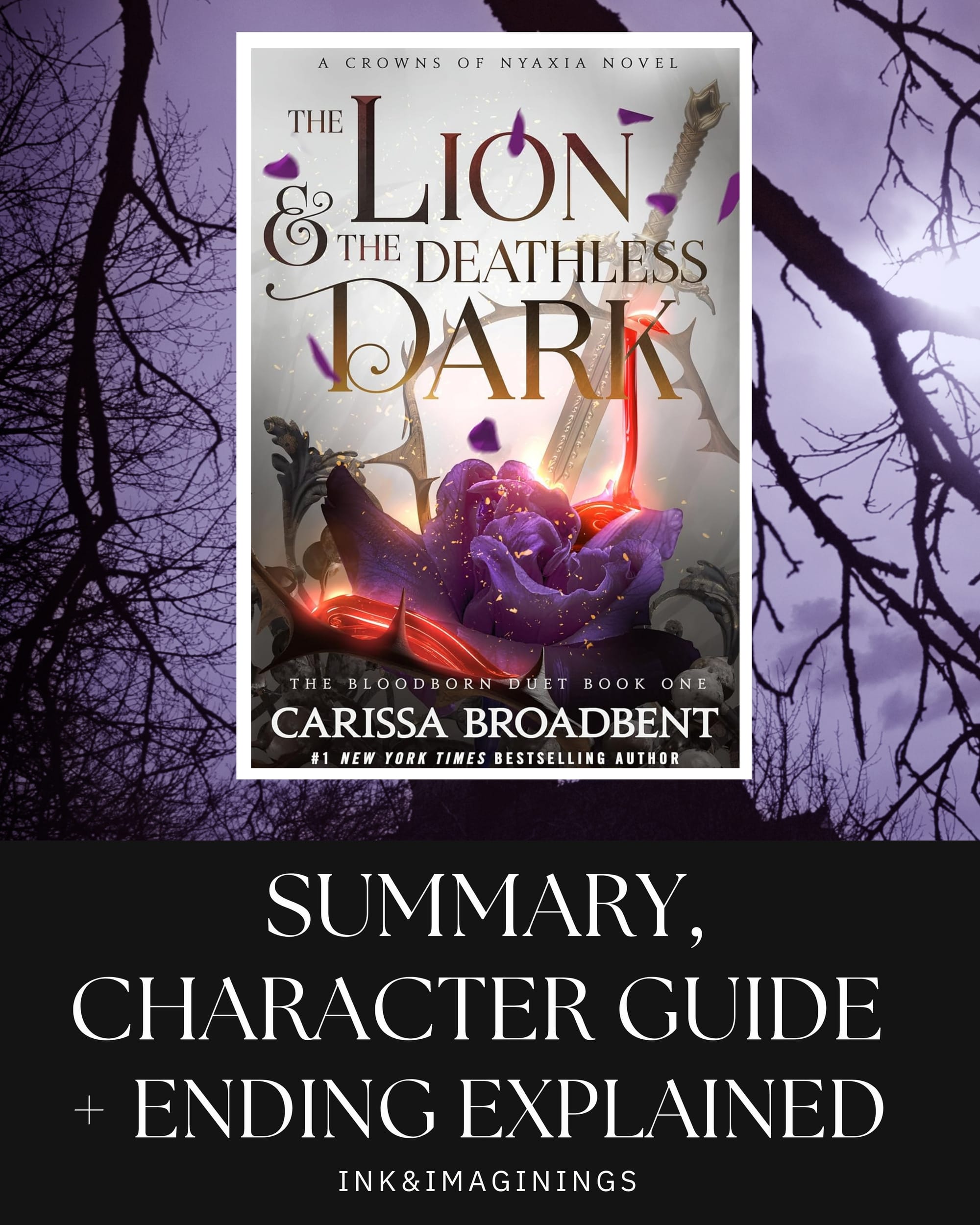
📚 Into the Blue by Emma Brodie Reese's April pick. A decades-spanning love story about two people who keep finding and losing each other through art, grief, and a diagnosis that changes everything. Frustrating characters in the best way.
📚 The Fine Art of Lying by Alexandra Andrews Reese's May pick. An art historian, a secret affair, a murdered lover, and a villain you won't see coming. The twists are unreal.
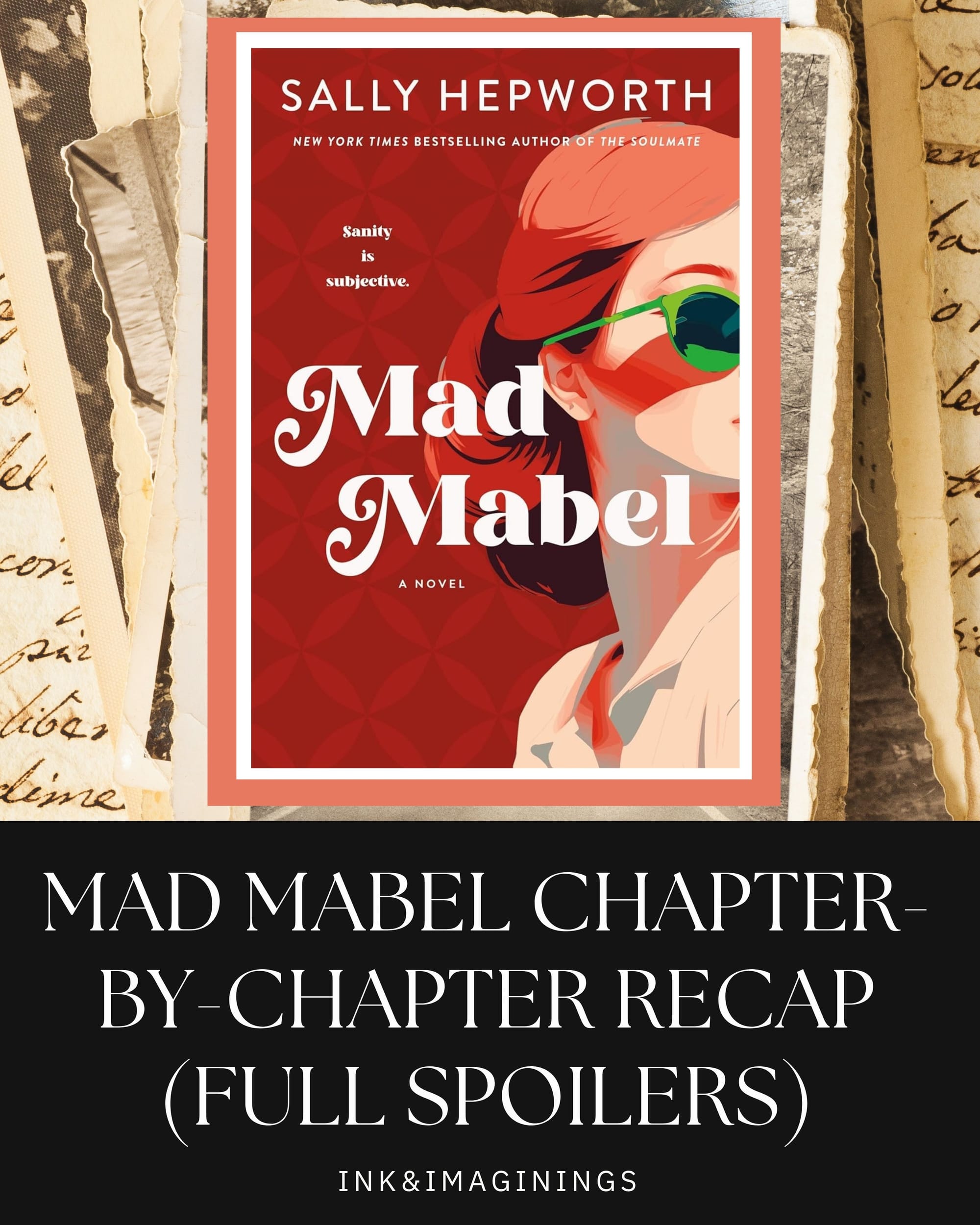
📚 Mad Mabel by Sally Hepworth An 81-year-old woman hiding a murder conviction, dual timelines, and layers of deception that unfold beautifully.
📚 Caller Unknown by Gillian McAllister Jenna's May pick. A mother smuggling drugs across the Mexican border to save her kidnapped daughter. The queen of twists does not disappoint.
📚 This Month's New Releases See what's dropping this month across every genre.
Already read one of these? Come back and check out the full guides we have ending explained posts, character breakdowns, and book club discussion questions for all of them:
Into the Blue Guide | Fine Art of Lying Guide | Mad Mabel Guide | Strangers Guide
📚 Looking for your next book club pick? Book of the Month sends you a new book every month for the price of a coffee. Try your first month for $5
Subscribe to Win $100 to spend on Prime Day.
Every Weekly Bookmark subscriber is automatically entered to win a $100 Amazon gift card.
Winner picked Wednesday morning, announced in that morning's email, and has Wednesday through Friday to spend $100 during the actual sale if they want to.
🎁 GIVEAWAY LIVE THROUGH TUESDAY 11:59 PM ET
Frequently Asked Questions
What is Yesteryear about?
Yesteryear is a debut novel by Caro Claire Burke about a tradwife influencer with millions of followers who wakes up in what appears to be 1855, trapped in a pioneer version of her own life. The novel alternates between the pioneer present and the backstory of how she built her empire and how it fell apart.
What is the twist in Yesteryear?
The twist is that Natalie and her husband Caleb created the pioneer world themselves. After a public scandal destroyed their influencer empire, they stripped their ranch of all modernity and raised their youngest children in a fabricated nineteenth-century homestead, telling them their older siblings were dead. Over the years, Natalie's mind fractured until she genuinely forgot she had built it.
Is Yesteryear based on a true story?
No, it's fiction. But it draws heavily on the real tradwife influencer phenomenon and accounts like Nara Smith and Ballerina Farm. For the full breakdown of the Hannah Neeleman comparison, what the author has said, and what Hannah herself said in her June 2026 Vulture interview, see our dedicated section above.
What did Hannah Neeleman of Ballerina Farm say about Yesteryear?
In a Vulture interview published June 16, 2026, Hannah addressed the speculation directly. She said she's aware of the comparison and was honestly surprised it took this long to land in a novel. She did not explicitly confirm or deny being the inspiration. Read our full breakdown in the Hannah Neeleman section above.
Is there a Yesteryear movie?
Yes. Anne Hathaway has secured the rights to Yesteryear and will both produce and star in the film adaptation. No release date or director has been announced.
How does Yesteryear end?
Clementine, Natalie's eldest daughter, arrives with a warrant and takes the children. Five years later, Natalie is serving a thirty-year sentence for child abuse. Mary, the eldest child raised in the fabricated pioneer world, publishes a bestselling memoir. The novel ends with Mary's words: the moment she opened her eyes on the highway and smiled for the first time.