Christopher Nolan's Odyssey has sent a whole new wave of people back to Homer. But here is the thing nobody tells you: the Odyssey is not one story, it is a doorway into an entire world.
There is a decade-long war behind it, a family of scheming gods above it, a monster on every island, and a homecoming that only makes sense once you understand everything Odysseus is coming home from.
So whether you have just seen the movie, you are reading the poem for the first time, or you simply keep hearing about all of it and want to catch up, these six books unlock that world.
Read even one and the whole story clicks into focus. Everything below is spoiler-free, so read on safely, and I have ordered them from "start here" to "read this one for sure."
You can also check out our Summary of The Odyssey here if you need a quick reference.
Why the Odyssey Feels Bigger Than One Book
Part of what makes the Odyssey feel intimidating is that the poem assumes you already know three whole worlds before it even begins, and it never stops to explain them.
First, it assumes you know the gods, an enormous, squabbling family of immortals with grudges and favorites who reach into the story constantly. Second, it assumes you know the Trojan War, the ten-year conflict Odysseus fought before the poem even starts. Plus the dozens of heroes and casualties whose names get dropped like you were there. And third, it assumes you can keep a hundred Greek names straight, from kings and queens to nymphs and monsters.
That is a lot. It is exactly why so many people bounce off the poem or the film feeling lost and confused. The good news is that each of these six books hands you one of those missing pieces, painlessly and enjoyably. Read a couple and you stop feeling lost and start feeling like you are in on every reference, which is when the whole thing becomes a lot more fun.
Heads up: this post uses affiliate links, so I earn a small commission if you shop through me, at no extra cost to you. Thank you for supporting Ink&Imaginings.
Start With the Foundation: Mythos by Stephen Fry

📚 Amazon | Bookshop | 🎧 Audible
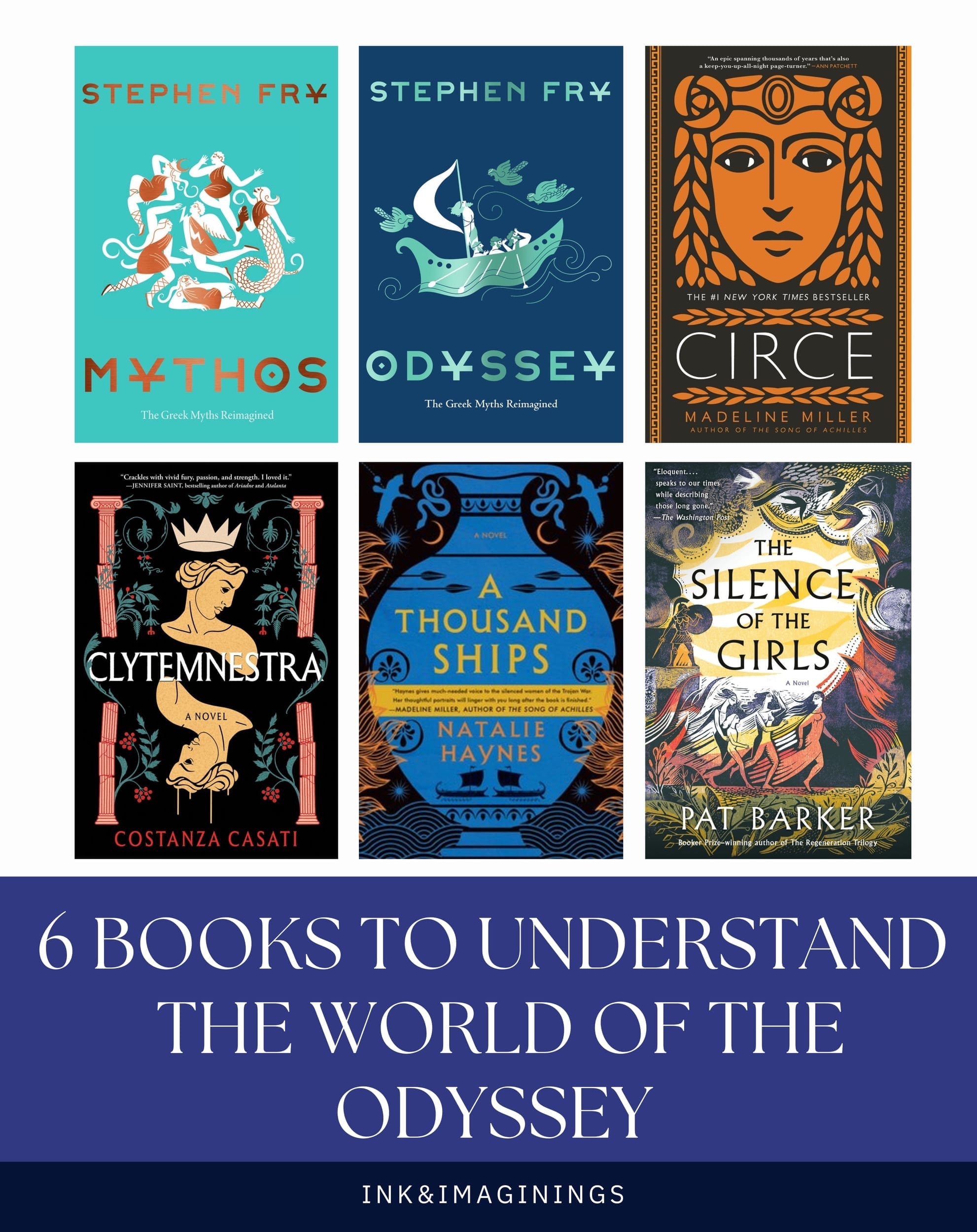
If the Greek gods have always felt like a tangle of names you can never keep straight, begin here. In Mythos, Stephen Fry retells the Greek myths from the very beginning, the creation, the Titans, the gods and their endless feuds, all in the voice of your funniest, smartest friend telling you the best stories he knows.
This is the foundation the Odyssey sits on. Once you understand who these gods are, why Poseidon holds a grudge, what Athena wants, and how these immortals meddle in human lives for sport, every divine intervention in the Odyssey suddenly makes sense.
Fry is warm, funny, and endlessly readable, so it never feels like homework. It feels like finally getting the joke everyone else was in on. If you read one book to prepare for a lifetime of Greek mythology, not just the Odyssey, make it this one.
The Story Itself, Made Easy: Odyssey by Stephen Fry

📚 Amazon | Bookshop | 🎧 Audible
Here is the most direct route of all. Stephen Fry's Odyssey, his 2025 retelling and the fourth book in his Greek Myths series, walks you through the entire poem, the Cyclops, the Sirens, Circe, the long road home, all with his signature humor and heart.
If the idea of a three-thousand-year-old poem feels intimidating, this is the fix. Fry keeps every thrilling turn of the original but tells it in plain, propulsive, modern language, so you get the whole story without ever fighting the text.
It is the fastest, most enjoyable way to actually know what happens, and it makes a wonderful companion to the film or a gentle on-ramp before you tackle a full translation. Think of it as the story with the training wheels left on, in the best possible way.
The War He Is Coming Home From: The Silence of the Girls by Pat Barker

📚 Amazon | Bookshop | 🎧 Audible
The Odyssey is the story of the journey home after the Trojan War, but the poem assumes you already know what that war cost. Pat Barker fills in that missing weight. The Silence of the Girls retells the Trojan War through Briseis, a captured queen handed to the Greek hero Achilles as a prize, and through the enslaved women who watched the great heroes up close and were owned by them.
It is unflinching, unsentimental, and beautifully written, and it changes the way you read Odysseus entirely. Once you have felt the true price of that war, his desperation to get home lands so much harder, and the violence he carries with him makes a different kind of sense. This is the Trojan War with all the glamour stripped away and all the truth left in, and it is one of the finest historical novels of the last decade.
The Whole Cast, In One Book: A Thousand Ships by Natalie Haynes
📚 Amazon | Bookshop | 🎧 Audible
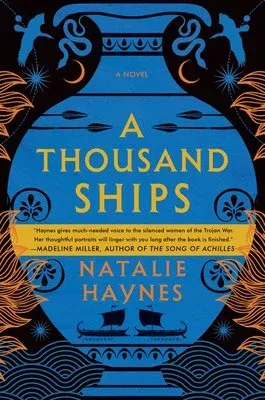
If The Silence of the Girls gives you the war's emotional core, A Thousand Ships gives you the entire map. Natalie Haynes hands the whole Trojan War to its women, from queens and princesses to goddesses and captives, and even gives Penelope, Odysseus's waiting wife, a running set of increasingly exasperated letters to her missing husband.
It is witty and genuinely useful as a who's who, because it introduces you to nearly every figure whose name gets dropped in the Odyssey and then never explained. Haynes frames the whole thing as the Muse herself, tired of poets who only ever want to sing about men, deciding to sing about everyone else instead. If you have ever felt lost in the sea of Greek names, this book is your map and your cast list, and a delight on top of it.
The Dark Mirror of the Homecoming: Clytemnestra by Costanza Casati

📚 Amazon | Bookshop | 🎧 Audible
Here is the pairing that unlocks the Odyssey's deepest meaning. Odysseus sails home to a faithful wife who has waited twenty years. Agamemnon, the leader of the whole Greek army, sails home to a wife who has spent those same years planning to kill him. That wife is Clytemnestra.
Costanza Casati's novel is a fierce, propulsive origin story for the queen everyone remembers as a murderer and no one remembers as a grieving mother. Reading it shows you exactly what the Odyssey is quietly celebrating: a homecoming that goes right, in a world where they so often went horribly wrong.
The two stories are told against each other on purpose, and once you know Clytemnestra's, Odysseus's return glows with a meaning you would otherwise miss. It also reads like a thriller.
If You Read Only One, Read Circe by Madeline Miller

📚 Amazon | Bookshop | 🎧 Audible
Circe is the character who turns Odysseus's men into pigs in a single episode of the Odyssey, and Madeline Miller gives her a whole luminous life of her own. Following her from an overlooked childhood in the halls of the gods to her exile on a lonely island, the novel is the most beloved doorway into this entire world for a reason.
It is the best possible companion to the poem, because it lets you live inside the gods' world at a human scale, and because Odysseus himself sails through the middle of it, seen at last from the outside.
Miller's writing is gorgeous without ever being difficult, and the story is so absorbing that people who swear they do not like mythology fall completely in love with it. If you take one book off this list, take this one. It will make you want to read all the others. Want the deep dive? Our full Circe reader guide has the summary, the ending explained, and book club questions.
Two More Worth Knowing
If these six leave you hungry, two more belong on the same shelf. The Penelopiad by Margaret Atwood retells the Odyssey from the point of view of Penelope, the wife who waited, and the twelve maids who pay a terrible price when Odysseus finally comes home. It is short, sharp, and it flips the homecoming inside out. And The Song of Achilles by Madeline Miller, the other novel from the author of Circe, tells the love story at the heart of the Trojan War, deepening Achilles, the hero whose death hangs over everything that comes after. Neither is required, but both make the world of the Odyssey even richer, and both are wonderful reads.
How These Books Change the Movie
If it is Nolan's film that brought you here, these books do something specific and wonderful to your viewing experience. A film adapts and compresses, cutting names, folding characters together, and assuming the audience will fill in the rest.
When you already know the gods pulling the strings, the war Odysseus is haunted by, and who all those side characters really are, you catch every choice the movie makes, what it keeps, what it changes, and what it quietly leaves out. It works in both directions, too. See the film first and these books deepen everything you just watched. Read a couple first and you walk in already fluent.
Where to Start
If you are brand new to the myths, begin with Mythos. If you want the actual story fast, read Stephen Fry's Odyssey. If you want to feel the war behind it, pick The Silence of the Girls. And if you just want the single most rewarding read, go straight to Circe. There is truly no wrong place to begin.
Frequently Asked Questions
Do I need to read the Odyssey itself first? No. Every book on this list works on its own and actually makes the poem easier and richer whenever you get to it. Several of them, especially Stephen Fry's Odyssey, tell you the whole story directly.
Which one should I read first? For total beginners, Mythos. For the story itself, Fry's Odyssey. For the most rewarding single read, Circe. You can start anywhere.
Do these spoil the Odyssey or the movie? They cover the same ancient myths the movie draws from, so you will learn the shape of the story, but the poem is three thousand years old and these books are companions, not spoilers for the film's specific choices.
Are these hard to read? Not at all. Every pick here is chosen to be welcoming and propulsive. Fry is funny, Miller is gorgeous and easy, and the historical novels read like the best book-club fiction.
Which is best if I only like modern novels? Circe, A Thousand Ships, and The Silence of the Girls all read as contemporary literary fiction with a mythic backbone, so they suit readers who do not usually reach for anything ancient.
Is there a right reading order? Not really, but a lovely path is Mythos for the gods, then Stephen Fry's Odyssey for the story, then Circe to fall in love, and finally The Silence of the Girls or Clytemnestra when you want more weight. You can also just grab whichever cover calls to you.
What should I read once I finish these six? If they leave you ready for the poem itself, my guide to choosing an Odyssey translation is the next stop. And if you want to stay in the myth world instead, there is a whole shelf of modern retellings waiting, linked below.
What to Read Next
Deeper into the Odyssey? Keep going.
📚 The Odyssey Summary: The Full Story Explained: the whole plot in plain language, spoilers and all.
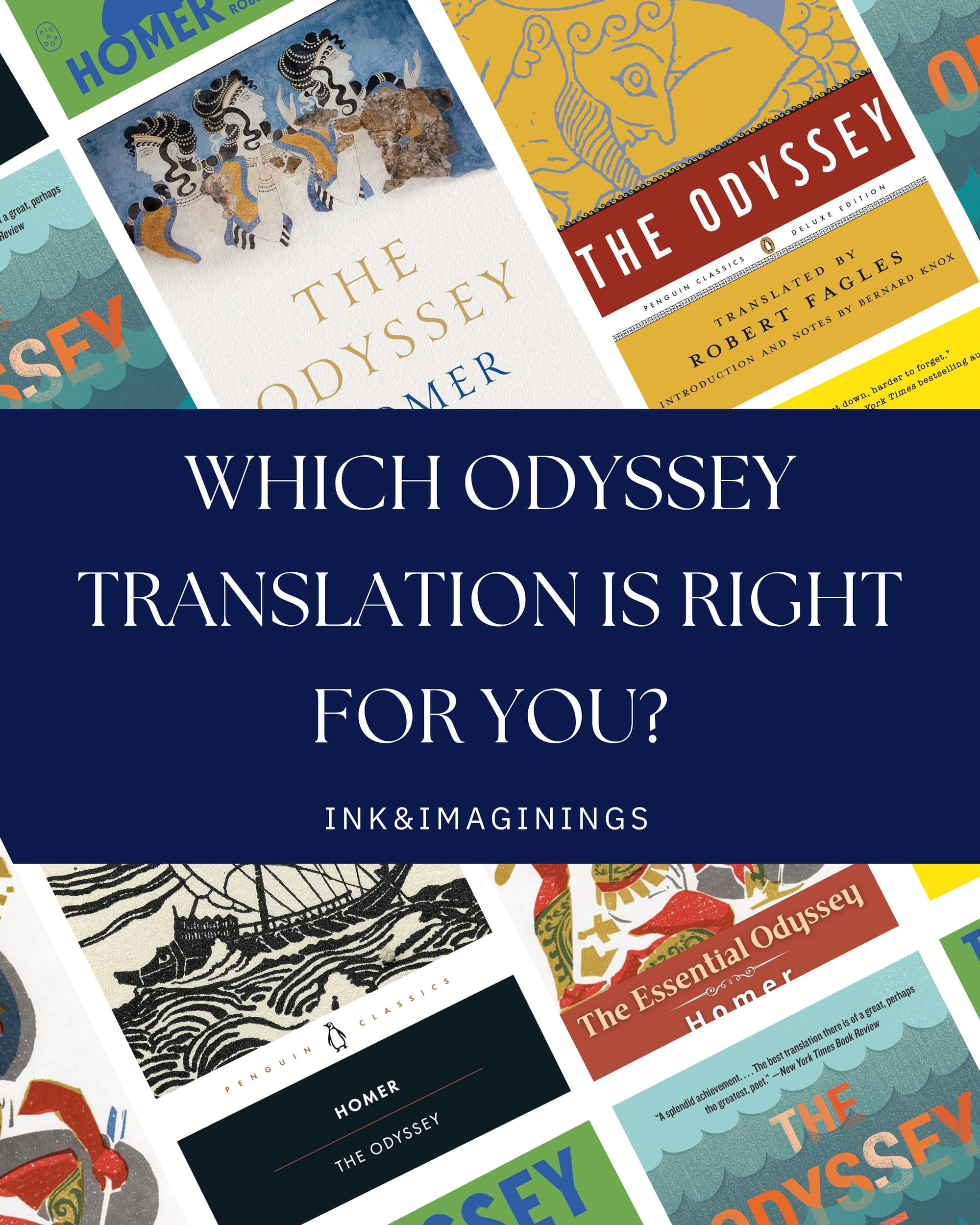
📚 Which Odyssey Translation Is Right for You: ready for the poem itself? Pick your perfect version.
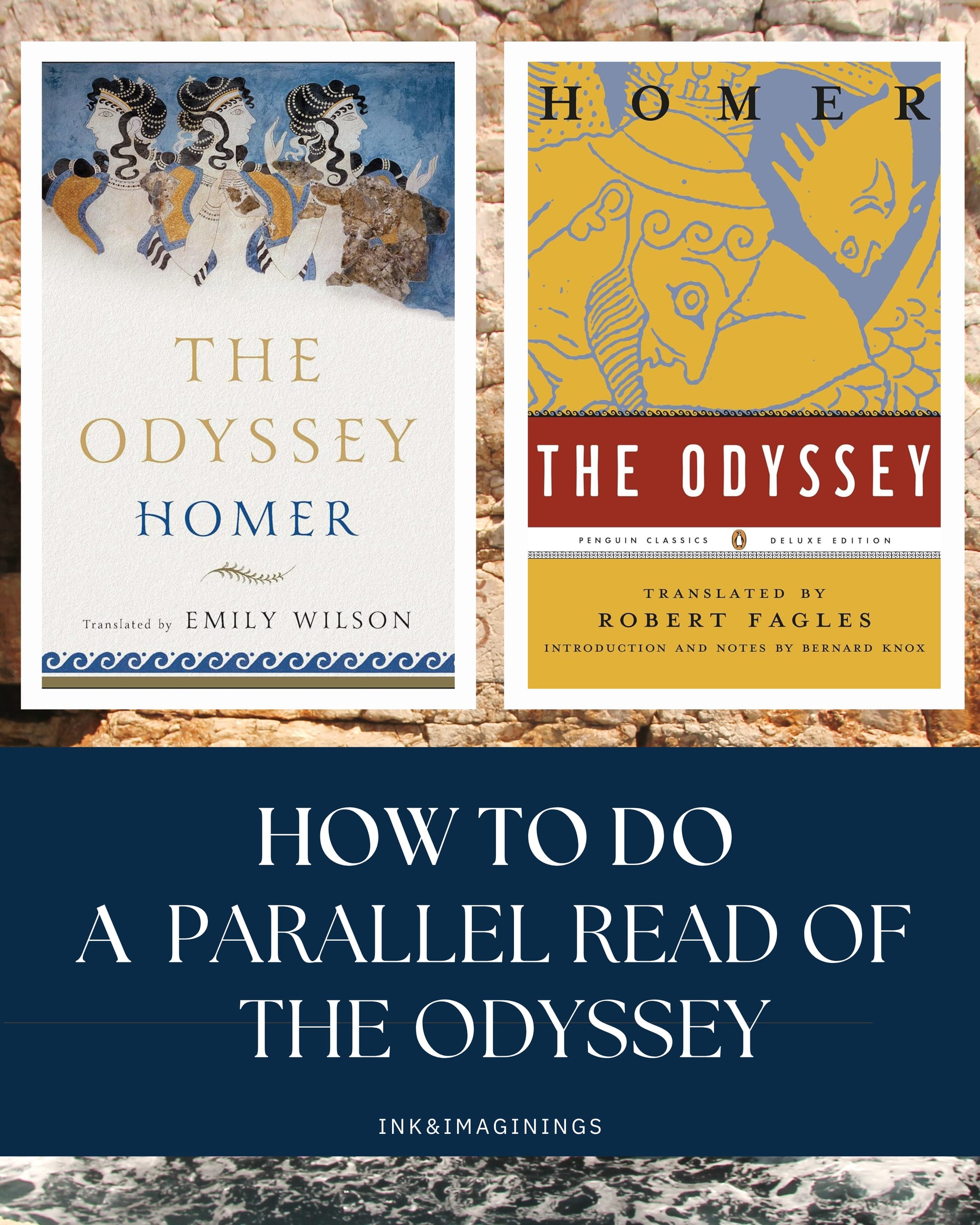
📚 How to Read The Odyssey in Two Translations at Once: the parallel read, with a free kit.
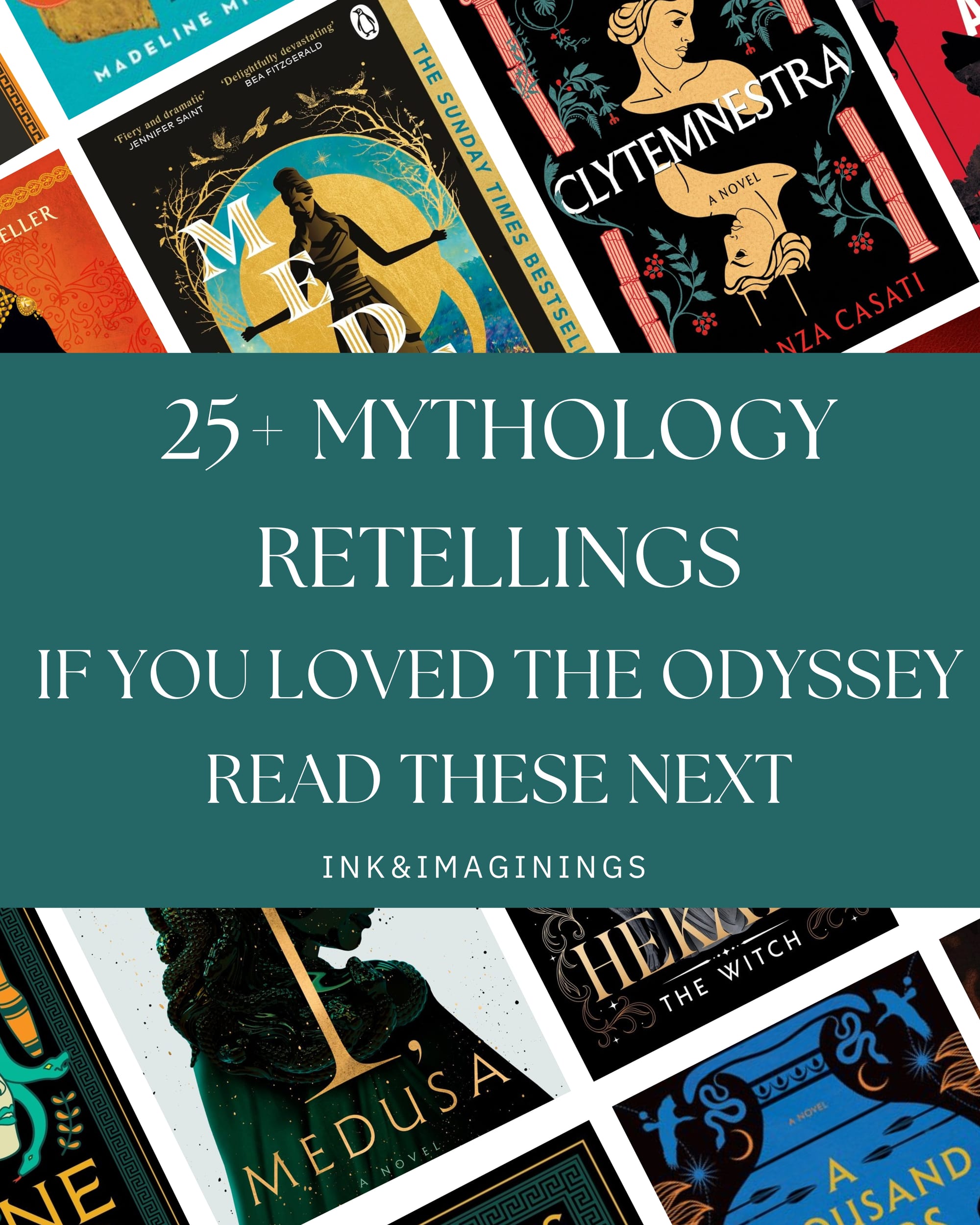
📚 If You Loved The Odyssey, Read These: 25 Mythology Retellings: the full shelf, once these six leave you wanting more.
📚 Want a new great book picked for you every month? Try your first month of Book of the Month for $5
Want more guides like this one, plus honest takes on what is worth your time? Join The Weekly Bookmark, our weekly newsletter with new releases, book news, and exclusive giveaways.