A Read with Jenna Pick
Just like her debut Pineapple Street, Jenny Jackson has crafted another narrative I absolutely loved. The Shampoo Effect is the perfect summer read: a feel-good story that's genuinely funny, with just the right amount of drama.
If your book club picked this one, the discussion questions at the bottom are going to fuel at least an hour of the best kind of arguing.
Below: what it's about (spoiler-free), the full plot, every character in the friend group, the themes worth talking about, how it ends, twelve discussion questions, my honest take, and what to read next. Full spoilers once you hit the plot summary.
This post contains affiliate links. If you buy through them, I may earn a small commission at no extra cost to you. Thanks for supporting Ink & Imaginings.
Quick Facts
- Released: June 30, 2026
- Author: Jenny Jackson (author of Pineapple Street)
- Publisher: Penguin Random House
- Genre: Contemporary fiction, women's fiction, book club fiction, summer read
- Setting: Greenhead, a seaside town on the Massachusetts coast, present day
- Book Club Pick: Read with Jenna (Today show)
- Book Club Verdict: The perfect summer pick. Funny, warm, a little messy, and packed with things to argue about.
- Read it if you love: multi-POV friend-group novels, millennial adulting, and New England drama with a soft heart
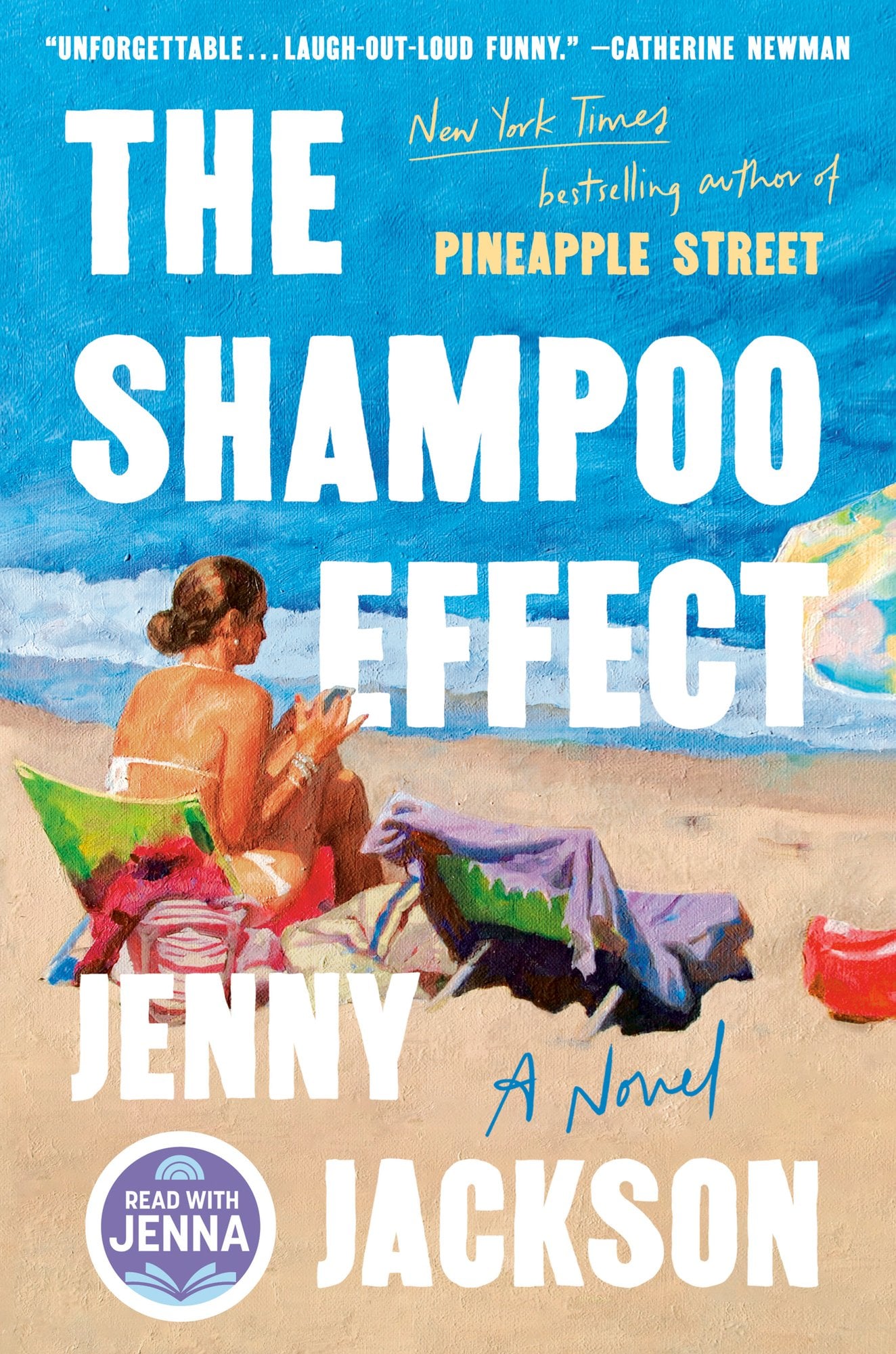
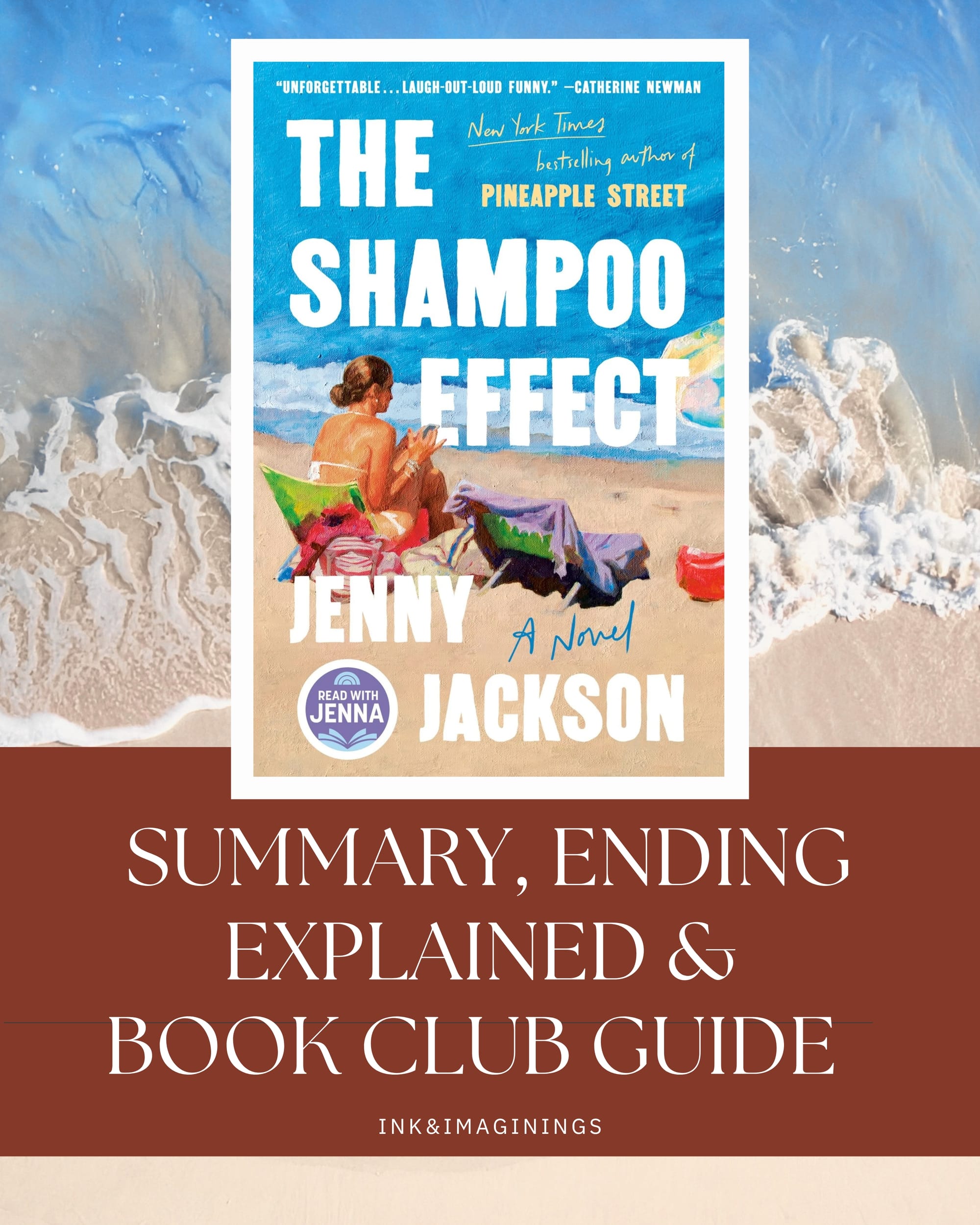
The Shampoo Effect by Jenny Jackson Book Cover
📚 Amazon | Bookshop | 🎧 Audible
What The Shampoo Effect is about (spoiler-free)
Caroline Lash is a young New York editor and aspiring writer trying to step out of the shadow of her famous novelist mother. When she lands a writing fellowship in the seaside town of Greenhead, Massachusetts, she trades the city grind for a writer's cottage, castle tours, and long beach walks. She also, almost immediately, steps on a jelly donut at the train station. It's the kind of small, sticky, comic disaster that turns out to mark the start of a whole new life.
In Greenhead she meets Van Whittaker, a local environmentalist with an easy kindness and a lifelong friend group she can't quite crack: Bailey, Augusta, Fran, and the extended circle they've known since childhood. Caroline is both charmed and unsettled by how tightly these people are woven together, all inside jokes and shared history. She's an outsider and an observer, which is exactly what makes her fall for the place, and exactly what makes belonging feel just out of reach.
Told from Caroline's point of view and the perspectives of the women in Van's circle, The Shampoo Effect is a warm, funny, but also sharp novel about modern relationships. Also the specific chaos of adulting and parenting as a millennial, and the near-impossible project of making real friends as an adult. It's a summer read with a full heart and a lot on its mind.
If you loved Pineapple Street for the way Jenny Jackson writes people you feel like you already know, this one lives in the same warm, observant, gently skewering world.
Full Plot Summary (Full Spoilers)
⚠️ Major spoilers ahead. If you haven't finished the book, skip down to the Characters or Discussion Questions.
The jelly donut and the fellowship
Caroline arrives in Greenhead to escape two things: her mother Gwendolyn's long shadow (Gwendolyn is a bestselling author) and the grind of her New York life. She wants to write something of her own. She steps on a jelly donut at the train station on day one, and the book treats that little mess as a sign of everything sweet and sticky coming her way.
She settles into her writer's cottage and starts learning the town's rhythms: the historic castles, the local tours, the very particular way New Englanders let you in without ever quite letting you in.
Her way into the town is Van Whittaker, a local environmental scientist who is kind, a little quirky, and clearly one of the good ones. Their meet-cute is awkward and funny.
Through Van, Caroline gets folded into his friend group: Bailey, Augusta, Fran, and their partners and extended circle, people who have been in each other's lives since childhood sleepovers and high school parties.
The good guy's secret
Right as Caroline and Van feel real, the bubble pops. Bailey, Van's oldest friend and former on-and-off flame, is pregnant with Van's baby from a recent fling. Caroline has to sit with jealousy, uncertainty, and the blurry line between friendship and love.
To his credit, Van is honest and wants to do right by both women, but that only makes the triangle more tender and more tangled. Caroline has to decide whether to stay and live inside the mess or retreat to the safety of her old life.
Bailey decides to keep the baby and to do it as a single mother, on her own terms. That choice sends a ripple through the whole group. Her bond with Van is complicated. Full of years of history and chemistry, but not the romantic spark she actually wants. Augusta and Fran rally around her with support, advice, and the occasional side of judgment.
Parent Trap season
Augusta, the group's organizer, decides Bailey and Van belong together for the baby's sake and sets about engineering it, Parent Trap style. Dinner parties and group outings turn into low-key theaters of matchmaking, awkward introductions, and old grievances resurfacing. Caroline feels her outsider status more sharply here.
Meanwhile the friends' own marriages and partnerships, some steady and some wobbling, quietly raise the book's bigger questions about loyalty, honesty, and the cost of keeping up appearances in a town where everybody knows your business.
Fran's storyline runs as a counterpoint: a chaotic family of gambling brothers and a drinking mother, plus her own unconventional partnership with RJ. Fran refuses to marry, keeps her own money, and parents with blunt honesty, even as the emotional labor of holding everyone together wears her down.
Why is it called "The shampoo effect"
The "shampoo effect" is the way old dynamics and unresolved tensions keep bubbling back up, never quite rinsed away fully. Pickup basketball games, beach days, and drunken nights surface simmering resentments and childhood roles that never really evolved. Caroline's inability to keep up with the references makes her outsider status impossible to ignore.
The Clam Box baby
Bailey's labor starts unexpectedly at the Clam Box, and baby Dylan arrives. The birth cements a permanent bond between Bailey and Van even as it complicates any romance between them. Caroline, now firmly on the edge of the group, has to reckon with her own ambitions and the reality that some doors have quietly closed.
Blood, bugs, and betrayal
Summer turns sticky in every sense: greenhead fly bites, a lice outbreak, and a slow leak of long-held secrets. Augusta finds evidence of infidelity. Fran's family faces financial ruin. The town that once seemed cozy starts to feel suffocating as gossip does its work.
The New Yorker article
Caroline channels her heartbreak and her outsider's eye into a thinly veiled short story and publishes it in The New Yorker. Exposing the group's secrets to anyone who can read between the lines. It's a professional triumph and a personal catastrophe.
The Shampoo Effect ending
The back half is about the slow, uneven work of forgiveness. Augusta and her husband Colin's marriage cracks open around the truth of Colin's bisexuality and his past relationship with Eben, who is Augusta's brother. It's messy. There is anger, confusion, failed attempts to bridge the gap, and eventually a handful of honest conversations that let them start to rebuild trust.
Bailey and Van finally try the romantic partnership everyone kept pushing, and it doesn't take. They're incompatible in the ways that matter, and their breakup is bittersweet, all Swedish Fish and Peloton rides and the harsh truth that loving someone and liking your life with them are not the same thing. They land, instead, on co-parenting Dylan with clearer boundaries.
Time does its softening. Fran and Augusta repair their friendship. Colin and Eben make peace. Eben and his partner Max adopt a baby, and the new arrival brings the group a sense of renewal. Caroline, back in New York, writes a new, self-deprecating novel that finds real success, but the ache of the love and friendships she lost doesn't fully go away. She comes to accept her outsider status and what it cost her.
One year later, Caroline returns to Massachusetts for a book festival, changed by success and a little more self-aware. A chance encounter, a jelly donut left on her car, and the memory of Van bring the whole thing full circle. The ending isn't a tidy bow. It's a nod to where she started and a quiet argument that forgiveness, growth, and the messy unpredictability of life are the actual happy ending.
Characters
Caroline Lash. Our narrator and the group's outsider, observer, and accidental wrecking ball. She's a sharp New York editor and wannabe novelist who moved to Greenhead to get out from under the shadow of her famous mother and finally write something that's hers. Her romance with Van is real, but the timing is cruel.
Van Whittaker. The certified good guy. An environmental scientist, loyal friend, devoted son, and the kind of man who takes care of everyone but himself. His whole identity is wrapped up in responsibility and his deep roots in this place, which is exactly why he can't quite let go of his history with Bailey. Watching him try to be everything to everyone is a little heartbreaking.
Bailey Newmarch. The group's golden girl: beautiful, funny, and fiercely independent. She runs hot and cold, craving closeness and then bolting from it, using humor to keep everyone at arm's length. Her arc is about learning that love comes in more than one shape and that choosing her own path doesn't make her selfish.
Augusta Nickerson. The organizer. She's the one trying to Parent Trap everyone into place, and she has to learn that she can't stage-manage her way through life.
Fran Gianopoulos. The group's truth-teller, running on caffeine, exhaustion, and dark humor. She came up in a chaotic family and is determined to do it differently, which looks like refusing to marry RJ, keeping her own money, and parenting without the pretty filter. The jokes hide real fatigue and real resentment about how much of the emotional load she carries.
Colin Nickerson. Augusta's husband and Eben's former love, a reserved man caught between duty and desire. His bisexuality and his past with Eben are things he's buried under a conservative upbringing and a fear of being left. When the truth finally comes out, it's painful and, eventually, freeing. His story is about the terror and relief of finally being fully known.
Eben Nickerson. Augusta's brother, openly gay and quietly carrying the weight of the secret he shares with Colin. His loyalty to Colin sets him against his sister and mirrors the group's bigger fights about honesty versus protection.
RJ. Fran's partner, a lovable goofball who would rather throw a party than have a hard conversation. He is all pranks, weed, and avoidance. But when it counts, he shows he can grow up for the people he loves.
Gwendolyn Lash. Caroline's mother, a bestselling author who is formidable to say the least. Her success is the shadow Caroline is always trying to escape, and her brand of self-absorbed pragmatism offers wisdom but not much warmth. She's the powerful mother you admire, fear, and can never quite please.
Ned Clark. Caroline's former lover turned literary agent, charming and always working an angle. His interest in signing Caroline's mother, his role in the Palmer Preston estate, and his murky feelings for Caroline keep him hovering between ally and antagonist.
Themes Worth Discussing
Making friends as an adult is brutal. Caroline walks into a group with thirty years of shared history and no way in. The book is honest about how hard it is to join an established circle later in life, and how being the outsider makes you see everything more clearly and feel everything more sharply. Your book club will have opinions about whether the group was ever going to let her in.
Adulting and parenting as a millennial. Nobody here has it figured out. Bailey is doing single motherhood on purpose, Fran is refusing the traditional script, Augusta is white-knuckling the perfect-marriage image, and RJ is dodging adulthood entirely.
Modern relationships and the new shape of family. Co-parents who aren't a couple, an unmarried partnership by choice, a marriage rebuilding after a secret, a gay couple adopting. Jackson keeps asking what "family" actually means when you stop assuming it looks one specific way.
The shampoo effect itself. The idea that the past never fully rinses out, that old roles and resentments keep foaming back up under stress. Which of your own childhood roles do you still fall into with old friends?
Turning real life into art. Caroline's New Yorker story is the moral center of the book. Was it a betrayal, or was it hers to write? The novel doesn't fully let her off the hook, and it doesn't fully condemn her either.
Book Club Discussion Questions
These are the ones that will get your group talking, ordered from warm-up to heated.
- The jelly donut opens and closes the book. What did you make of it as a symbol, and did the full-circle ending land for you?
- Caroline is an outsider trying to join a friend group with decades of history. Have you ever been the new person in an established circle? Did the book get that feeling right?
- Van is written as the good guy, but he keeps choosing duty over his own happiness. Is that admirable, or is it its own kind of avoidance?
- Bailey chooses single motherhood on purpose. Did you read that as empowerment, fear of intimacy, or both?
- Augusta spends the book trying to manage everyone else's lives. Where does that come from, and when did you start to sympathize with her instead of judging her?
- Fran carries most of the emotional labor for her family and rarely asks for help. What does the novel say about who does the invisible work in a partnership?
- Colin's secret reshapes his marriage to Augusta. Did the book handle his bisexuality and his history with Eben with the care it deserved?
- The "shampoo effect" is about the past bubbling back up. Which character is most trapped by their old role, and did any of them actually break free?
- Caroline publishes a thinly veiled story about the group in The New Yorker. Was that a betrayal, or was it her story to tell? Where's the line?
- Bailey and Van finally try romance and it doesn't work. Were you rooting for them, and were you relieved or disappointed when they chose co-parenting instead?
- The book insists that forgiveness is slow and incomplete. Did any reconciliation feel unearned to you, or did they all feel right?
- If Caroline handed you the manuscript before publishing, what would you have told her to do?
My Honest Take
The Shampoo Effect is essentially the perfect summer read. A feel-good story that's funny with just the right amount of drama.
The story shifts perspectives between the characters, so you really get to know each of them, and they're written so well and so relatably that they start to remind you of your own group of friends.
Modern relationships, the struggles of adulting and parenting as a millennial, and the particular challenge of making new friends as an adult are just a few of the threads we follow. And what's more perfect for summer than a character-driven read with all the drama, set on the New England coast?
If your book club wants a July or August pick that goes down easy but still gives you plenty to fight about, this is the one. Bring snacks and bring opinions about Caroline's short story. You'll need both.
If You Liked The Shampoo Effect, Read These Next
📚 Pineapple Street by Jenny Jackson: start with her debut if you somehow missed it. Same warm, funny, quietly sharp eye for family and class, this time among old-money Brooklyn.
📚 The Wedding People by Alison Espach: a lonely outsider crashes into a tight group at a seaside hotel and slowly finds her people. Funny, tender, and summer-coded in the best way.
📚 Really Good Actually by Monica Heisey: millennial adulting, messy friendships, and being a disaster with great comic timing. If Caroline's voice charmed you, this is your next.
📚 Same As It Ever Was by Claire Lombardo: for the reader who wants the friendship-and-family emotional depth turned up, with the same lived-in character work.
📚 Happy Place by Emily Henry: a friend group, a coastal getaway, and a couple pretending everything is fine. Perfect beach-chair companion reading.
Already read one of these? Come back and check out the full guides:
Whistler | Theo of Golden | Every Reese, Oprah & Read with Jenna Pick of 2026
📚 Looking for your next book club pick? Book of the Month sends you a new book every month for the price of a coffee. Try your first month for $5
Want more book club picks like this in your inbox every Tuesday? Subscribe to The Weekly Bookmark, the books I'd text a friend about, plus the new releases worth catching this week.
Frequently Asked Questions
What is The Shampoo Effect about?
It's Jenny Jackson's summer novel about Caroline Lash, a New York editor and aspiring writer who takes a fellowship in the seaside Massachusetts town of Greenhead, falls for a local named Van, and gets pulled into his tight childhood friend group. Told from multiple perspectives, it's a warm, funny story about modern relationships, millennial adulting, and how hard it is to make new friends as an adult.
Is The Shampoo Effect a Read with Jenna pick?
Yes. The Shampoo Effect is a Read with Jenna (Today show) book club pick.
Is The Shampoo Effect connected to Pineapple Street?
No. It's a standalone novel, not a sequel to Pineapple Street, though it shares Jenny Jackson's warm, observant voice and her eye for family, class, and friendship.
How does The Shampoo Effect end?
Caroline publishes a thinly veiled short story about the group in The New Yorker, which fractures her friendships and freezes her out of the town. Over time the group slowly forgives one another: Augusta and Colin rebuild their marriage, Bailey and Van settle into co-parenting rather than romance, and Caroline finds professional success in New York while accepting what her choices cost her. A year later she returns for a book festival and the story comes full circle with another jelly donut.
Is The Shampoo Effect a good book club pick?
Yes. It's built for discussion: multiple perspectives, big questions about friendship and family and the ethics of writing about real people, and a light enough tone that the debate stays fun. It's an ideal summer book club choice.
Who is the author of The Shampoo Effect?
Jenny Jackson, the bestselling author of Pineapple Street. She is a longtime book editor, and The Shampoo Effect is her second novel.