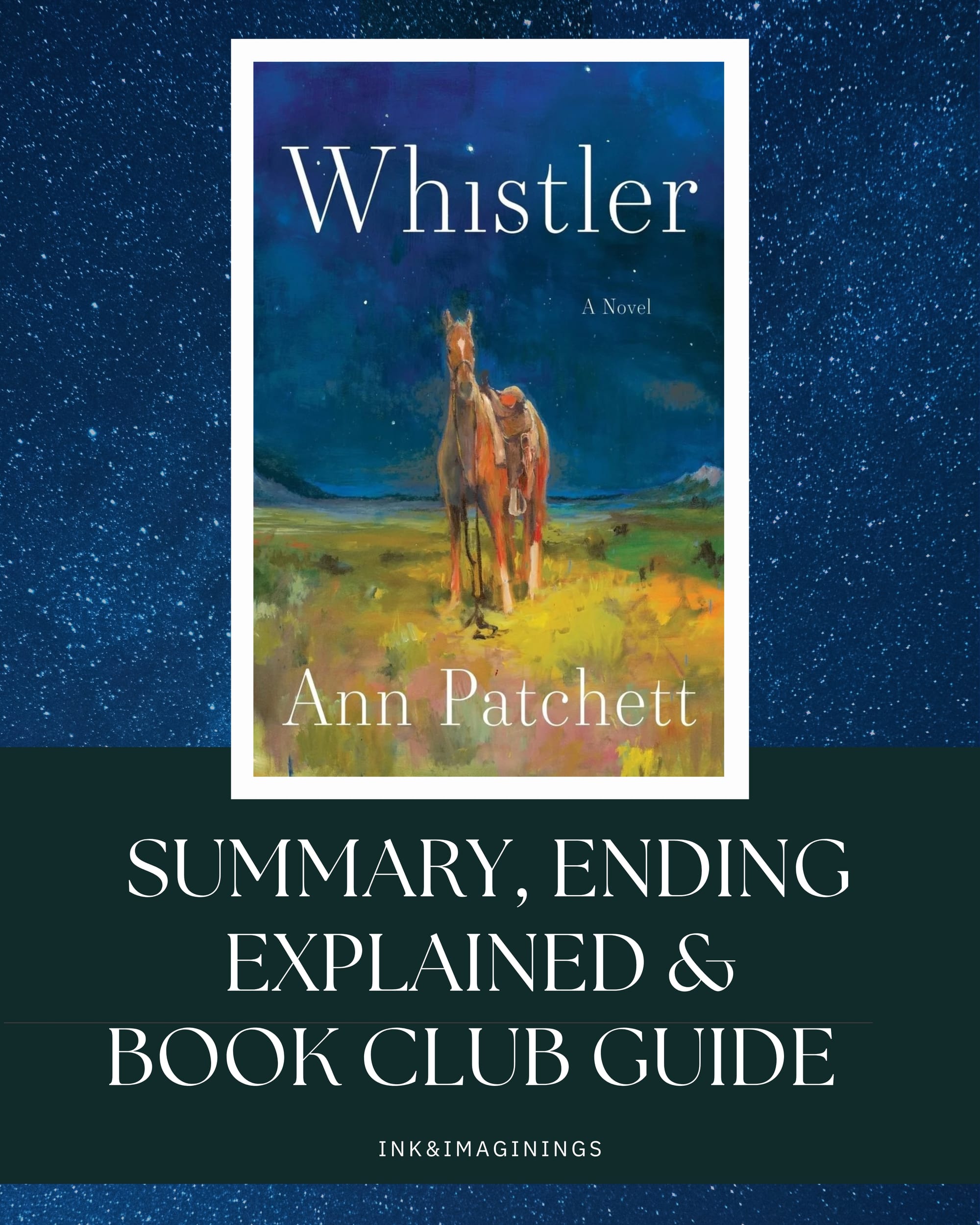
Spoilers ahead, all of them. This page walks through the entire ending of Ann Patchett's Whistler. If you haven't finished it yet, my spoiler-light review and full guide is the better place to start.
Whistler closes on a conversation rather than an event. That's why so many readers finish it and go straight online looking for someone to explain what happened. Nothing blows up. Nobody dies on the page. Two people sit on a bench and talk.
Below: what actually happens in the last stretch. What Eddie's final request means. Whether he dies, and why there's no epilogue. And why I don't buy the theory that's been going around book clubs all summer.
How Whistler Ends
The last third of the book is mostly Daphne and Eddie talking, which is the whole point.
Once they're reunited, the two of them fall straight back into the bond they had in 1980. Daphne's sister Leda, now a clinical psychologist, is the one who gently pries the whole story loose. That's how Daphne finally learns why Eddie's marriage ended. It wasn't the accident. Eddie is gay, and Abigail found out. He'd been in love with his married best friend Skip for most of his life. Daphne meets the blended, chosen family that grew up around Eddie, Skip, and Skip's wife Polly.
Then the other shoe drops. Eddie has leukemia, and he isn't going to beat it. Daphne becomes the person who sits with him through chemo.
He gets interested in Buddhist ideas about dying. The bardo, and the practice of telling a spirit it's time to move on. He asks Daphne to promise that when it happens, she'll tell him he's dead so he can go forward. She promises.
Two objects change hands near the end. Jonathan has spent most of the book clearing out his late mother's house. He gives Daphne a small metal horse from his collection. Eddie gives her the original photograph of Whistler, the one that's been on his desk for forty-four years.
And then he asks her for the thing the whole book has been building toward. He tells her to write it all down.
The Ending Explained
The novel closes on a conversation rather than an event, which is exactly why some readers find it abrupt, and why I think it's the right call.
In Eddie's final stretch, he lands on the idea that has quietly powered the whole book: he tells Daphne to write it all down. If she puts their story into a novel, it becomes immortal: the two of them, the accident, the night in the car, Whistler the horse, all of it preserved past the reach of leukemia and forgetting. This is the payoff of a book that's obsessed with how stories both save lives and erase them.
There's a lovely ambiguity a lot of book clubs snag on: are we reading events in real time, or are we reading the novel Daphne wrote? Patchett never resolves it, and that's deliberate. The book you're holding may be Daphne's act of keeping Eddie alive on the page, the story he asked her to tell. The Whistler tale mirrors this exactly: a horse that comes back for its person, a story that returns someone from the edge of death. Eddie tells Daphne that story to get her through the worst night of her childhood. Daphne (maybe) writes this story to get herself through losing him.
So the “no resolution” ending isn't Patchett running out of road. It's the point. We don't get to know how everyone ends up because that was never the promise. The promise was connection, the almost unbearable gift of being truly known by one person, even briefly, and the way we make that connection outlast a life by telling it. Eddie was, Daphne realizes, her “third father,” filling the hole left by her absent biological dad Buddy and her well-meaning-but-distant later stepfather Lucas.
If you closed the book a little teary and a little unmoored, that's the intended landing.
Does Eddie Die in Whistler?
Not on the page. This is where a lot of readers get stuck, because the book makes it very clear he's dying.
Eddie has leukemia, and he's running out of treatment options. The last chapters are openly about getting ready. He makes Daphne promise to speak to him after. But Patchett stops the book before it happens. We never get the deathbed, the funeral, or the aftermath.
Daphne's other two fathers are already gone by then. That's part of why Eddie lands so hard. Buddy, her absent biological dad, and Lucas, the stepfather who tried, are both behind her. Eddie is the third one. He's the only one she got to choose.
So if you finished the book unsure whether Eddie died, that's the book doing it on purpose. He's dying, and we're not shown it. The last thing we watch him do is sit on a bench.
The Last Scene: Back at the Met
The book ends where it started. Daphne and Eddie first ran into each other at the Metropolitan Museum of Art. That's where they are on the final page. Side by side on a bench, watching people walk past.
It's a circle, and it's doing real work. The Met is the room where a stranger turned back into the most important person in Daphne's life. Putting the last scene in the same place says what the book keeps saying. Coming back is the whole idea. Whistler comes back for her person. Eddie came back for Daphne. The story comes back to the bench.
It also means the last image is two people in a public place, alive, surrounded by ordinary strangers. For a book about a man who's running out of time, that's a generous place to stop.
Is There an Epilogue in Whistler?
No. There's no epilogue, no time jump, and no closing note that tells you how everyone turned out.
The novel alternates present-day chapters with interludes from that night in 1980. So it already moves back and forth in time. It just never flashes forward past the Met. The bench is the last thing you get.
That's behind most of the complaints about the ending. Readers who want a wrap-up keep waiting for a chapter that never comes. I think the absence is the ending. We don't find out what happens next because Daphne doesn't either.
The Dedication to Jim Fox
Whistler is dedicated to Patchett's friend Jim Fox, who died in 2024 on his eighty-fifth birthday. He's the real person behind the friendship at the center of the book. The much older man who becomes essential to a much younger woman.
The dedication sits next to a line from Jules Verne. He asks to live another hundred years, so a friend's memory can stay with him that much longer. Which is almost exactly what Eddie asks Daphne to do with a book.
Patchett has talked about this part openly. The stories we tell, she told the Provincetown Independent, “change and define us, but they're not the verbatim truth.” That's the ending right there. Daphne doesn't get Eddie back. She gets to tell it.
Did Eddie Die in the Car Accident? The Fan Theory, Explained
This is the question readers ask me most about Whistler, so it gets its own section. A theory has been making the rounds in book clubs, and it's a big one: what if Eddie never survived that night in 1980?
The theory. Eddie's ankle is crushed, the car is freezing, and nine-year-old Daphne is out in the snow looking for help. What if she didn't make it back in time? In this reading, Eddie froze to death in the car. Everything after it is the life Daphne invented for him. The reunion at the Met, Skip and Polly, the chemo, the bench. It's how she learns to live with the fact that she survived and he didn't.
The whole theory hangs on one line near the end. Eddie tells Daphne to write their story because “in the book, I don't die.” Read one way, he means the leukemia. Read another way, he means the crash.
Where it came from. It took off this summer after a First Draft Book Club meeting of about 120 readers. One member floated the idea, the room erupted, and the debate nearly spilled into the parking lot. From there it spread to news sites, college papers, and just about every book club guide.
Has Ann Patchett addressed it? Not as far as I can find. She hasn't publicly backed the theory or shot it down. When she talks about Whistler, she talks about missing a friend who died and about good people trying their best to be good to each other. Nothing she's said hints at a hidden twist.
Why I don't buy it. The book gives Eddie too much real life after the accident. He has surgery on that ankle. He spends decades as a book editor. He builds a whole chosen family with Skip and Polly. Leda finally learns what happened that night at the hospital, with everyone gathered around Eddie. He keeps the photo of Whistler on his desk for forty-four years. A ghost doesn't leave that many fingerprints.
To me, “in the book, I don't die” is Eddie talking about what stories can do. It's the same thing he did in the car. He told Daphne the Whistler story to get her through the night. Now he's asking her to tell one that keeps him alive after he's gone. The horse comes back for her person, and the story brings Eddie back. That's the engine of the whole novel, and it runs fine without a twist.
Still, I get why the theory sticks. Patchett lets Eddie feel like someone who came back from the dead. She also never tells us whether we're reading real events or Daphne's novel, and that open door is what lets the theory in. I just don't think she planted it.
What to Read After Whistler
If you want the same feeling again, start with Theo of Golden by Allen Levi. Critics keep pairing the two, and it's easy to see why. Both were 2026 Katie Couric Book Club picks. Both are quiet stories about an older man, buried secrets, and kindness that leaves you teary. Both end in a way you'll want to talk about. My full guide breaks down the plot, the ending, and every character.
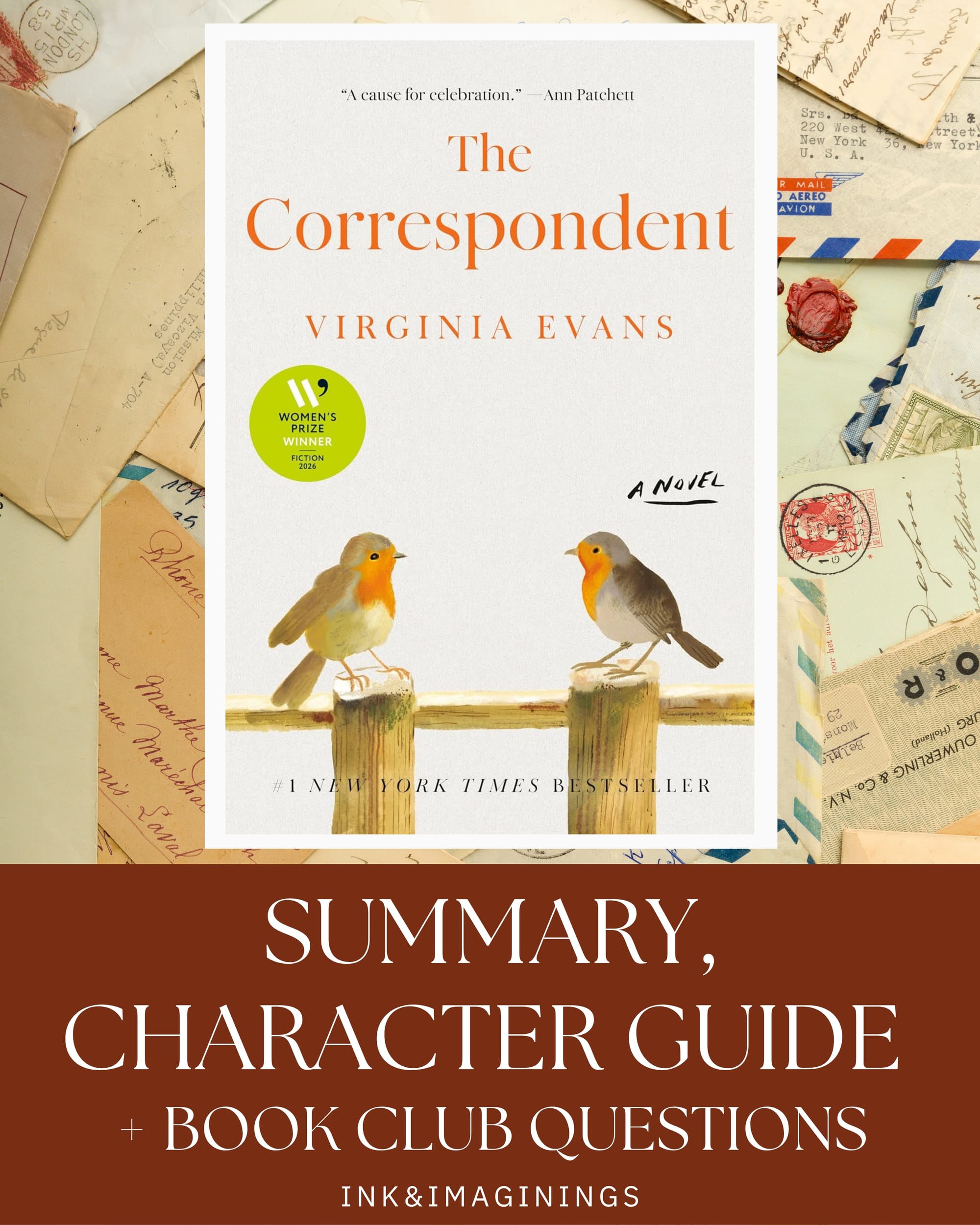
After that, try The Correspondent by Virginia Evans. Or dig into my 2026 book club reading guides.
Frequently Asked Questions
Did Eddie die in the car accident in Whistler?
No, not in the story as written. Eddie survives the 1980 crash because nine-year-old Daphne walks through the snow and finds help. He has surgery, spends decades as a book editor, and is dying of leukemia in the present-day timeline. A popular fan theory says he froze in the car and the rest is the novel Daphne wrote, but Ann Patchett hasn't publicly backed it, and the book gives Eddie too much real life afterward for it to hold up.
Does Eddie die at the end of Whistler?
Not on the page. Eddie has leukemia, and the final chapters are about getting ready. Daphne even promises to tell him he's gone, so his spirit can move on. But the novel stops before it happens. There's no deathbed scene and no funeral. The last time we see him, he's on a bench at the Met with Daphne.
How does Whistler end?
It ends with a conversation. Eddie, dying of leukemia, asks Daphne to write their story down so it outlasts him. In the book, he says, he doesn't die. The final scene returns to the Metropolitan Museum of Art, where the two of them first met again. They sit on a bench and watch people pass. Patchett never tells you whether you've been reading real events or the novel Daphne went on to write.
Does Whistler have an epilogue?
No. There's no epilogue, no time jump, and no final chapter explaining how everyone turned out. The book alternates present-day chapters with interludes set during the 1980 accident. It never moves forward past the last scene at the Met.
Why does Eddie ask Daphne to write the story?
Because a story is the one thing that outlives him. Eddie told nine-year-old Daphne the tale of Whistler the horse to get her through the night in the crashed car. A story brought her back from the edge. Now he's asking her to do the same for him. If their life together exists in a book, it keeps going after the leukemia wins.
Who is Eddie based on in Whistler?
Patchett's friend Jim Fox, who died in 2024 on his eighty-fifth birthday. The book is dedicated to him. The friendship between Daphne and Eddie grew out of that real one. Patchett has said she was tapping into a truth about friendship, not writing down events as they happened.
Before You Go
If you like the kind of reading that leaves a handprint on your heart, the quiet, character-driven, cry-in-the-good-way novels, come hang out in your inbox. Every week I send The Weekly Bookmark: the books I'd text a friend about, the new releases worth catching, and reader guides like this one. No spam, just the good stuff.
And if you've already read Whistler, come tell me where you landed on that ending. I'm still turning it over, and I'd love to know whether you read it as real, as the novel Daphne wrote, or a little of both.