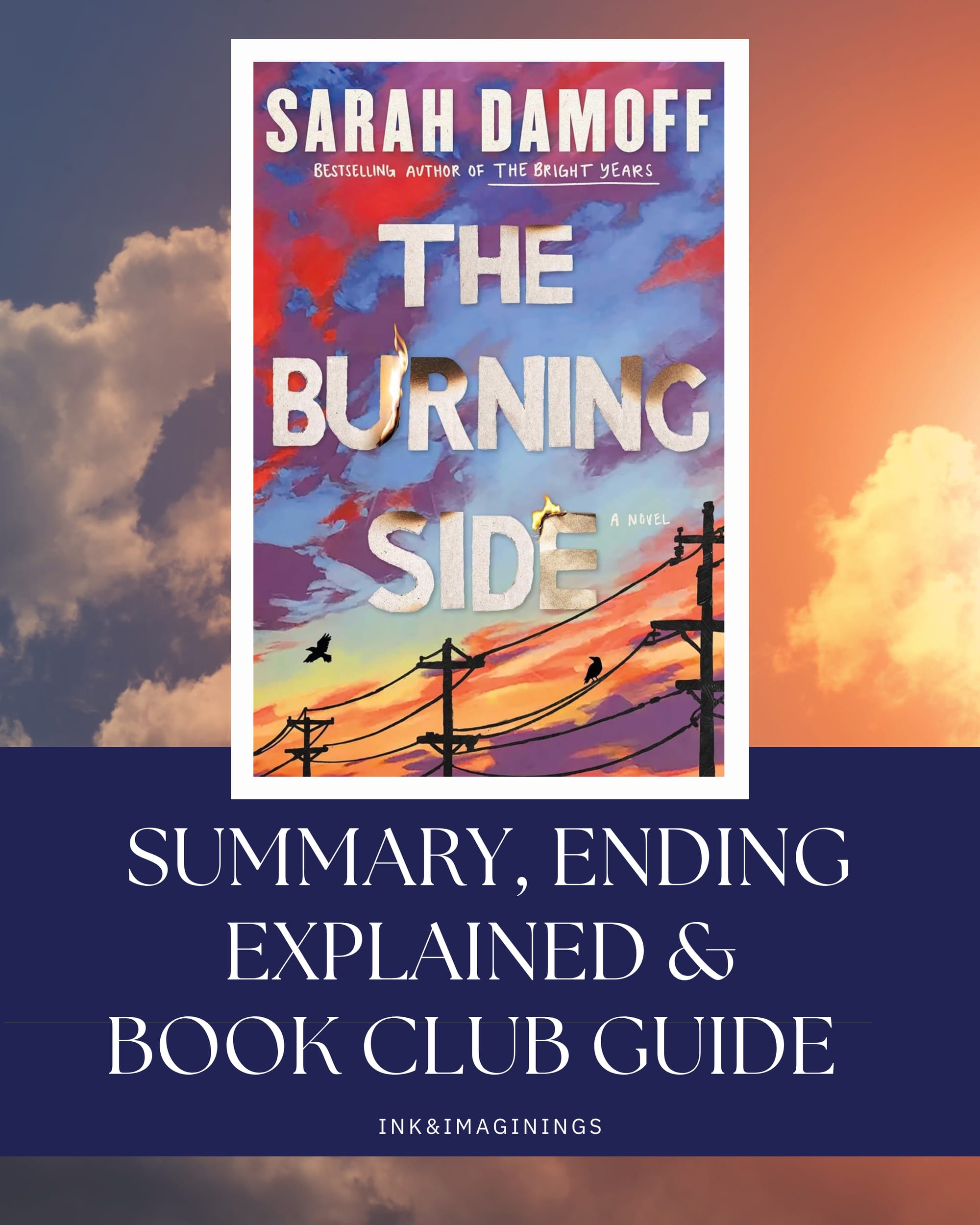
If you thought Sarah Damoff was a good writer from The Bright Years, just wait. The Burning Side is even better. The characters are even more complex, and the generational threads are woven together perfectly. It's a tender, aching novel that will absolutely earn its place on your book club list.
Below: what it's about (spoiler-free), the full plot, the whole extended family, the themes worth talking about, how it ends, twelve discussion questions, my honest take, and what to read next. Full spoilers once you reach the plot summary.
This post contains affiliate links. If you buy through them, I may earn a small commission at no extra cost to you. Thanks for supporting Ink & Imaginings.
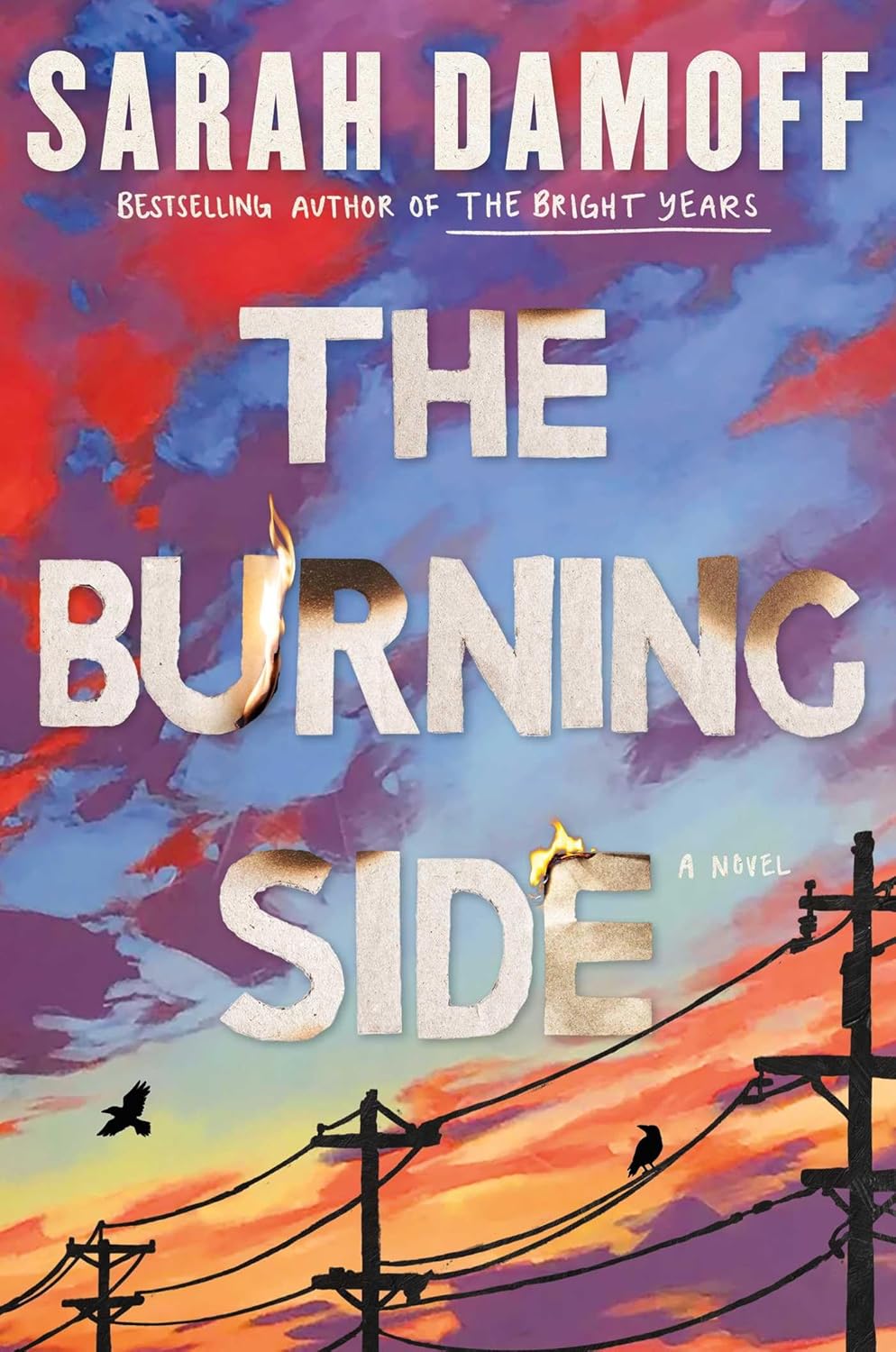
The Bright Side by Sarah Damoff Book Cover
📚 Amazon | Bookshop | 🎧 Audible
Quick Facts
- Released: May 19, 2026
- Author: Sarah Damoff (author of The Bright Years)
- Publisher: Simon & Schuster
- Genre: Literary fiction, family drama, contemporary fiction, book club fiction
- Setting: Texas, present day and across decades, moving between a burned house outside Dallas and the family home April grew up in
- Structure: braided timelines that move between the aftermath of the fire and the years that built the marriage
- Book Club Verdict: quiet, layered, and deeply moving. A perfect pick for a group that loves a multigenerational family story.
- Content notes: a house fire, marital breakdown, early-onset Alzheimer's, postpartum depression, the suicide of a parent (in backstory), and grief

The Burning Side by Sarah Damoff Book Cover
What The Burning Side is about (spoiler-free)
The book opens with April stumbling out of her burning house, clutching her baby and a book, while her husband Leo and older daughter are still inside. Everyone survives, but nearly everything they own turns to smoke, and the fire drags a private disaster into the open: the same night the house catches, Leo has told April he wants a divorce.
With their home gone, April, Leo, and their kids retreat to April's childhood home, into the orbit of her parents, Deb and Billy, and the whole loving, intense Russo family. As the couple sorts through literal and emotional ash, the novel braids their story with the marriage that came before it and the generations on both sides, Leo's abandonment and poverty, April's need to be enough, and Billy's slow disappearance into early-onset Alzheimer's.
Sarah Damoff, whose debut was The Bright Years, writes about family with so much tenderness. The Burning Side is a novel about marriage, memory, inheritance, and what's left standing after everything else burns. If you love a quiet, character-driven family saga, this is a beautiful one.
Full Plot Summary (Full Spoilers)
⚠️ Major spoilers ahead. If you haven't finished the book, skip down to the Characters or Discussion Questions.
The fire, and the retreat home
April escapes the burning house with her baby and a book while Leo and their older daughter, Sadie, get out too. The fire, sparked on the night Leo asks for a divorce, torches nearly everything they own and lays their crumbling marriage bare.
With nowhere else to go, the family moves into April's parents' house, the home where she grew up. The nostalgia is bittersweet and the old family patterns are immediate, and living in the pink glow of her childhood bedroom, April begins to grasp that it isn't only her house she's lost. Her marriage may be gone for good too.
The marriage, in flashback
Woven through the aftermath is the story of how April and Leo got here. They met at a Texas high school, a passionate tutor and a new teacher, both outsiders, connecting over books and a shared devotion to overlooked kids. They fix up a battered "sold-as-is" house on four acres, marry, and build a life, but upbringing and fear pull at the seams.
Leo, shaped by poverty and abandonment, is haunted by impermanence; April, from a loving but demanding family, never feels like enough. Arguments over money, class, and a former student they try to save expose deeper fractures, and a hard pregnancy, colic, and April's postpartum depression push them further apart.
The parents, and the diagnosis
April's mother, Deb, moves to the foreground as the family's caretaker and memory-keeper, carrying the weight of her husband Billy's early-onset Alzheimer's. As the couple sorts through the wreckage of the burned house, dividing possessions and blame, the extended Russo family gathers for birthdays and reunions, each sibling processing the family's grief differently. Billy's decline cracks everyone open, and long-buried family secrets, about why Deb and Billy married, about which memories are true, start to surface.
How The Burning Side ends
The inheritance of pain, revealed. The novel's hardest truths belong to Leo's side. His father, Rico, absent for most of the book, re-enters as a flawed, sympathetic man whose abandonment was shaped by generational poverty and depression. And the wound underneath Leo's whole life finally becomes clear.
His mother Ana, a young mother who struggled with her mental health, died by suicide. That loss has impacted every act of care Leo performs as an adult, and understanding it is what finally lets him confront his father and begin, imperfectly, to heal.
Choosing each other again. The demolition of the burned house becomes the act of closure. Facing the finality of both their home and their marriage, April and Leo instead do the harder thing. They forgive. In raw, necessary conversations, each admits their part in the collapse, neither guiltless.
Settlement talk gives way to midnight conversations, and the old ring goes back on April's finger. It isn't a fairy-tale reconciliation. It's an active, uneasy choice, made by two people deeply marked by failure, to keep loving each other anyway, embers and all.
Letting go, and going on. As April and Leo rebuild, Deb and Billy prepare to leave the family home for the last time, and the whole clan gathers to pack the boxes. Billy's memory fades, but Deb's capacity for presence only grows.
The book closes on a glimpse of the future. April and Leo as elders, their children grown, a grandchild at their feet, names and details slipping away but the love is still there. Damoff's final argument is that family isn't a house or a perfect story. It's the long string of clumsy, choices people keep making. Choosing to there for and beside each other.
Characters
April Russo Torres. The heart of the novel, an anxious, deeply nurturing but self-doubting woman shaped by both the love and the pressure of a close, performing family. A former tutor who advocates fiercely for struggling kids (she has dyslexia herself), she's driven by a need to be needed that often costs her own sense of worth. Through the fire, the near-collapse of her marriage, and her father's decline, she has to learn to forgive herself as fiercely as she loves everyone else.
Leo Torres. April's husband, a teacher marked by childhood poverty and abandonment, wary and adaptable but chronically insecure. Terrified of repeating his own parents' failures, he copes by withdrawing, going silent, erasing himself, which is exactly what nearly ends the marriage. His journey is toward the hard-won understanding that love is built and rebuilt, not sustained by willpower or memory alone.
Deb Russo. April's mother, the family's caretaker, cook, and historian, often at the expense of her own desires. Her marriage to Billy grew from a pragmatic arrangement into real love, and she's the emotional touchstone of the book, modeling the difficult grace of keeping love alive as her husband's memory slips away.
Billy Russo. April's father, a dentist whose progression through early-onset Alzheimer's is rendered with devastating specificity. Quietly loyal, expressing love through practical care rather than grand gestures, his decline illuminates both what's lost to the disease and what somehow can't be.
Josie Russo. April's vibrant middle sister, a traveling actor who refuses her family's expected timelines and masks vulnerability with bravado. Her need to be seen on her own terms mirrors the book's larger belief that families survive by loving what's different, not by demanding sameness.
Cameron Russo. The youngest Russo sibling, thoughtful, loyal, and steadying, the least likely to rock the boat and the most likely to show up with quiet support. His grounded steadiness is a deliberate contrast to the more volatile men in the story.
Sadie and Otto Torres. April and Leo's children. Sadie, their daughter, is the family's emotional barometer, her fear during the fire mirroring the collective trauma and her resilience pointing toward healing. Otto, the baby, is both a symbol of hope and a trigger for Leo's deepest fear of failing as a father, and the hard early days of his infancy test whether the family can truly survive together.
Rico and Ana Torres. Leo's parents, who enter mostly through memory and late revelation. Rico's abandonment is contextualized by poverty and depression, making him both culpable and sympathetic, and his eventual reconnection with Leo offers a route out of inherited shame. Ana, Leo's mother, struggled with her mental health as a young mother and died by suicide, a loss that haunts Leo's identity and shapes the novel's cycles of grief.
Themes Worth Discussing
What survives the burning. The fire is the book's central metaphor: strip away the house, the possessions, the tidy story of a marriage, and what's left? Damoff's answer is family, not as a structure or a myth, but as the messy, ongoing set of choices people keep making for each other.
Inheritance, and the cycles we try not to repeat. Both April and Leo are shaped by their parents' wounds, his abandonment and loss, her family's intensity and pressure. The novel is fascinated by how pain travels down generations, and by the effort it takes to hand your children something better.
Memory, and the mercy and cruelty of forgetting. Billy's Alzheimer's runs through the whole book as a look at memory's double edge, how it wounds us and how it holds us. The question of which memories are even true becomes a family reckoning.
Marriage as a daily choice. April and Leo don't get a magic reconciliation. They get midnight conversations and a returned ring and a decision, made again and again, to stay. The book is clear-eyed that love is work, and that choosing each other is the opposite of a fairy tale.
Forgiveness as survival, not justice. When old secrets surface, forgiveness in this novel isn't about who was right. It's about giving up the fantasy of a neat ending and choosing to keep living, together, anyway.
Book Club Discussion Questions
These are the ones that will get your group talking, ordered from warm-up to heated.
- The novel opens with April fleeing the fire clutching her baby and a book. What did that image, and that one saved object, tell you about her?
- The fire starts the same night Leo asks for a divorce. How did the literal and emotional destruction mirror each other for you?
- April never feels like "enough," and Leo is terrified of impermanence. How did their opposite wounds feed the collapse of the marriage?
- The family retreats to April's childhood home. How did returning to where she grew up help and hurt her?
- Deb has spent her life as the family's caretaker and memory-keeper. What did the book say about the invisible labor of holding a family together?
- Billy's Alzheimer's is rendered in painful detail. What did the novel get right about loving someone as their memory fades?
- Leo learns the full truth about his parents, including his mother's death. How did that backstory change your understanding of him?
- Family secrets surface about why Deb and Billy married and which memories are real. Did the truth feel like a relief or a loss?
- April and Leo choose each other again, but it's uneasy and imperfect. Were you rooting for the reconciliation, and did it feel earned?
- The demolition of the house is treated as an act of closure. What did letting the house go allow the family to do?
- The book argues that forgiveness is about survival, not justice. Do you agree, and where in your own life have you seen that?
- The final flash-forward shows love outlasting even memory. What did you take from that closing image?
My Honest Take
If you thought Sarah Damoff was a good writer from The Bright Years, just wait, because this one is even better. The characters are even more complex, and the generational threads are woven together perfectly.
What she does so well is refuse the easy version of every moment. The marriage doesn't collapse cleanly and it doesn't heal cleanly. The parents aren't saints or villains. Even the fire, the most dramatic thing in the book, ends up mattering less than the small, ordinary choices that come after it. Pick it for a book club that loves a tender, multigenerational family story and doesn't need a tidy ending. Bring tissues, especially for the Billy chapters.
If You Liked The Burning Side, Read These Next
📚 The Bright Years by Sarah Damoff: her debut, the one that made everyone fall in love with her family fiction. Start here if you haven't.
📚 Hello Beautiful by Ann Napolitano: a tender, sweeping novel about sisters, marriage, and a family absorbing a wounded outsider. The same big-hearted register.
📚 The Most Fun We Ever Had by Claire Lombardo: a sprawling, decades-spanning family saga about a marriage and the four daughters orbiting it.
📚 Commonwealth by Ann Patchett: two families reshaped by divorce and a single summer, traced across fifty years with grace and ache.
📚 Little Fires Everywhere by Celeste Ng: motherhood, class, and a literal fire that lays a family's secrets bare. A natural companion read.
Already read one of these? Come back and check out the full guides:
Whistler | Every Reese, Oprah & Read with Jenna Pick of 2026
📚 Looking for your next book club pick? Book of the Month sends you a new book every month for the price of a coffee. Try your first month for $5
Want more book club picks like this in your inbox every Tuesday? Subscribe to The Weekly Bookmark, the books I'd text a friend about, plus the new releases worth catching this week.
Frequently Asked Questions
What is The Burning Side about?
It's Sarah Damoff's second novel, about April and Leo, a Texas couple whose marriage is collapsing on the same night their house burns down. Forced to move in with April's parents, the family sorts through the wreckage while the novel braids in the story of their marriage and the generations of grief and love on both sides, including April's father's early-onset Alzheimer's.
How does The Burning Side end?
April and Leo, facing the demolition of their home and the end of their marriage, choose instead to forgive each other and stay together, an uneasy, hard-won reconciliation. Leo reconciles with his estranged father, April's parents move out of the family home as her father's Alzheimer's advances, and a closing flash-forward shows the couple as elders, love outlasting even memory.
Is The Burning Side connected to The Bright Years?
No. It's a standalone novel, Sarah Damoff's second after her debut The Bright Years, though it shares her tender, multigenerational approach to family.
Is The Burning Side sad?
It's emotional and deals with heavy material, including a house fire, a failing marriage, Alzheimer's, and inherited grief. But it's ultimately a hopeful book about forgiveness and the endurance of love. Most readers find it moving rather than bleak.
What are the content warnings for The Burning Side?
The novel includes a house fire, marital breakdown, early-onset Alzheimer's, postpartum depression, the suicide of a parent in backstory, and grief. It's tender in its handling, but go in aware of those themes.
Who wrote The Burning Side?
Sarah Damoff, the author of the acclaimed debut novel The Bright Years. The Burning Side is her second novel.