⭐ Reese's Book Club March 2026 Pick ⭐
This is the 2026 debut novel by Rachel Hochhauser Reese Witherspoon's March Book Club selection. A standalone literary reimagining of Cinderella told from the stepmother's perspective.
Forget the glass slippers. This isn't that story.
Rachel Hochhauser's debut novel takes the world's most famous fairy tale villain — the wicked stepmother of Cinderella— and makes you root for her. Lady Etheldreda Tremaine is twice widowed, broke, living in a manor that's gorgeous on the outside and literally crumbling within, raising her own two daughters alongside a stepdaughter she didn't choose. She has a razor-taloned peregrine falcon named Lucy. And she has exactly one shot at securing her family's future before the whole performance of gentility collapses.
By the last page, you're not just sympathizing with Lady Tremaine. You're in her corner completely.
This post contains affiliate links. If you buy through them, I may earn a small commission at no extra cost to you. Thanks for supporting Ink & Imaginings.
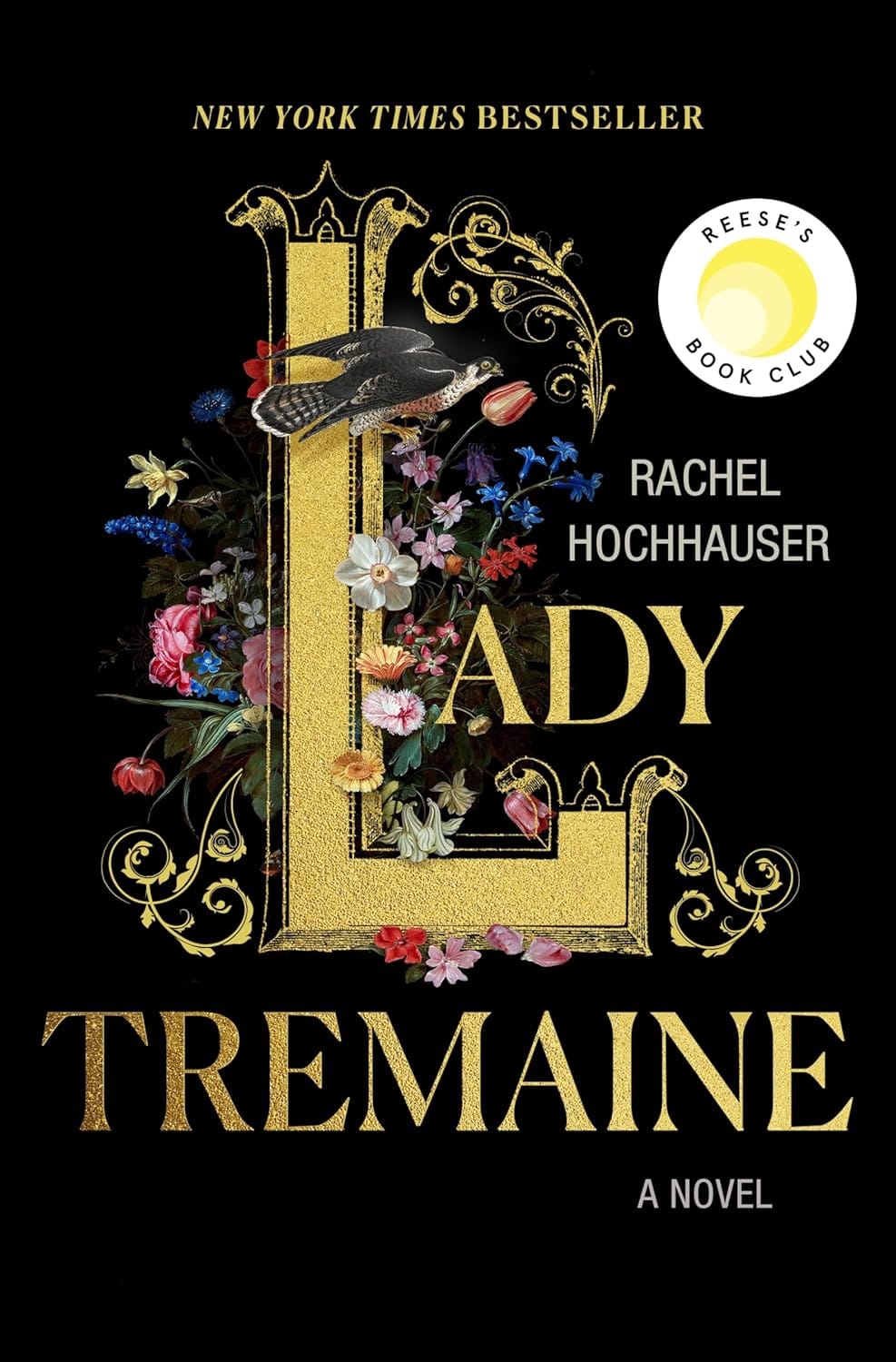
Lady Tremaine by Rachel Hochhauser book cover
📖 Buy on Amazon | Buy on Bookshop.org | 🎧 Listen on Audible
Quick Take
- Genre: Historical Fiction / Fairy Tale Retelling
- Setting: A vaguely medieval kingdom, the world of Cinderella is reimagined
- Released: March 3, 2026 (St. Martin's Press)
- Length: 352 pages
- Book Club Pick: Reese's Book Club, March 2026
- Awards/Buzz: IndieNext Pick, LibraryReads Pick, People Book of the Week, Kirkus starred review, Publishers Weekly starred review. Blurbed by Glennon Doyle, Sarah Penner, and Emilia Hart.
- Read if you loved: Circe by Madeline Miller, Wicked by Gregory Maguire, The Lost Apothecary by Sarah Penner, Weyward by Emilia Hart, anything that flips a familiar story to give the so-called villain her say
What Lady Tremaine Is About
Lady Etheldreda Verity Isolde Tremaine Bramley (Ethel to those closest to her) is the sole adult holding together a household that should have a full staff. She has been widowed twice. Her first husband, Henry Tremaine, was a love match: they bonded over falconry, away from society's gaze, and his sudden death left her exposed to his family's whims and the harsh realities of inheritance law.
Her second husband, Lord Robert Bramley, was a pragmatic alliance arranged when her daughters were on the verge of being married off as children. Robert is also now dead. What he left her is Bramley Hall, a gorgeous, crumbling manor, and a mess of debt, locked-away dowries, and a stepdaughter named Elin who has rejected her authority from day one.
Etheldreda has two daughters of her own. Mathilde, the eldest, is sharp, practical, and runs the family accounts before she's old enough to be asked. Rosamund, the younger, is warm, artistic, and keeps the household alive with her embroidery. She also has Lucy, the razor-taloned peregrine falcon whose training Ethel took on after Henry's death as a way to channel her grief.
The story opens with Ethel in the woods at dawn, hunting with Lucy and crossing paths with a stranger. A quiet, watchful man named Otto Abensur. The encounter is tense, then complicated, then unfinished. He will matter later in ways neither of them sees coming.
Then the world cracks open. The royal court announces a ball, the prince is searching for a bride. A carriage arrives at Bramley Hall and the family scrambles to perform gentility despite the patches in the rugs and the threadbare sleeves. But the invitation, when it's read aloud, names only Elin. Mathilde and Rosamund are excluded. The slight is a blow, and Ethel's determination hardens: she will not let her own daughters be left behind.
What follows is a series of desperate maneuvers. Ethel pawns her mother's cameo. She barters the orchard's apples for court favor. She braves an audience with the queen Sigrid, the same Sigrid she knew as a girl, the rival who once humiliated her in the falconry fields and has since ascended to the throne through a fateful "accident" and a series of calculated moves. The cost of admission to the ball is steep, and the price of Sigrid's favor is even steeper still.
In the days before the ball, Ethel orchestrates a "chance" encounter. A picnic positioned along the royal hunting party's route. The plan works. The prince notices Rosamund and Mathilde. The family is invited.
And then, on the night itself, Elin arrives at the ball in Ethel's most treasured possession, her blue wedding dress, the one she wore the day she married Henry. The prince dances with Elin all night. By the time the family returns to Bramley Hall, Rosamund's hopes are dashed and Ethel is mourning a dress she did not give. Three weeks later, the engagement is announced. Three weeks after that, the wedding.
And in those weeks, Ethel begins to notice that something is deeply, dreadfully wrong inside the palace.
The Main Characters
Lady Etheldreda "Ethel" Tremaine Bramley
The heart of the novel. Twice widowed, broke, holding her family together through performance and sheer will. Prideful, sharp-tongued, and occasionally ruthless but every move she makes is driven by the kind of desperate, bone-deep maternal love that fairy tales never bother to show you.
Mathilde
Ethel's eldest daughter. Intelligent, practical, and old before her time. She runs the household accounts and absorbs responsibilities her mother shouldn't have to hand her. Her rivalry with Elin is rooted in both jealousy and a real sense of justice. She sees what Ethel sacrifices and is frustrated by Elin's passivity. Mathilde's arc is one of learning when to fight and when to choose family over ambition.
Rosamund
Ethel's younger daughter. Warm, artistic, and the family's quiet talent. Her embroidery and needlework aren't just a hobby. They're what keeps the household clothed and dignified. Rosamund hopes for the ball in a way that's almost too pure for the book she's in, which is why her heartbreak after the ball lands so hard. Her arc is about finding self-worth that doesn't depend on a prince noticing her across a crowded room.
Elin
Ethel's stepdaughter, and the figure the original tale calls Cinderella. She is not the angelic victim of the Disney film or the Grimm fairytale. She is complicated, frustrating, and clings hard to ideals of virtue, accomplishment, and obedience that have been drilled into her by her dead mother and her dead father in equal measure. She resists Ethel at every turn. She makes choices that challenge both her stepmother and the reader. And when the ball arrives, the choice she makes about the blue dress is the moment the whole novel turns.
Lucy (the peregrine falcon)
Lucy is so much more than a pet. The falconry scenes are some of the most beautiful writing in the book, and they're never decorative. Every time Lucy appears, watch what Ethel is doing with her hands and her grief.
Sigrid (the Queen)
Ethel's old rival, now the most powerful woman in the kingdom. Sigrid climbed through a series of strategic moves and one convenient accident, and she has no intention of relinquishing what she earned. Her relationship with Ethel is the novel's mirror plot: two women, similar circumstances, opposite choices. Sigrid wields her power with grace and cruelty in equal measure.
Prince Simeon
The book's antagonist, and the figure who exposes how thin the line between fairy-tale charm and unchecked privilege actually is. Charming on the surface, predatory underneath. His pursuit of Elin is not what Ethel thinks it is, and his true nature is the novel's central horror.
Otto Abensur
The royal counselor and the stranger from the woods. Haunted by his own losses, navigating court politics with the kind of integrity that keeps him constantly in danger. His relationship with Ethel evolves from suspicion to alliance to something Ethel did not expect to feel again after Henry. Their romance doesn't dilute the story, it deepens it.
Wenthelen and Alice
The household's cook and housekeeper. Romantic partners. Co-conspirators in every survival strategy Bramley Hall mounts. They are the model of chosen family that the novel quietly insists matters more than blood, and their loyalty to Ethel and the girls is unwavering.
Moussa
A traveling jongleur (medieval entertainer in France and Norman England) who passes through Bramley Hall during the worst of the lead-up to the ball. Outsider, trickster, sage. His perspective from outside the gentry's world is the breath of air Ethel desperately needs.
The Cinderella Reframe
What Lady Tremaine does is hold the original fairy tale up against the actual economic and social realities of being a widowed woman with daughters to feed. That's what makes it so much more than a clever "villain gets her say" story .
The original story flattens Lady Tremaine into cruelty for cruelty's sake. Hochhauser asks: what if she wasn't? What if she was a woman who had been told her entire life that her only job was to marry her daughters off, who had been given no other survival tools, who watched a stepdaughter inherit something she could have used? Is that villainy? Is it desperation? Is the difference, in the end, even meaningful?
The book is structured around three recurring symbols that do the heavy thematic lifting:
Falconry. Every scene with Lucy is doing two jobs at once. Falconry is the negotiation between wildness and obedience, between instinct and training. Ethel learned it from Henry. She uses it to survive widowhood. And it's the language the book uses for what motherhood actually costs her.
Apples. The orchard at Bramley Hall is one of the family's last actual resources, and Ethel barters apples for court favor, for invitations, for the picnic that lands her daughters in front of the prince. The apple as currency. The apple as temptation. In this story it's the thing women trade for proximity to the men with power. It's not subtle, and it doesn't need to be.
The blue dress. Ethel's wedding gown from her marriage to Henry. The love of her life, the man with whom she was genuinely happy. The dress is the most personal thing she owns. When it ends up on Elin at the ball, it stops being a dress and becomes the entire question of the novel: what do you owe a girl who has taken from you without asking? And what does it mean to keep choosing her anyway?
If Wicked taught a generation of readers to question who gets to be the hero, and Circe taught them to question who gets to tell the story, Lady Tremaine does both at once and asks a third question on top: what does it cost the women who do the telling?
My Honest Take
Forget the glass slippers. This isn't that story.
I had the ARC of Lady Tremaine and went into it expecting a sympathetic-villain retelling that would be smart but maybe not surprising. I was wrong. Hochhauser does the harder thing: she makes you understand Ethel without absolving her, and she makes you understand Elin without sanctifying her, and she puts them in a story where both of them are trying to survive a system that wasn't built to let either of them succeed.
Etheldreda is prideful, sharp-tongued, and occasionally ruthless. But every move she makes is driven by the kind of desperate, bone-deep maternal love that fairy tales never bother to show you. The fact that the maternal love sometimes lands as cruelty toward her stepdaughter is the entire moral question of the book and Hochhauser refuses to give you a clean answer.
The writing is gorgeous. It gets you so deep inside Ethel's head. The pacing tightens in the back half. The royal-family secret, when it surfaces, raises the stakes from "will the Tremaines survive" to "what does Ethel actually owe a girl who has rejected her at every turn." That tension is where the book really shines.
By the last page I wasn't just sympathizing with Lady Tremaine. I was in her corner completely.
⚠️ Lady Tremaine Ending Explained SPOILERS BELOW ⚠️
Stop scrolling now if you haven't finished the book. Everything past this point reveals the third act, including the central royal secret, the prince's fate, and what happens to Lucy.
The "deeply wrong" thing Ethel senses inside the palace is this: Prince Simeon and his sister, Princess Hemma, are in an incestuous relationship. Hemma is pregnant with Simeon's child. The royal engagement to Elin is a fast-tracked decoy marriage designed to preserve the bloodline and provide cover for the actual paternity of the heir who is on the way.
Elin, in other words, has been chosen as a body to launder a royal lie. The prince never intended this to be a love match. He needed a girl whose mother had no political power to protect her once the truth started to slip.
Ethel uncovers the scheme and confronts the prince. He turns on Elin first. He is physically violence and the scene is intense. Ethel and Elin defend themselves and, in the struggle, the prince is killed. In the same fight Lucy, Ethel's peregrine falcon, is killed defending the women who raised her.
What follows is a coordinated act of survival. Ethel, the girls, Wenthelen, Alice, and Otto dispose of the prince's body and destroy the evidence. Queen Sigrid arrives at Bramley Hall demanding answers.
The confrontation that follows is the novel's quietest battle and one of its most powerful: Sigrid threatens annihilation, and Ethel makes Sigrid understand that the Tremaine family knows the royal secret. Mutual destruction is the only insurance the women have, and Sigrid who built her own power the same way accepts the terms.
The family buries Lucy in the orchard. Otto stays. Mathilde and Rosamund grow into themselves in ways neither of them could have if they had married into the gentry. Elin and Ethel arrive to level of mutual respect, finally, at something that isn't love and isn't forgiveness exactly but is enough to live on.
The book ends with the women together, scarred and alive, facing a future that no fairy tale prepared them for.
It is the closest thing to a happy ending Hochhauser is willing to give. It is, also, exactly the right one for this story.
Book Club Discussion Questions for Lady Tremaine
- Before reading Lady Tremaine, what was your impression of the original wicked stepmother of Cinderella? Did Hochhauser's version change that impression, or just complicate it?
- Ethel's actions are driven by a fierce, almost desperate maternal love for Mathilde and Rosamund. Does that love justify her treatment of Elin? Where do you draw the line between protective motherhood and harm?
- Falconry is the book's spine, Ethel learned it from Henry, used it to survive widowhood, and Lucy dies in the final confrontation. What is Hochhauser saying about the relationship between wildness, control, and motherhood?
- The Tremaine manor is described as "gorgeous on the outside, literally crumbling within." How does that description work as a metaphor for the women inside it?
- Elin is reframed as complicated and frustrating rather than the angelic victim of the original tale. How did you feel about her at the start vs. the end? When (if ever) did your sympathies shift?
- The blue wedding dress is the symbol that drives the second act. What does Elin choosing to wear it say about her? What does Ethel's response say about Ethel?
- Sigrid, as queen, is Ethel's mirror, same starting position, opposite choices. What is the novel saying about the costs of each woman's path?
- The royal-family secret, and what Ethel does about it, pushes the book from social drama into something darker. Did the violence feel earned to you? Did the ending feel earned?
- Wenthelen, Alice, and Moussa are not blood family, but they are family. What is Hochhauser saying about the chosen family that survives at Bramley Hall versus the formal family structures the kingdom recognizes?
- If you've read other recent fairy-tale or villain reframes Wicked, Circe, retellings of Snow White, Sleeping Beauty, Beauty and the Beast where does Lady Tremaine fit? What does it add to the conversation about who gets to be the protagonist of a familiar story?
If You Loved Lady Tremaine, Read Next
📚 Circe by Madeline Miller The original modern "give the villain her say" novel and the most-cited comp for Lady Tremaine. Miller takes Homer's sea-witch and turns her into one of the most complete portraits of female resilience in recent fiction. If you haven't read it yet, start here.
📚 Wicked by Gregory Maguire The other obvious comp. A perspective flip on a famous villainess that asks the same questions Lady Tremaine asks about who gets to be the hero of a story we thought we knew.
📚 The Lost Apothecary by Sarah Penner Sarah Penner blurbed Lady Tremaine ("my favorite read of the year so far") and the audience overlap is real. An 18th-century apothecary who poisons men on behalf of wronged women, intersecting with a modern woman uncovering the apothecary's records. Same lane of female-anger-historical-fiction.
📚 Weyward by Emilia Hart Hart blurbed Lady Tremaine ("breathtakingly beautiful") and her own novel traces three women across centuries connected by a quiet, dangerous power. If the "women in impossible positions writing their own way out" frame is what worked for you, Weyward is yours.
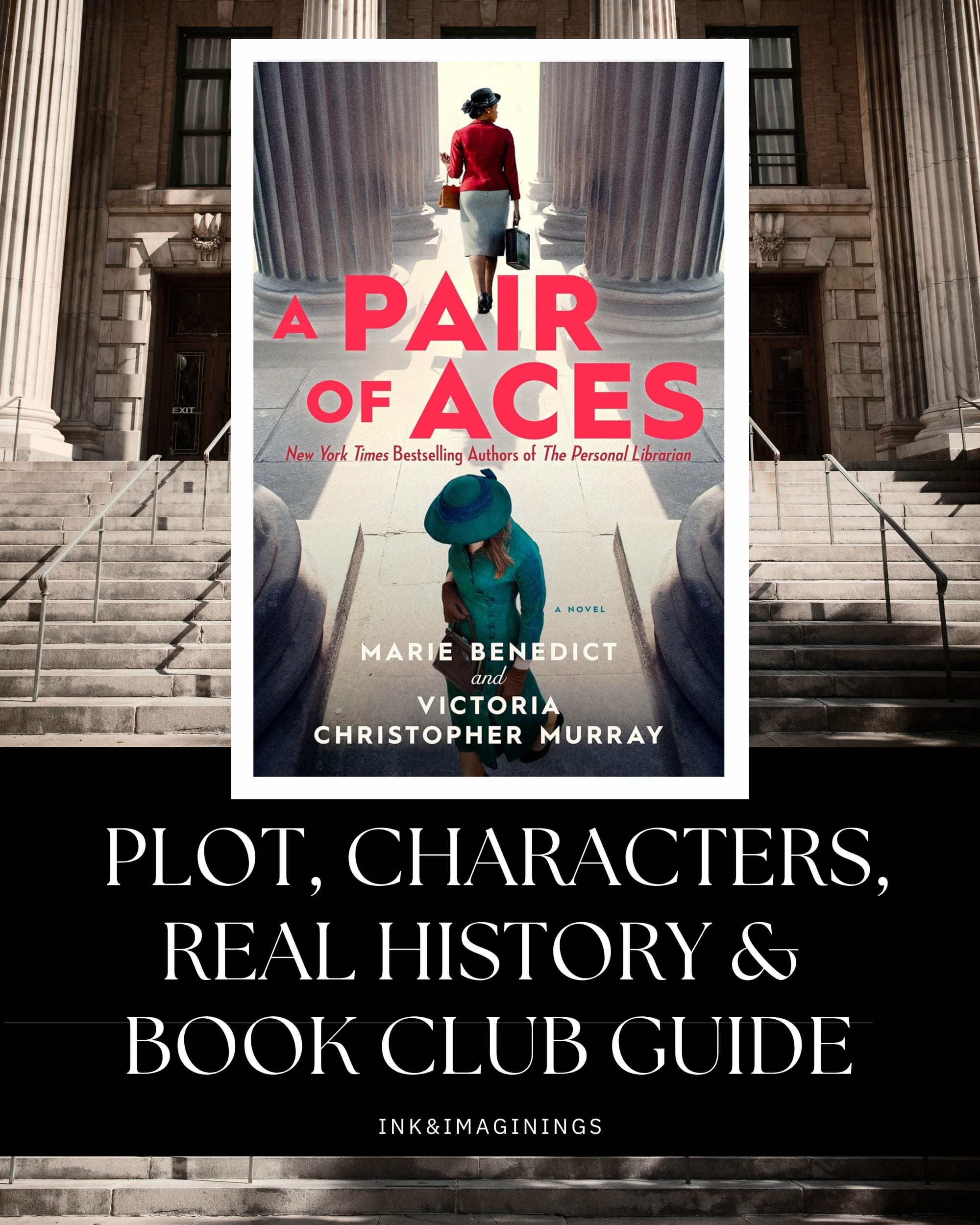
📚 A Pair of Aces by Marie Benedict and Victoria Christopher Murray Different setting, same lane. Reese's June 2026 pick is built on real women navigating a system designed to exclude them. Full guide here.
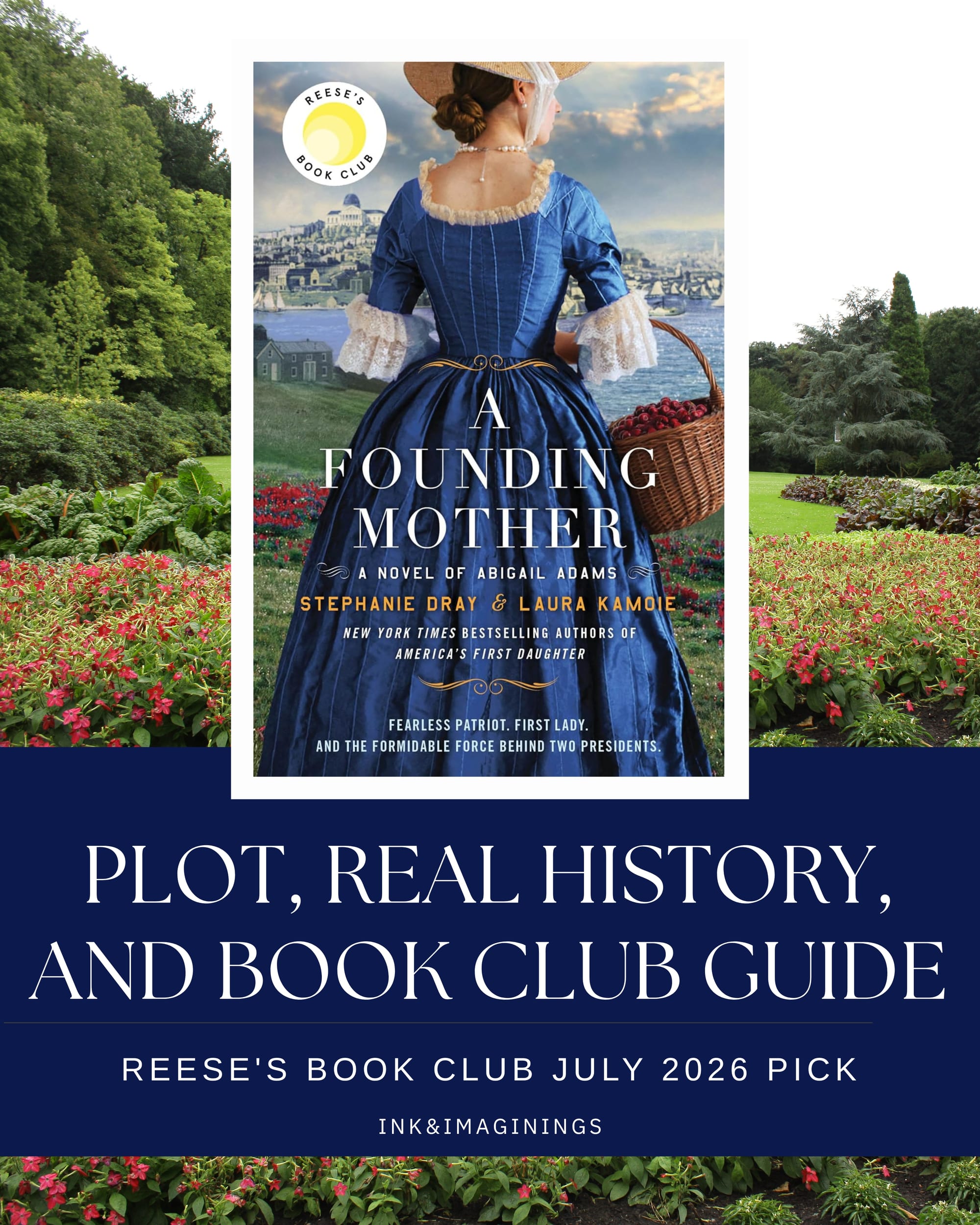
📚 Yesteryear by Caro Claire Burke Reese's January 2026 pick. Family secrets, dual timelines, an ending your book club will argue about for an hour. Full guide here.
Want more character-driven literary fiction with morally complex protagonists? The Golden Boy by Patricia Finn: reader's guide Lady Tremaine asks who really gets to be the villain of their own story. The Golden Boy asks the inverse: what does it cost to spend your life as the golden one and then learn the price the people you stepped on actually paid. Stafford Hopkins in his Maui exile is the morally complex protagonist Lady Tremaine readers will recognize immediately.
Where to Buy Lady Tremaine
📖 Buy on Amazon | Buy on Bookshop.org | 🎧 Listen on Audible
📚 Want a Reese pick (or another book club book) delivered to your door each month? Book of the Month carries most of the major picks and is how a lot of readers got Lady Tremaine the same week it came out. First book is $5 →
Frequently Asked Questions
Is Lady Tremaine a Cinderella retelling?
Yes. Lady Tremaine is a literary reimagining of the Cinderella fairy tale from the point of view of the so-called wicked stepmother, Lady Etheldreda Tremaine. Rachel Hochhauser keeps the core structural elements of the original. The manor, the stepdaughter, the royal ball, the prince, and flips the moral perspective to make the stepmother the protagonist. Be aware: this is adult literary fiction, not a YA or middle-grade retelling.
Is Lady Tremaine a Reese's Book Club pick?
Yes. Lady Tremaine by Rachel Hochhauser is Reese Witherspoon's March 2026 Reese's Book Club selection. It was also named an IndieNext Pick, a LibraryReads Pick, and People magazine's Book of the Week.
What is the sordid secret at the center of Lady Tremaine?
⚠️ Major plot spoiler. The royal engagement to Elin is a decoy: Prince Simeon and his sister Princess Hemma are in an incestuous relationship and Hemma is pregnant with Simeon's child. Elin has been selected as a fast-tracked bride to provide cover for the actual paternity of the future heir. The discovery is the turning point of the novel. See the Ending Explained section above for full details.
Why is falconry so important in Lady Tremaine?
Falconry is the novel's central metaphor and Ethel's defining inner life. She learned it from Henry, her first husband. Her bond with Lucy, the peregrine falcon, is the book's emotional through-line the negotiation between wildness and control mirrors the negotiations Ethel is making throughout the story about motherhood, survival, and self. Pay attention every time Lucy enters a scene.
Who is Rachel Hochhauser?
Rachel Hochhauser is a debut novelist who grew up in Santa Barbara, California, and earned her master's in professional writing from the University of Southern California. She currently lives in Portland, Oregon with her husband and two daughters. Lady Tremaine is her first novel.
How long is Lady Tremaine?
352 pages, published by St. Martin's Press.
What other Cinderella or villain-reframe novels should I read after Lady Tremaine?
For more Cinderella-adjacent fiction: Cinder by Marissa Meyer (YA sci-fi spin), Stepsister by Jennifer Donnelly (one of the stepsisters' POV). For the broader "villain reframe" lane: Wicked by Gregory Maguire, Circe by Madeline Miller, and the wave of fairy-tale POV flips currently flourishing. Lady Tremaine is the strongest entry in that lane in 2026.