⭐️⭐️⭐️⭐️⭐️ (5 stars)
I listened to The Midnight Train in one day while reorganizing our closet, and by the time I refolded the last sweater I could already think of a dozen people I wanted to hand this book to. That's the kind of book this is. The kind you finish, then immediately want to push onto everyone you love.
Matt Haig's companion to The Midnight Library arrived May 26, 2026 from Viking, and it does exactly what readers loved about the first one with a slightly different angle: where The Midnight Library was about the lives you didn't live, The Midnight Train is about the one you actually did, and what you'd do differently if you got to see how it all played out.
Below you'll find a spoiler-free summary, the ending explained, a character guide, my honest take, and ten book club questions. I'll mark the spoiler section clearly so you can stop reading if you haven't finished yet.
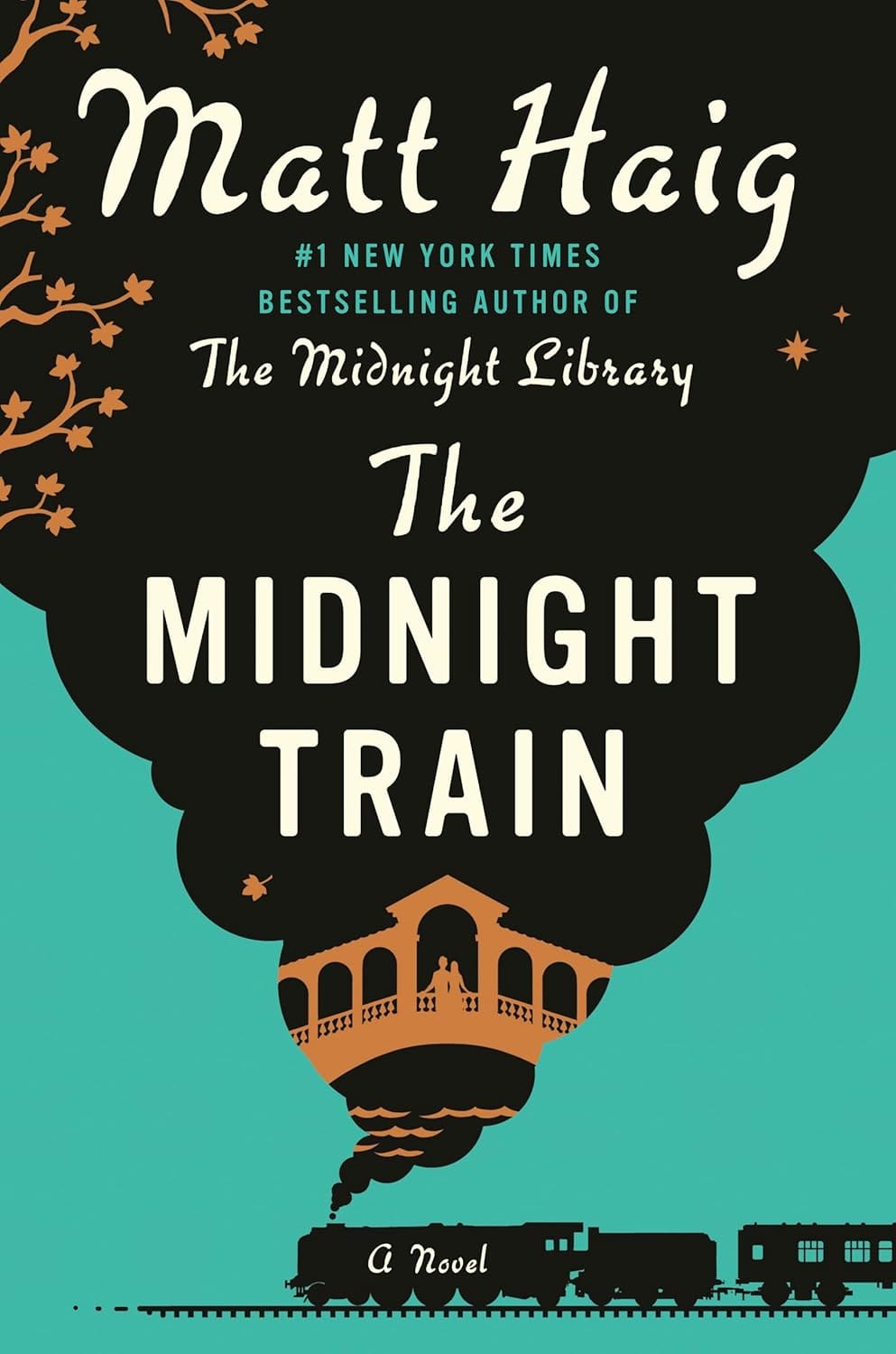
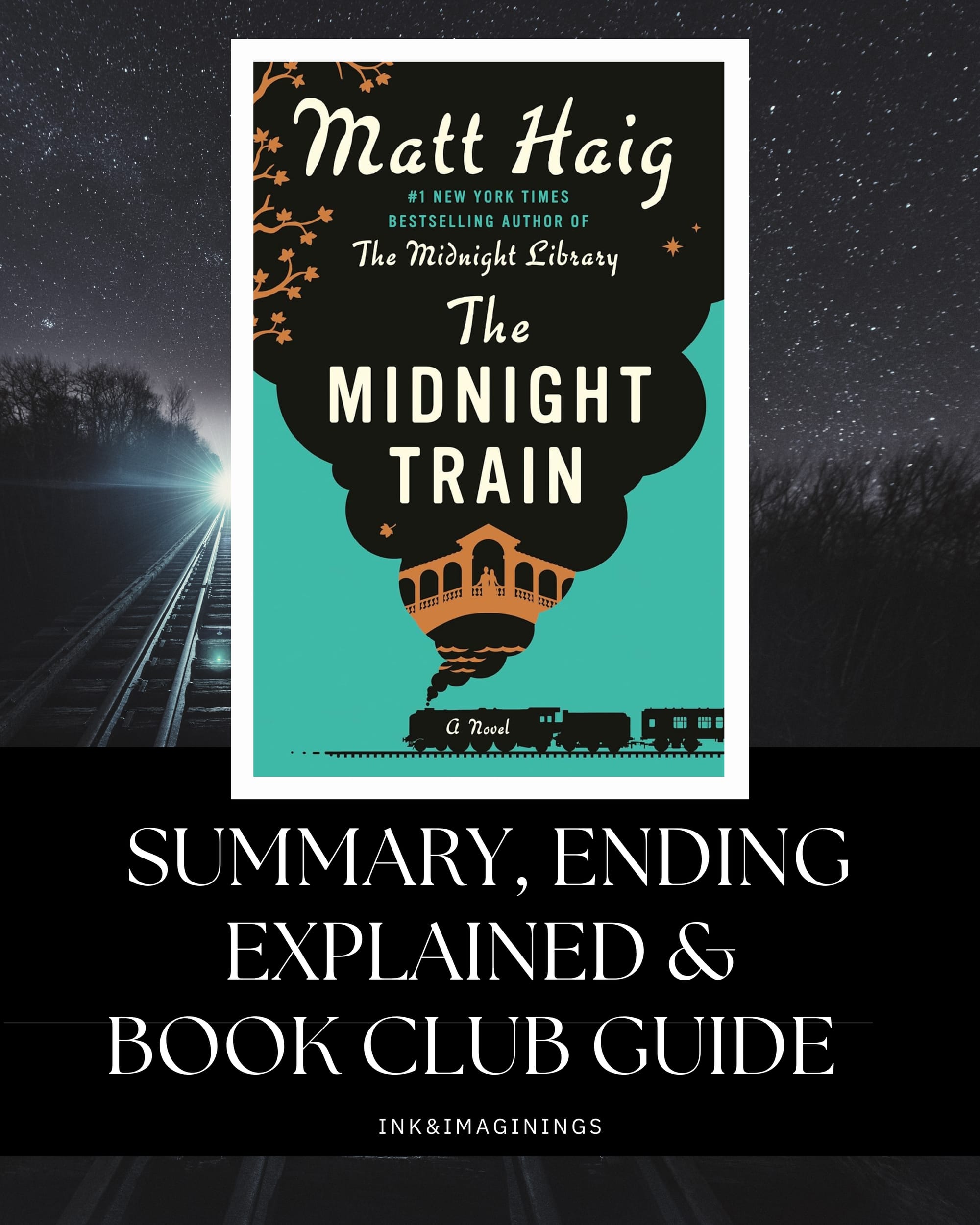
The Midnight Train by Matt Haig Book Cover
📖 Buy on Amazon | Buy on Bookshop.org | 🎧 Listen on Audible
Quick Answers
What is The Midnight Train about? Wilbur Budd, an 81-year-old widowed bookshop owner, dies and finds himself on a magical train that takes him back through the most important moments of his life with a ghostly guide who insists he watch and not interfere. The question becomes whether he can change anything, and whether some choices are worth breaking the rules for.
Is The Midnight Train connected to The Midnight Library? Yes, it's a standalone companion novel in the same universe. Readers will recognize one returning character (Nora Seed appears as Wilbur's piano teacher in his old age), but you do NOT need to have read The Midnight Library first. It works completely on its own.
How does The Midnight Train end? Wilbur wakes back on his honeymoon in Venice with the memory of everything still intact. The gift of a second chance, now made possible by his ghostly self sacrificing eternity. Full ending explained below.
Is The Midnight Train worth reading? Yes, five stars from me. If The Midnight Library moved you, this one likely will too. Read on for who I'd specifically recommend it to.
Spoiler-Free Summary
Wilbur Budd is eighty-one years old, alone in a quiet English village, and taking piano lessons because they're the one bright thread left in an increasingly small life. His ex-wife Maggie, the love of his life, the one he lost not to death but to his own slow drift into ambition calls out of the blue. It's the first conversation they have had in years. Then Wilbur dies.
He wakes in a dreamlike train station, alone, and finds a ticket waiting for him. The train departs at one minute past midnight. His destination, he learns from a ghostly guide named Agnes, is his own life. The train will move him through the pivotal moments, and his job is to watch. Not to change anything. Just to witness, and to understand.
What follows is a journey through the texture of one ordinary, imperfect life: a working-class Sheffield childhood marked by his father's death and his mother's quiet resentment; a brother, Dougie, whose love and recklessness shaped everything; a meeting with Maggie that became a marriage, and a marriage that became its own slow undoing. Wilbur sees it all from the outside now, and Agnes won't let him interfere, because the rules are absolute, until they aren't.
The novel is short (304 pages), tender, and built on the same emotional architecture that made The Midnight Library a phenomenon: the question of what we'd do with our lives if we could see them clearly. Haig's gift is that he asks the question without making you feel preached to.
And the ending turns in a way I genuinely didn't see coming and is the part I want to talk to people about most! (Full breakdown after the spoiler break.)
⚠️ Full spoilers below this point. If you haven't read it yet, skip to my review and book club Q section and come back for the ending explained when you've finished.
The Midnight Train Ending Explained
Full spoilers below
The ending hinges on a choice the ghost-Wilbur makes against the rules. As he and Agnes move through the memories; his honeymoon, Dougie's death, Maggie's miscarriage, the moment he fired his best friend Charlie, the slow erosion of everything that mattered, he becomes increasingly desperate to warn his younger self. Agnes has been clear from the start: he can watch, but he cannot interfere. The train runs on rules, and the cost of breaking them is steep.
He breaks them anyway.
In the climax, ghost-Wilbur deliberately appears to his younger, dreaming self and shows him a vision of the life ahead. The lonely house, the empty success, the Maggie-shaped absence. He does this knowing the cost: his own unmaking. Agnes warns him that if he interferes, he may simply cease to exist. The train itself begins shaking and crumbling around them. He goes anyway.
Which is how Wilbur wakes, not dead in a village in rural England, but young, on his honeymoon in Venice, with Maggie beside him and the memory of the train still intact. The gift is everything. He knows how it ends if he keeps going the way he was. He knows what he loses. He knows that ambition will hollow him out and that Charlie deserves better and that Maggie will not stay if he doesn't choose her every day.
The final scenes show him doing exactly that. He tells Maggie what she means to him. He gives up the empire he was about to build. He keeps one bookshop instead of many. He stays present. The novel closes with the two of them walking through Venice at night, planning their life as they go. The radical idea that a life worth living isn't a script you execute but a thing you remake, daily, with your person beside you.
It's tender without being too easy. The ghost is gone, he traded eternity so the living man could wake, and what remains is the quiet weight of a second chance, used well.
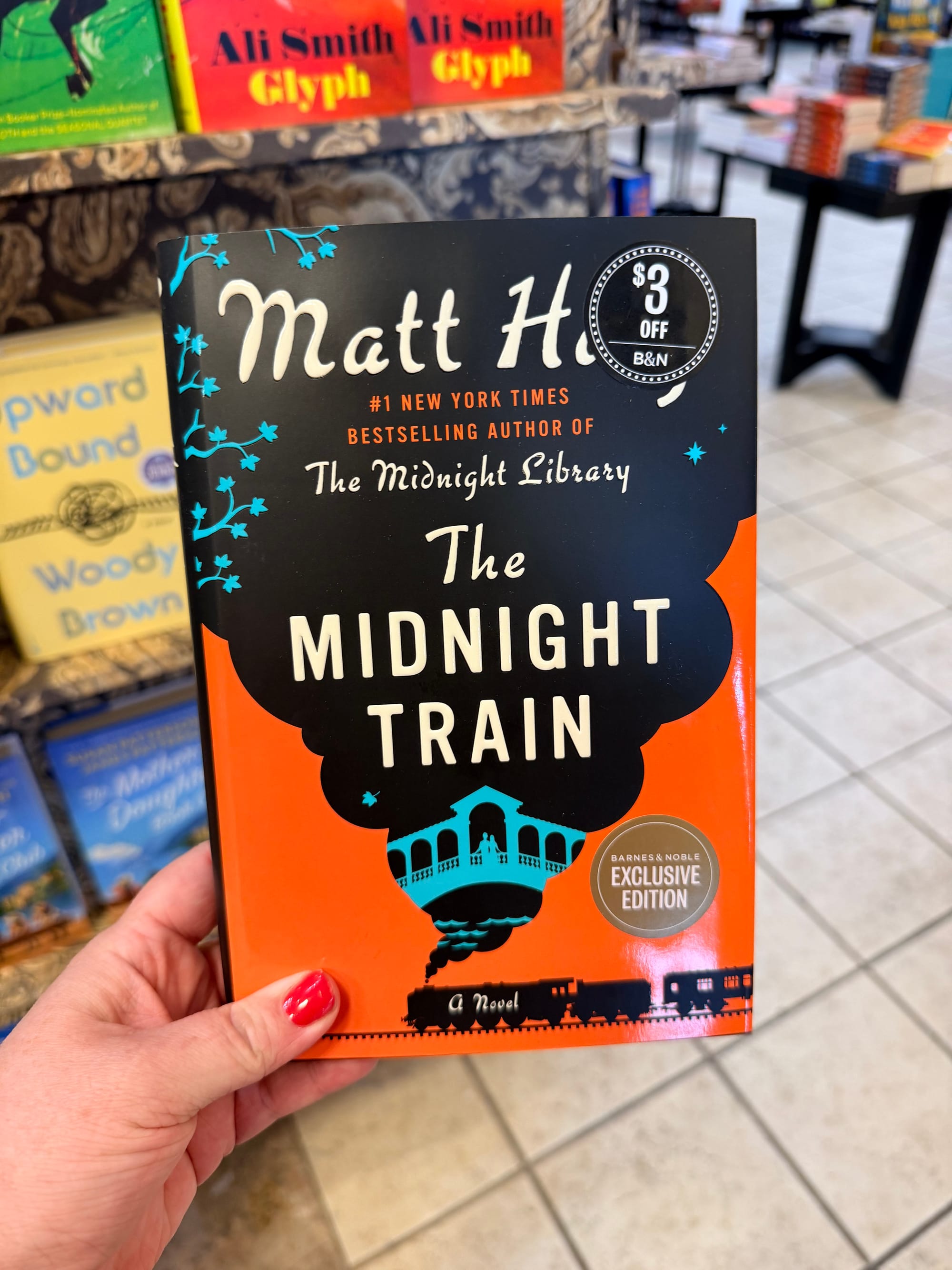
Photo of holding a copy of the book The Midnight Train by Matt Haig
Character Guide
Wilbur Budd
Protagonist, prism, and ghost. A Sheffield bookseller shaped by postwar poverty, his father's early death, and the tragedy of his older brother. Intelligent, sensitive, and resourceful, Wilbur's promise gets warped by trauma into a lifelong drift between ambition and avoidance.
Maggie Shaw Budd
Wilbur's wife and the love of his life. Creative, intelligent, and quietly fierce Maggie is both the woman Wilbur loves and the one he keeps failing. Her final act of leaving him isn't an attack it's a call for him to wake up.
Agnes Bagdale
The ghostly conductor of Wilbur's train, who owned the village bookstore when Wilbur was a kid. Brisk, no-nonsense, but deeply kind. She is the train's authority and also Wilbur's last childhood mentor returned to him at the end. Her insistence on non-interference is the book's central tension and she doesn't approve of Wilbur's eventual rule-breaking she still stands by him.
Dougie Budd
Wilbur's older brother. Volatile, "a troubled one", scarred by their father's and the struggle he and his mom endured after the war. The accident that lead to his death had a deep impact on Wilbur's life.
Edith Budd
Wilbur's mother. Widowed by the war before Wilbur was born, exhausted by survival, and resentful of the fatherless baby she had to raise. Edith's mental health unravels across the decades but we are left with a glimmer of hope that her future will also be softened after this train ride.
Charlie Applewood
Wilbur's lifelong best friend. Shy, mathematically gifted, the kind of loyal best friend every coming-of-age novel needs. Their estrangement is one of the book's most painful regrets, and Wilbur's eventual restoration of the friendship is one of best moments of redemption.
Nora Seed
Readers of The Midnight Library know her. Here, she appears in Wilbur's old age as his piano teacher. A woman who once nearly died and chose, instead, to live. Her presence is the cameo Penguin teased, but she earns it: her philosophy of "the only way to learn is to live" is part of what gives Wilbur the courage to act when his ghost finally breaks the rules.
Miss Graham
Wilbur's early teacher, who fostered his love of literature and appears later as a ghostly second voice on the train. The counter to Agnes, urging him to take a risk and break the rules. She is novel's acknowledgment that there are two kinds of wisdom: the disciplined kind and the daring kind and both matter.
Mr. Parkin
Initially the archetype of the strict and exploitative landlord. Later emerges as Edith's suitor in her late life, recasting decades of family resentment in a softer light. His arc is the book's quiet argument that the villains of our childhoods may not be as we remember them.
Alfred Shaw
Maggie's father, and the closest thing Wilbur has to a paternal figure in adulthood. His central advice that "love is a garden, not a declaration; it has to be tended" is the book's entire philosophy in one sentence.
My Honest Review (5 stars)
I'll say it plainly: I loved this book. I listened to it in one day, and I think I'll listen to it again before the year is out.
Matt Haig has a particular gift that doesn't get talked about enough: he writes the kind of sincere, gently-instructive fiction that could so easily feel like preaching, and somehow it doesn't.
The Midnight Train spends three hundred pages telling you to slow down, be present, love the people in front of you, and stop sacrificing what matters for what looks like it matters and never once does it feel like a TED Talk. It feels like a friend with a quiet voice reminding you about something you already knew but had forgotten.
I was reminded the whole time of A Christmas Carol, and Haig isn't shy about the parallel. A man revisiting moments from his life, forced to confront his choices, returned to a chance to do better. It's a classic for a reason.
What Haig does that's new is treat the classic bones with extreme tenderness, and add a few specific twists (Agnes; the rule of non-interference; the ghost's sacrifice) that turn it from morality tale into love story.
If you adored The Midnight Library, this book is for you. If you love Mitch Albom's tender speculative fiction, this book is for you. If you're at a point in your own life where you're asking yourself the questions Wilbur is asking; did I love hard enough, did I notice enough, did I prioritize the right things it might be exactly the book you need right now.
The honest caveat I'd give: people tend to fall hard into two camps about Haig. People who love his work love it for its sincerity and its willingness to be wise without irony. People who don't love his work find that same sincerity too preachy or oversimplified. If you're in camp two, this one won't convert you. If you're in camp one, or if you've never read him and you're open to a quiet, heartfelt story ride this one if for you.
This is a five-star read for me. I would press it into the hands of a dozen people I know without hesitation.
Book Club Discussion Questions
- The novel opens with Wilbur's honeymoon in Venice and uses that memory as a touchstone throughout. Why do you think Haig structures the book this way? What does the Venice memory represent that none of the others quite do?
- Agnes insists on the rule of non-interference. Wilbur can watch, but not change. Ghost-Wilbur eventually breaks the rule anyway. Was he right to? What does the novel ultimately argue about rules versus love?
- Dougie's death is the central trauma that shapes Wilbur's life from young adulthood forward. How does the novel portray the long aftermath of grief — and the way unprocessed pain can warp later joys?
- Maggie's leaving isn't framed as a betrayal but as a call to wake up. Did you read it that way? Whose side were you on as their marriage unraveled and did your sympathies shift?
- Wilbur's ambition is the slow villain of the book. What's the difference, in Haig's framing, between meaningful work and "perpetual busyness"? Where in your own life have you seen that line blur?
- Agnes and Miss Graham represent two opposite kinds of wisdom, the disciplined and the daring. Which voice did you find yourself agreeing with more, and did that change by the end?
- The ghost trades eternity so the living Wilbur can wake. What does that sacrifice say about the relationship between the lives we live and the selves we leave behind?
- Alfred Shaw's teaching that love is a garden that needs constant tending becomes the working philosophy of the book. Who in your own life modeled that kind of love for you or didn't?
- Nora Seed appears as a cameo for readers of The Midnight Library. What did her presence as Wilbur's piano teacher add to the story for you? Did it deepen the book, or feel like fan service?
- The novel ends with Wilbur and Maggie planning their life by "making it up as they go along." Is that a wisdom you believe in, or does it feel too easy? What does it cost to live that way and what does it cost not to?
What to Read Next
If The Midnight Train hit, these are the books I'd hand you next.
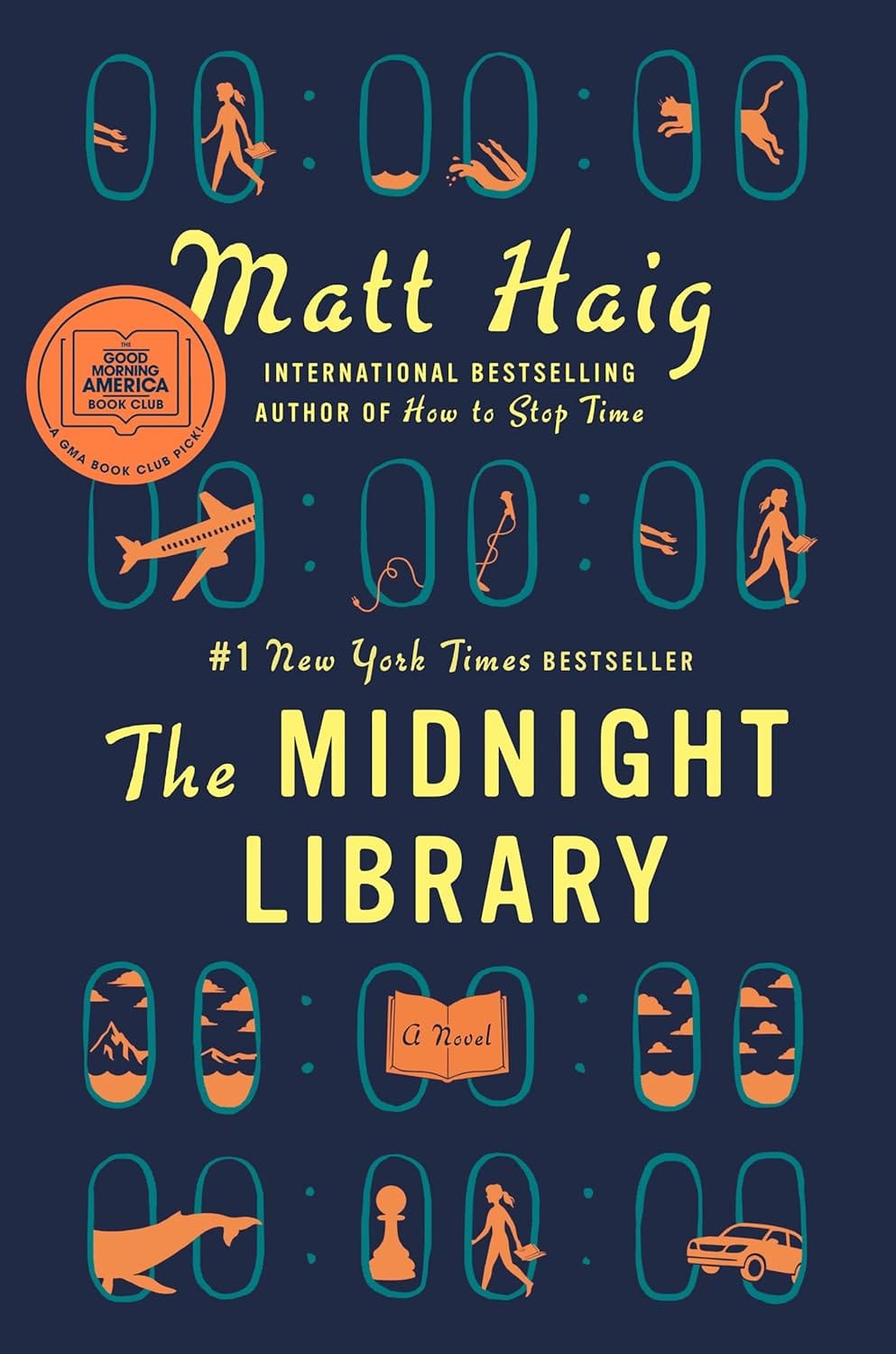
The Midnight Library by Matt Haig Book Cover
The Midnight Library by Matt Haig
📖 Buy on Amazon | Buy on Bookshop.org | 🎧 Listen on Audible
The obvious answer is the right one. If you haven't read The Midnight Library yet, do that. Nora Seed's library of lives-not-lived is the structural mirror to Wilbur's train of lives-lived, and her piano-teacher cameo in Train lands harder if you've already watched her choose her own life in Library. The two books work in either order, but reading Library first deepens the second one.
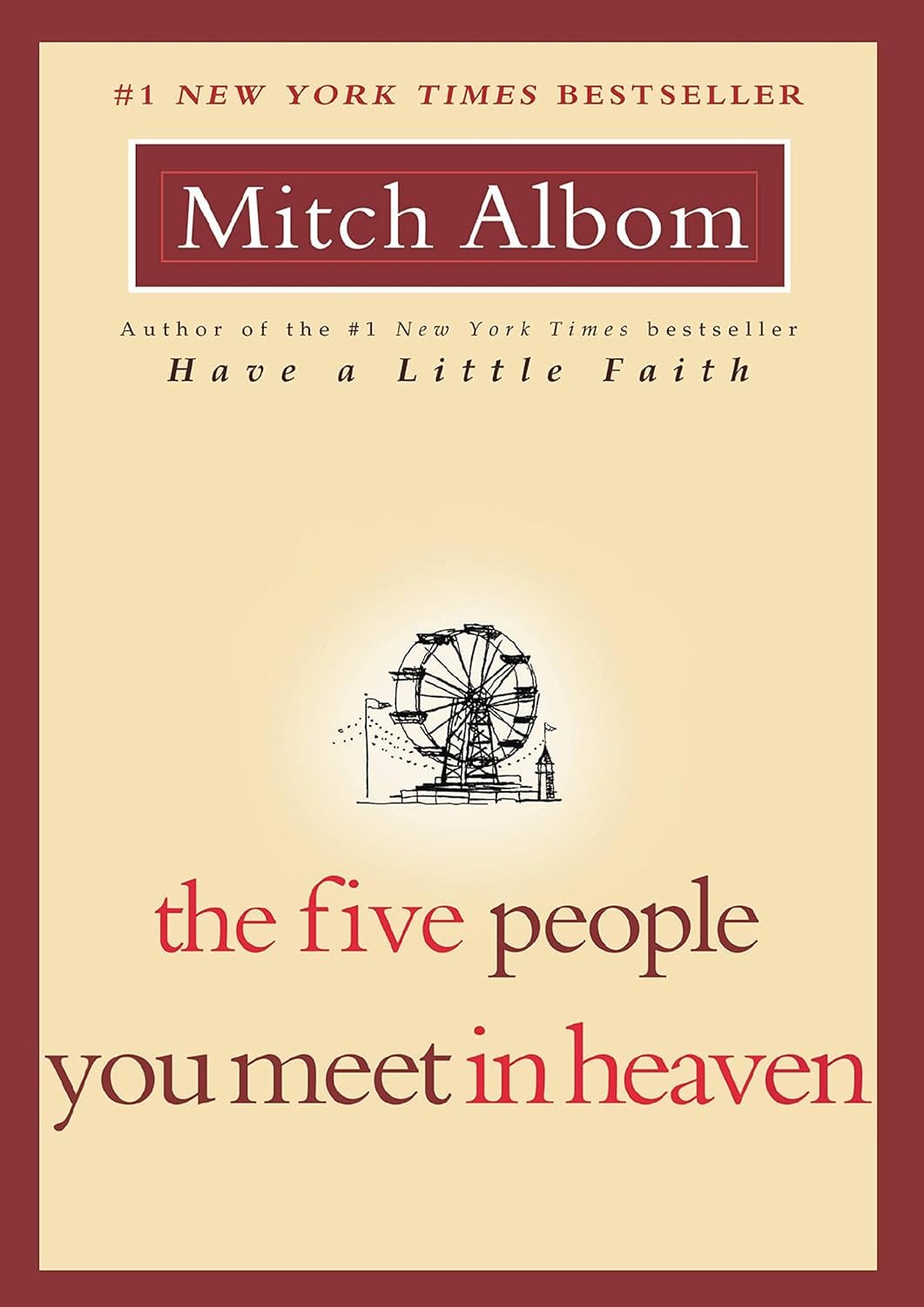
The Five People You Meet in Heaven by Mitch Albom Book Cover
The Five People You Meet in Heaven by Mitch Albom
📖 Buy on Amazon | Buy on Bookshop.org | 🎧 Listen on Audible
The Mitch Albom comparison is the comp Penguin themselves drew, and they're right. Five People is the same emotional register and the same gentle speculative architecture. Eddie the maintenance worker dying on the carousel, then meeting five strangers who reveal what his own life actually meant. The Same emotional architecture as Wilbur's ghost standing at the back of his honeymoon, finally seeing what he had. If Haig hit, Albom will too.
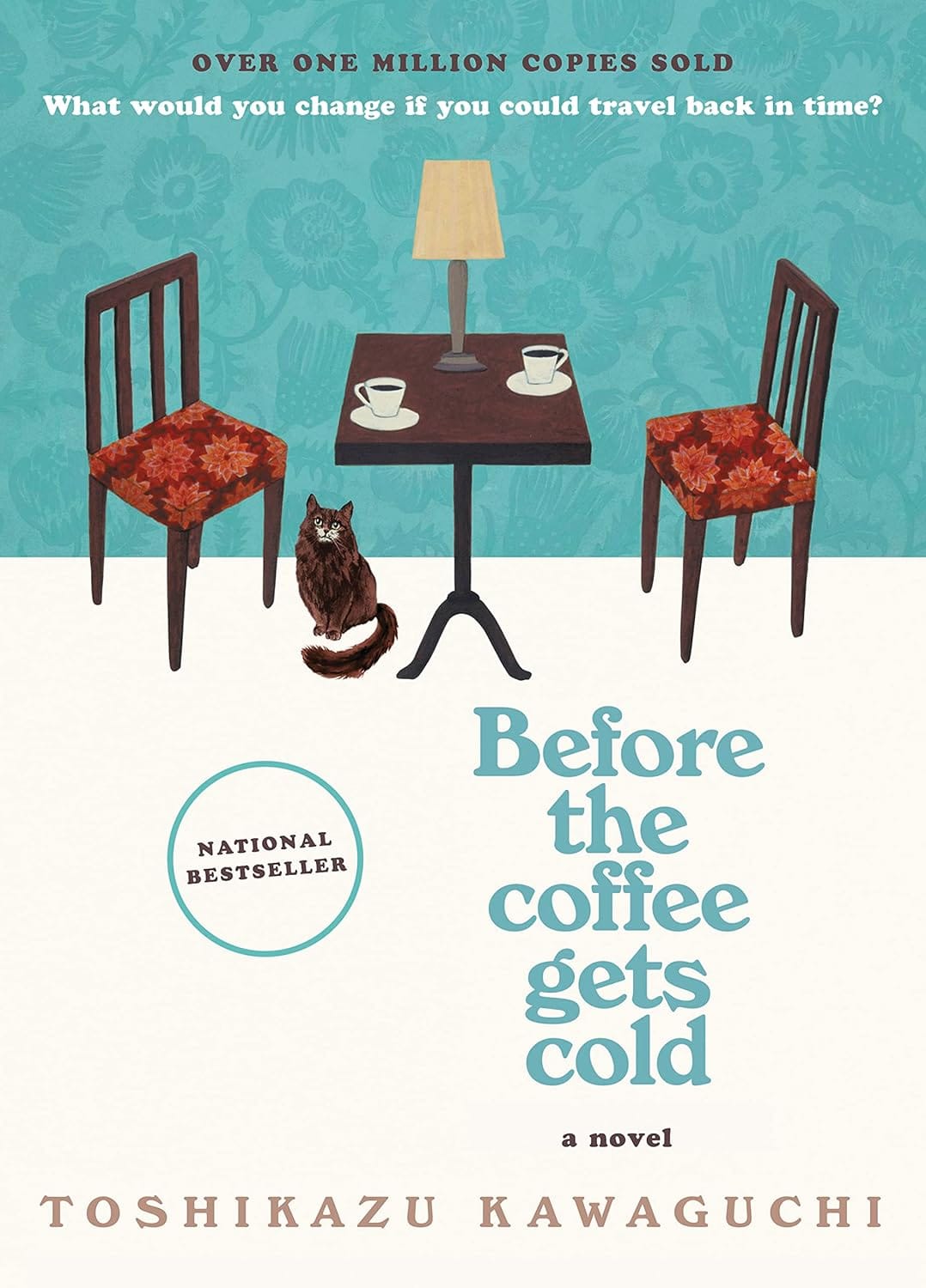
Before the Coffee Gets Cold by Toshikazu Kawaguchi Book Cover
Before the Coffee Gets Cold by Toshikazu Kawaguchi
📖 Buy on Amazon | Buy on Bookshop.org | 🎧 Listen on Audible
The closest to The Midnight Train on this list and a personal favorite of mine. In a small Tokyo café, customers can travel back in time but only while sitting in one specific seat, only until their coffee gets cold, and (the rule that matters) they cannot change anything that happens afterward. Four interconnected stories follow four customers using this magic to revisit one moment each: the husband they didn't say goodbye to, the sister they failed, the mother they lost too young, the daughter they never got to meet. Kawaguchi resolves each story not by changing what happened, but by changing what the character carries forward It's also the start of a series (Tales from the Café, Before Your Memory Fades, and several more), so if it lands, you have somewhere to keep going.
Tom Lake by Ann Patchett Book Cover
Tom Lake by Ann Patchett
📖 Buy on Amazon | Buy on Bookshop.org | 🎧 Listen on Audible
Different genre, same emotional question: what does it mean to look back at the loves and roads-not-taken of your own life from a vantage where you can finally see them clearly? Lara telling her three grown daughters, during cherry-picking season at the family orchard, about the summer she almost left for an actor's life same quiet ache as Wilbur turning over the choice that cost him Maggie. Patchett works in literary realism rather than Haig's gentle speculative mode, but if you're in the mood that The Midnight Train put you in, Tom Lake belongs on the same shelf.
Book of the Month
Want a hand picking your next read? Try Book of the Month for $5 in your first month they've been my best discovery tool for books that hit this exact emotional register.
Frequently Asked Questions
Is The Midnight Train a sequel to The Midnight Library?
Not a sequel, but a companion. It's a standalone novel set in the same loose universe, with one returning character (Nora Seed appears as Wilbur's piano teacher). You can read either book first; Library enriches Train slightly, but it's not required.
How long is The Midnight Train?
304 pages in hardcover. The audiobook runs around eight hours short enough to finish in a day like I did.
Is The Midnight Train sad?
It's tender, and there are sections that will make you tear up. Dougie's death, the miscarriage, the ending of the marriage. But it isn't bleak. It moves through grief toward hope, and lands on hope.
Who would enjoy The Midnight Train?
Readers of Matt Haig, Mitch Albom, Tuesdays with Morrie, The Midnight Library, Before the Coffee Gets Cold , and other tender speculative fiction about the lives we lead and the lives we could have led. People in their thirties through their seventies tend to respond to it most strongly it's a book that lands harder the more life you've already lived.
What does the ending mean?
Wilbur's ghost sacrifices his own existence in the afterlife to give his younger, dreaming self a vision of the life ahead, allowing the young Wilbur to wake on his honeymoon with the memories of the train intact. He uses that knowledge to make different choices. Keeping one bookshop instead of many, staying present with Maggie, choosing the people in his life over the empire he was about to build. The novel ends with Wilbur and Maggie walking through Venice planning their life as they go.
When you finish, you'll have a quiet, weighty book on the shelf, four next-reads queued up, and a question to bring to your book club: would you change your past if you could?
Tag me when you read it. I want to know who YOU'D press it into the hands of. I'm always collecting names for the dozen people in my own life who need exactly this book.