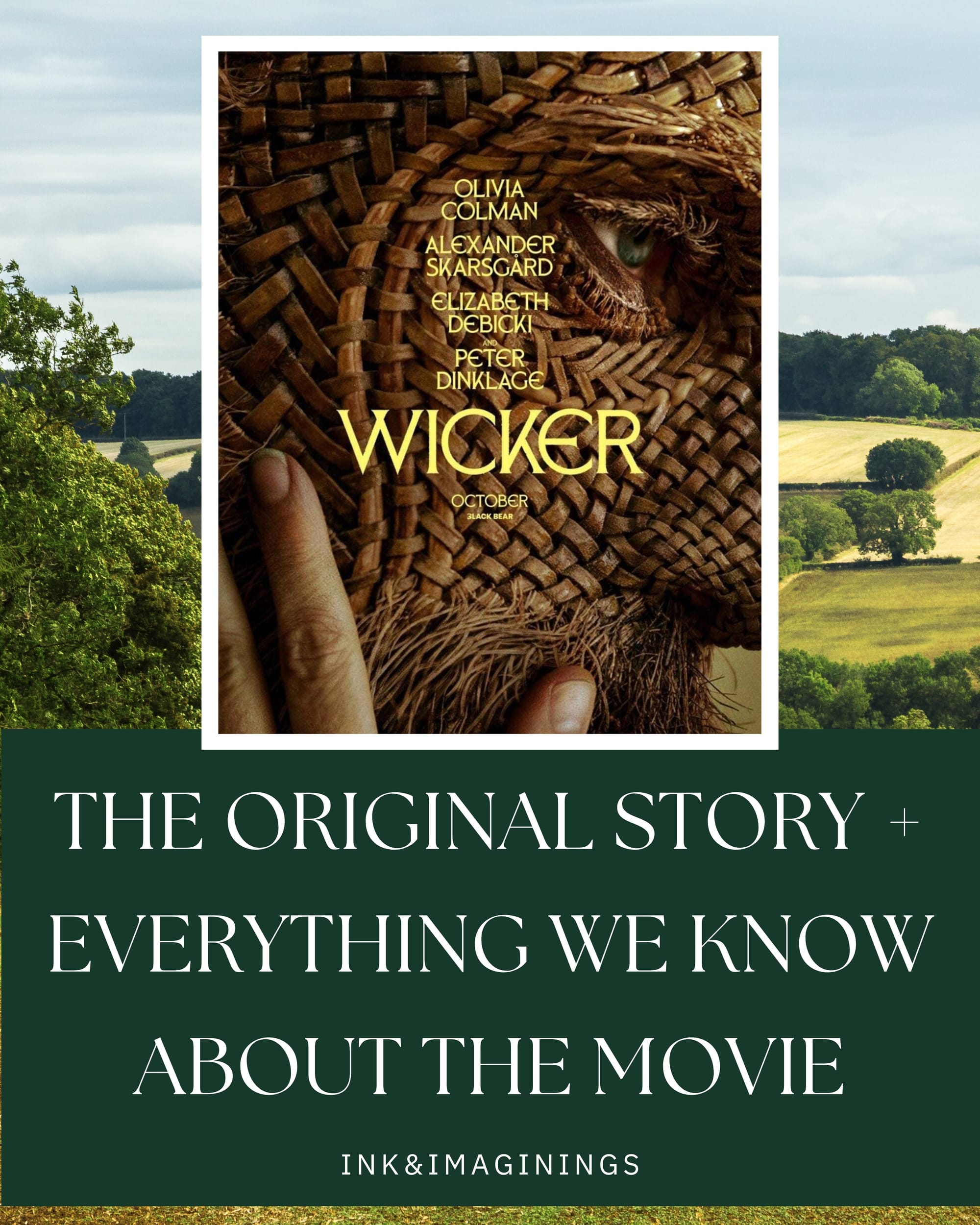
Unless you have been living under a rock, you have seen the trailer. A woman in a fishing village commissions a husband woven entirely out of wicker, he turns out to be kind and devoted and improbably swoony. So naturally the whole town loses its collective mind about it.
The movie is Wicker. It premiered at Sundance in January and opened in US theaters on October 23, 2026.
Here is the thing a lot of people do not realize: it is based on a short story you can read in about fifteen minutes. Below is a link to the original story "The Wicker Husband", what it is actually about, and everything we know about the film so far, including a cast you genuinely could not have guessed.
Wicker movie ending explained
Full spoilers for the film from here. If you only want the short story's ending, that's further down.
Short answer first, because it's the thing everyone's asking: yes, it's a happy ending, and a warmer one than the story gives you. The basket weaver, the fisherwoman, the wicker husband and the wicker baby all leave together, alive, with the village's money and gifts.
Here's how it gets there.
The wicker bride and the bidding
The basket weaver announces his retirement and his final piece, a wicker bride, to go to whoever brings him the best gift. The village goes exactly as greedy as you'd expect, but the film gives the bidders their own reasons.
The butcher and his wife bid together, interested in bringing a third into their marriage. Then the tailor's wife arrives with a sack of gold, announces she's leaving, and says the wicker bride can replace her. It's the closest thing to a victory lap anyone in that village gets.
The butcher comes back with a far bigger sack of gold. To get there, he's locked his young wife in the cellar.
What happens to the butcher
His wife gets out. She comes running with a butcher knife, intending to kill him, and finds she's been beaten to it. The blackthorn bride already has hold of his face.
That's the film's best joke and its sharpest point in one shot. Two different people arrive to end him within seconds of each other, and the woven woman gets there first.
Where they go
The basket weaver, the fisherwoman, the wicker husband and the wicker baby load the cart. Every retirement gift the village handed over goes with them. Then they drive off, heading abroad. The basket weaver's parting line is that he thinks she'll enjoy the angling.
A woman who gutted fish for a living, for a village that despised her, is going somewhere she can fish for pleasure. That's the whole film in one sentence.
What Is Wicker Based On?
Wicker is adapted from "The Wicker Husband," a 2008 short story by British writer Ursula Wills-Jones. It is a modern fairy tale, the kind of thing that reads like a folk legend someone forgot to write down a century ago, and it built a quiet cult following online long before Hollywood came knocking. It has also had a life on stage: it was developed into a musical (workshopped through NAMT and staged in the UK) before the film adaptation.
Directors Alex Huston Fischer and Eleanor Wilson wrote the screenplay themselves, expanding a very short story into a full feature while keeping to its strange, tender, faintly melancholy source material.
Where to Read "The Wicker Husband"
Good news: it is short and free. You can read the whole thing in about fifteen minutes, which means you can easily fit it in before the movie.
You can read "The Wicker Husband" for free on Scribd, where the full text is posted. It is free to read with ads, or you can start Scribd's 30-day free trial to read it ad-free. (The story lived for years on the short-fiction archive East of the Web, but that link is currently down, so Scribd is the most reliable option right now.)
One gentle warning before you click, which brings us to the summary.
What "The Wicker Husband" Is About
A heads up before you read on: it starts whimsical and turns genuinely dark. Here is the spoiler-free version first, then a full summary for anyone who wants it.
The setup (no real spoilers). The story follows a young woman known in her village only as "the ugly girl." She guts fish for a living, she has no family and no friends, and the town has quietly decided she is beneath them.
Instead of waiting for a suitor who will never come, she saves six gold coins and walks out to the swamp, where a famous old basket-maker lives, and asks him to weave her a husband.
He does, and the wicker husband comes to life devoted, gentle, tireless, and openly in love with her. For the first time, she is happy. The trouble is that the village cannot forgive her for it.
Full summary, including the ending (spoilers ahead).
The wicker husband is everything the village men are not. He fixes the house, dances beautifully, murmurs sweet nothings, never eats, never complains, and adores his wife in plain sight.
The "ugly girl" blooms, and the village curdles. Wives nag their husbands, the men feel shown up, and idle jealousy hardens into a plan. When the wicker husband politely turns down the baker's nudge that he stray, and the ugly girl slaps away the tailor's wife's poisonous "warning" that he has been unfaithful, the village decides something drastic has to be done.
They pay the old basket-maker to weave a wicker baby, then carry it to the couple's door as a trap, presenting it as proof of the husband's affair. In the chaos the tailor threatens to throw the baby in the fire and the wicker husband lunges to save it. The ugly girl, misreading the moment through a haze of jealous grief, hurls the oil lamp at her own husband. He goes up in flames and throws himself into the river. The villagers stroll home to their dinners, and the tailor's wife stamps the wicker baby into a ditch on the way.
Half-mad with grief, the ugly girl later finds the baby still alive and takes it home. Meanwhile the old basket-maker discovers what is left of the wicker husband on the swamp road, burned, rotting, and tongueless, and carries him home to repair him, his heart hot with anger.
Once his creation is whole again, he goes to the ugly girl and tells her the truth. He made the baby himself, it carries his own face and not the husband's, and her husband never betrayed her. She destroyed the one person who loved her over a lie. He leads her to his home in the swamp, where her husband sits waiting and the two are reunited.
Then the basket-maker gets even. He announces to the village that he is retiring and weaving one final work. His ultimate masterpiece, a wicker woman. Whoever brings him the finest retirement gift can have her. The same town that spent the whole story calling the wicker family an abomination is instantly consumed by greed.
Neighbors evict, sue, and sabotage each other to win her. On the appointed day they heap their treasure on him, the butcher "winning" with a small herd of livestock, and the basket-maker calmly loads up every last gift.
When he delivers the veiled bride, she turns out to be woven not from the gentle willow of the husband but from blackthorn. Cold, hard, thorny, and impossible to kill by fire or frost. She kisses the butcher and shreds his mouth to ribbons. By the time the enraged villagers slog back through the swamp to take revenge, the basket-maker, the wicker husband, the ugly girl, the baby, and every scrap of the village's riches have vanished for good.
It is a fable about loneliness. About who society decides is allowed to be loved. About people who punish difference while secretly coveting it. It is funny, cruel, and, in the end, deeply satisfying.
What the movie changed from the short story
Fischer and Wilson had fifteen minutes of fable to stretch into a feature. Most of what they added went to the village, not the couple. The result is a story where the cruelty is less organized and more ordinary.
The bottle washer, who isn't in the story at all
The film adds a man who watches the wicker husband being a better husband than he is, and decides to measure up. He goes up to fix his own roof. He falls.
What follows is the most quietly furious sequence in the film. The tailor's wife takes over stitching him up when her husband faints partway through. She's the village doctor's daughter, and it shows. She does the work.
Her father and her husband take the credit. The doctor and the tailor. The man with the authority and the man with the needle. Both of them standing in a room where the person who actually did it won't be named.
Then he dies anyway. The wicker husband's existence has now killed a man who only wanted to be a bit more like him.
The wicker baby isn't a trap anymore
This is the biggest change, and it's worth sitting with.
In the short story, the village pays the basket-maker to weave a wicker baby specifically to frame the wicker husband for an affair. It's a plot, agreed on in advance, executed as a group.
In the film, the bottle washer's widow commissions the baby herself, out of grief. Nobody plans anything.
Then the tailor's wife finds out, because the widow is her sister. The two of them are the village doctor's daughters. That's how the film ties it together. The family that holds the village's medical authority also supplies its cruelty. She sees what she can do with the baby, drags her sister to the fisherwoman's hut, and announces it's the wicker husband's.
So the film swaps a conspiracy for an opportunity. No one sat down and schemed. One woman saw a grieving sister holding something useful and reached for it. If anything that's worse, because it doesn't require a village to organize itself. It only requires one person to be quick.
The women get to act
Two of them, specifically, and both in ways the story doesn't allow.
In the story the tailor's wife is purely malicious, and she ends it by stamping the wicker baby into a ditch. Here she gets a whole interior life, and then she buys her own way out. She's a doctor's daughter whose competence is invisible to every man around her. She hands over the gold, says she's leaving, and offers the wicker bride as her replacement. She's still the one who weaponized a baby against an innocent woman but she is a more complex character in the movie.
The butcher's young wife, barely a presence on the page, gets locked in a cellar and comes out armed. She doesn't get her revenge, the black thorn bride is already handling it, but she went for it.
What the film keeps
The lamp survives the adaptation. She still believes the lie, she still throws it, and he still goes up in flames. The film changes where he goes next. He limps off burning instead of throwing himself into the river. She finds the wicker baby by the water later on.
The basket weaver still gets his reveal, and the film hands him a better argument than the story did. On the page, the proof is a resemblance. In the film, it's logic. Baskets can't be born, he tells her. They have to be made. Somebody made that baby, and he knows exactly who, because it was him.
That's a sharper scene than a family likeness, because it doesn't ask her to look at anything. It asks her to think for one second, which is the one thing nobody in that village seems to do.
The film also leaves the resemblance unspoken. The baby and the husband are woven from the same materials, so it's there if you want it. But nobody in the film ever points it out
Nobody in Wicker has a name
Not the fisherwoman, not the husband, not the weaver, not the tailor's wife. Nobody. Every male stays an occupation and every woman is their wife or daughter. We see this pointed out when she refers to her as the doctor's daughter and is reminded it's tailor's wife now.
The Wicker movie: the facts
Release date. Wicker opened in US theaters on October 23, 2026, distributed in North America by Black Bear Pictures.
Festival premiere. It had its world premiere at the Sundance Film Festival on January 24, 2026, where the first-look buzz was immediate and very online (the internet spent a solid week thirsting over, yes, a man made of wicker).
The filmmakers. It is written and directed by the duo Alex Huston Fischer and Eleanor Wilson, adapting Wills-Jones' story.
Where it was made. Production wrapped in Budapest, Hungary in late 2025, which is part of how the film gets that timeless, storybook-village look.
The tone. Early reviews peg it as an oddball fable: absurd, sincere, a little spicy, and more emotionally affecting than the "hot wicker husband" line suggests. It is being talked about as a prestige-indie crowd-pleaser rather than a straight comedy or a horror movie.
A personal project. Olivia Colman is not just starring, she is also a producer on the film through her and Ed Sinclair's company, South of the River Pictures, so this is clearly a passion project for her.
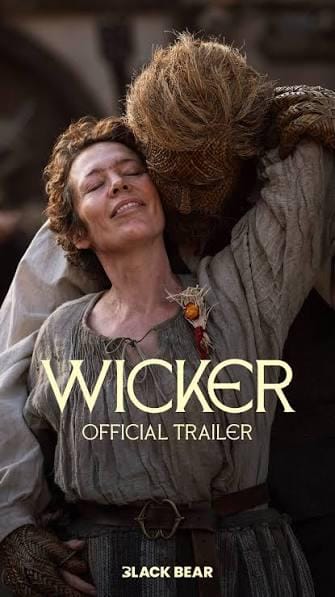
Wicker Movie Cover
The Cast You Would Never Have Guessed
Describe this movie to someone and then ask them to guess the cast. They will never get it. It is a wildly eclectic, absurdly prestigious ensemble:
- Olivia Colman as the outcast fisherwoman at the center of it all.
- Alexander Skarsgård as the Wicker Husband himself. Yes, that is the casting the internet reacted to.
- Peter Dinklage as the Basket Weaver who brings him to life.
- Elizabeth Debicki as the Tailor's Wife.
- Richard E. Grant as the Village Doctor.
- Nabhaan Rizwan as the Tailor.
- Marli Siu as the Basket Weaver's sister.
- Ella Bruccoleri rounding out the village.
Should You Read the Story First?
Completely up to you, but the story is short and incredibly well written. Plus it will make you appreciate how much Fischer and Wilson had to invent to stretch fifteen minutes of fable into a feature. If you would rather stay totally unspoiled for the film's take, the premise alone is all you need, and you can read the original afterward to see what changed.
Either way, this is one of the most charming book-to-screen stories of the year, and it started with a free short story almost no one was talking about.
In the meantime check out this month's new releases.
Frequently Asked Questions
What is the movie Wicker based on?
Wicker (2026) is based on "The Wicker Husband," a 2008 short story by British writer Ursula Wills-Jones about a village outcast who commissions a husband woven from wicker.
Where can I read "The Wicker Husband" short story?
It is free to read on Scribd, either free with ads or ad-free through Scribd's 30-day free trial. It is a quick read, roughly fifteen to twenty minutes. It was previously hosted on East of the Web, but that link is currently down.
Who is in the cast of Wicker?
Olivia Colman, Alexander Skarsgård (as the wicker husband), Peter Dinklage, Elizabeth Debicki, Richard E. Grant, Nabhaan Rizwan, Marli Siu, and Ella Bruccoleri.
When does Wicker come out?
It premiered at Sundance on January 24, 2026, and opened in US theaters on October 23, 2026.
Does Wicker have a happy ending?
Yes. The basket weaver, the fisherwoman, the wicker husband and the wicker baby all leave the village together, alive, taking the villagers' money with them. It is a warmer ending than the short story gives you.
How does the Wicker movie end?
The basket weaver auctions a final creation, a wicker bride, to whoever brings the best gift. The butcher locks his young wife in the cellar so he can bid. She breaks out and comes after him with a knife, only to find the blackthorn bride has reached him first. The basket weaver, the fisherwoman, the wicker husband and the wicker baby then drive off abroad with the cart full of gifts.
What did the Wicker movie change from the short story?
The biggest change is the wicker baby. In the story the village commissions it as a deliberate trap. In the film a grieving widow commissions it for herself, and her sister, the tailor's wife, seizes on it opportunistically. The film also adds a bottle washer who dies trying to be more like the wicker husband, and it lets the wicker baby survive.
Who are the tailor's wife and the widow in Wicker?
They are sisters, and both are daughters of the village doctor. The widow commissions the wicker baby after her husband dies. The tailor's wife is the one who uses it to accuse the wicker husband.
Is Wicker a horror movie?
No. Despite the eerie, folk-horror ring of the title, it is an oddball romantic fable with dark and comic edges, not a horror film. (The source short story does go to some genuinely dark places, though.)
Who directed Wicker?
Alex Huston Fischer and Eleanor Wilson wrote and directed it, adapting Ursula Wills-Jones' short story.