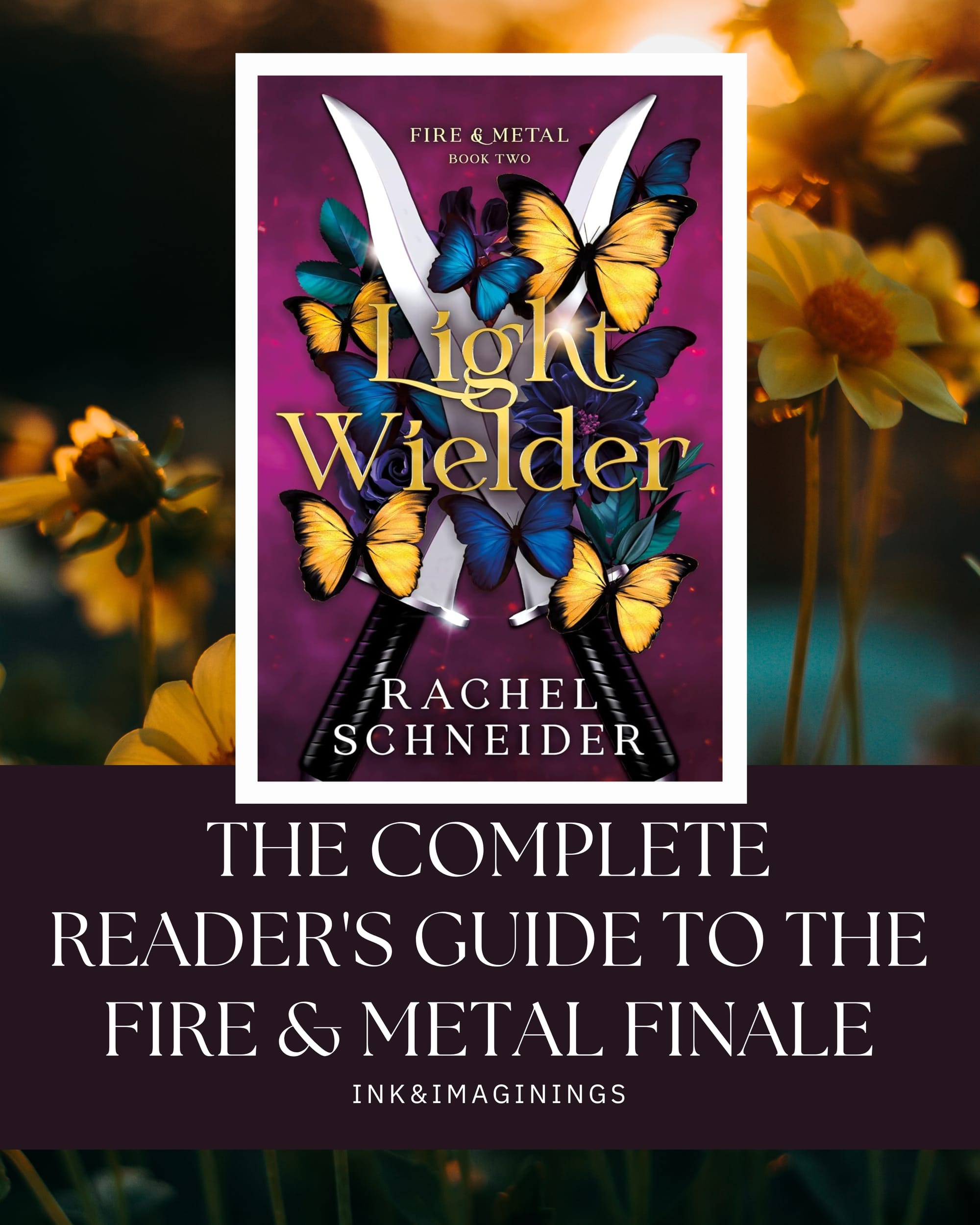
Rachel Schneider's Fire & Metal duology closes with a book that refuses easy resolution. Here is the full plot map, the character roster, the magic system, the ending unpacked, and the perfect book club discussion questions to get the ball rolling.
🚨 Full duology spoiler warning. This guide contains complete plot details for both Metal Slinger and Light Wielder by Rachel Schneider, including the ending reveal of book one, the four-year time jump, the climactic battle, and the epilogue. If you have not finished Light Wielder, bookmark this and come back. It will still be here.
Why this guide exists
If you came here right after finishing Light Wielder, you are in the company of thousands of readers who have spent the last few days staring at the ceiling at 2am trying to process what Rachel Schneider just did with the Fire & Metal duology.
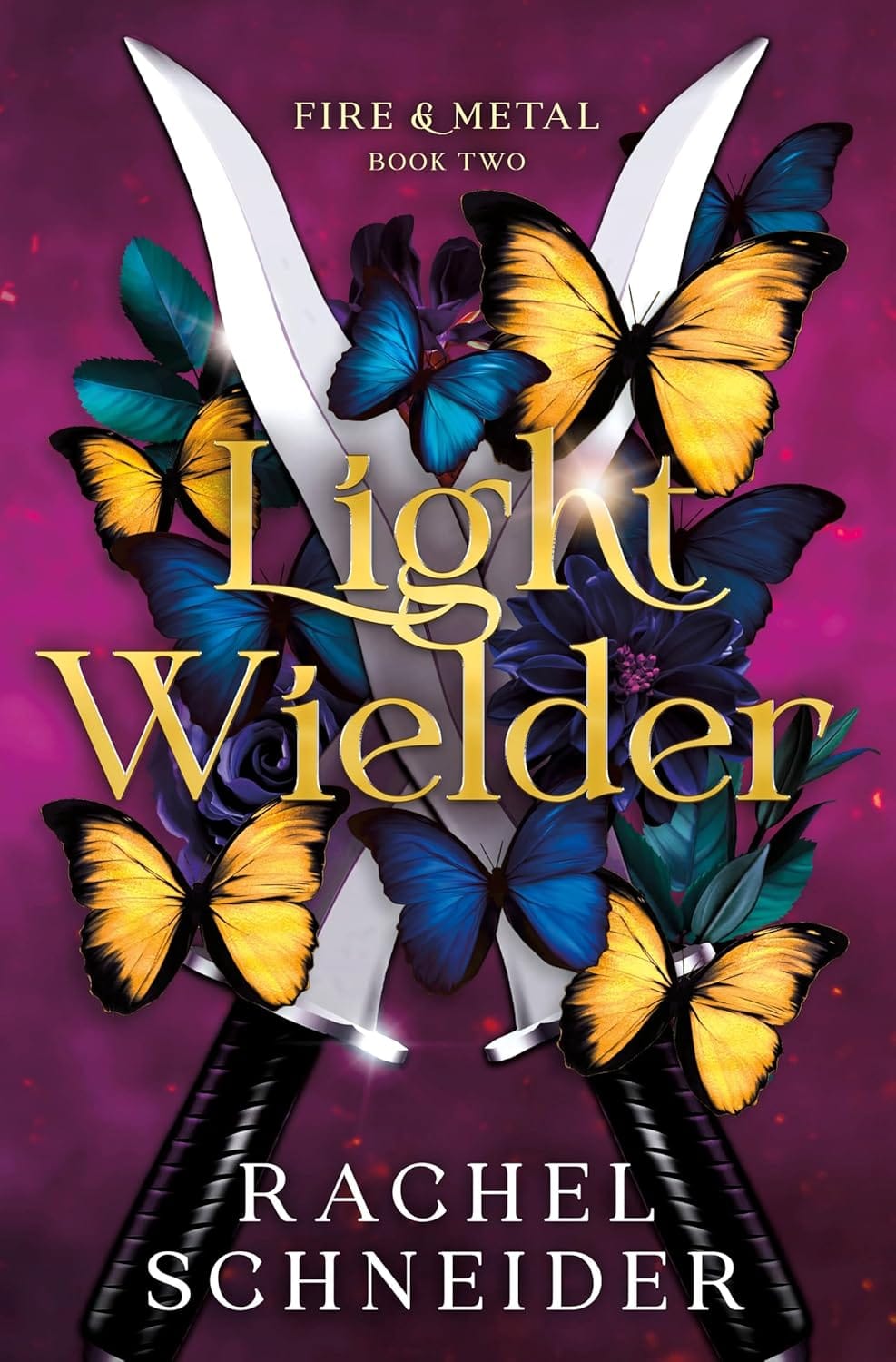
The book picks up four years after the end of Metal Slinger, when Jovie revealed her true identity as the lost princess of Maile and Acker discovered that the woman he loved was the enemy his father had been hunting. Light Wielder delivers the war they could not avoid, the Match Bond that magic could not silence, and the ending Schneider was building toward from the first page of book one.
This guide breaks down the four-part structure of the finale, maps out the ten characters whose arcs intersect, explains the magic system that drives every plot turn, walks through the climactic battle and what each character ends with, and gives book clubs a starter set of discussion questions that will help get the discussion going. Spoilers throughout. Have your coffee or wine at the ready.
The four-year time jump: where Light Wielder picks up
Metal Slinger ended with the reveal that Brynn, the Alaha-raised guard who threatened the fragile peace between her people and the Kenta, was actually Jovinnia (Jovie), the lost princess of Maile. Her true identity, suppressed her entire life, came with a Match Bond to Acker, prince of Kenta, that no oath could undo. The book closed on betrayal: Jovie fled Kenta after the truth surfaced, taking with her the love and trust she and Acker had spent the book building.
Light Wielder opens four years later. Jovie has spent those years in Maile, ruling alongside her guilt-shackled mother, leading her people in a continent-wide war that her defiance ignited. Acker has spent those years in Kenta, ruling alongside his tyrant father Edmond, wearing mangi stones that suppress his magic and dampen the telepathic Bond to Jovie that neither of them can sever. The Bond reaches across the war anyway. They feel each other's grief, lust, fury, and exhaustion every night, in stolen dream-encounters that wreck them both. The question is how long two people can survive like this.
The time jump is a radical structural choice. By the time we meet Jovie and Acker again, they are no longer the young lovers of book one. They are leaders who have killed for their people, who have made and broken vows, who have learned what love costs. Light Wielder is what happens when the war they delayed by walking away from each other finally arrives.
Plot summary by part
Part 1: Chapters 1–15
The duology's central tension reveals itself in this opening movement: how long can two people attempt to tamp down a magical Bond before the Bond suffocates them? Both protagonists are surviving rather than living. Jovie rules Maile with her inner circle (Messer, Fredrich, and her mother) but her heart is barricaded. She leads soldiers at the northern border. Young men and women die with her name on their lips. She carries the guilt of that.
In Kenta, Acker discovers that his father's corruption extends past mere tyranny into the systematic theft of magic from his own people through slatstones, weapons that drain life and magic from their victims. The revelation forces Acker to confront what it means to be a "weapon" forged by the crown. The food is dwindling. The council is splintering. The blacksmiths and old men of the city blame him for the deaths Jovie's defiance caused. He cannot defend her without losing them. He cannot abandon her without losing himself.
Across the continent, Maile fights Strou's monstrous mercenaries on its western borders and Roison's encroaching armies on its eastern. Alliances are collapsing. Trusted friends harbor secrets or fade into enemies. The world is at the kind of stalemate where everyone is exhausted and no one has won. The Bond between Jovie and Acker is suppressed but not severed. Every night, they invade each other's sleep. Every morning, they wake to the war keeping them apart.
Part 2: Chapters 16–30
The second movement transforms the narrative from psychological tension to physical confrontation. Acker arrives in Maile with a delegation, ostensibly seeking soldiers and an alliance against his father's growing threat. The power dynamics have inverted: Jovie now holds the throne, and the man who once hunted her must kneel.
What unfolds is a study in how trust gets tested under extreme duress. Jovie and Acker do not rebuild what they had. The Bond they both wore mangi to suppress flares between them when in the same room. The dream-encounters become daytime fevers. They cannot be near each other without their bodies remembering. They also cannot trust each other.
When Acker's father's agenda becomes clear (Edmond is not seeking peace; he is seeking expansion through magical extraction), Jovie and Acker are forced into reluctant cooperation. They share intelligence. They share strategy. They do not share a bed. Yet. The Bond dreams intensify into arenas where truth slips past their defenses. Both confess, in fragments, what the four years cost them. Here the book is doing one of romantasy's hardest tricks: showing two people learning to trust each other without resolving the wounds either inflicted.
Part 3: Chapters 31–45
The group's movement toward Kenta creates what Schneider builds as a pressurized "circle of non-trust": enemies performing as allies, with the cost of any honest moment too high to pay. Messer, Fredrich, Beau, and Irina each carry their own agendas. Doppelgangers infiltrate. Soldiers desert. Oaths break or bend in the small hours.
The southern cottage sequence is where Light Wielder stops being about the war and starts being about what survived it. Jovie and Acker, on the run together for the first time since book one, are forced into close proximity. The mangi stones are no longer enough to suppress the Bond. The cup scene (readers know which one) lands here, and what was forbidden in Metal Slinger arrives with the weight of four years of denial and grief layered into it. The intimacy is not a reconciliation. It is a confession. They cannot un-know each other. They cannot un-love each other. And they still do not know if they can survive what is coming.
The arc charts the transition from coerced cooperation to active rebellion. The full horror of the magic trade (cages of women and children, friends made into fuel for war) becomes impossible to ignore. Jovie's Light Wielder magic, the burgeoning power she has been suppressing with chains of mangi since adolescence, starts to slip free. She uses it to save a nameless soldier. She uses it again to turn the tide of a skirmish. Each use ties her fate tighter to Acker, whose own blood oath, made in love during Metal Slinger, strangles him with every hard choice she makes on the battlefield.
Part 4: Chapters 46–60
The Kentan palace becomes the stage for the duology's final reckoning. Edmond has been busy. The magic trade he was running has industrialized. The slatstones have grown more powerful and more cruel. Innocents and prisoners alike are being drained for fuel. Wren, Captain of the Alaha and the mythic figure who once saved Jovie as a child, reveals the depth of his Machiavellian tactics. He has been manipulating not just kingdoms but minds. His son Kai, Jovie's childhood savior and sometime lover from book one, stands at the moral edge: with his father against Jovie, or with Jovie against everything he has ever known.
The siege from within begins. Treachery festers in the council's gilded halls. Doppelgangers move through the palace. Jovie is paraded by Edmond, alternately chained and veiled, as both trophy and threat. Feasts become executions. Dreams become reality. Jovie and Acker, finally on the same side of the same room, must kill the monster king and survive a labyrinth of betrayals before the city falls.
The climax is tidal. Trolls raze the southern districts. Flames consume the palace streets. Butterflies (once Jovie's hope-symbol from book one) become the visual rhyme of mass death as she unleashes the full force of the Light Wielder, searing friend and foe alike. The good die alongside the wicked. Messer falls. Fredrich falls. Acker is grievously wounded but survives. Edmond is killed. Wren is killed. Chryse, the schemer king of Roison, surrenders. The tyrants are dead. The cost is monstrous. Only sacrifice on the scale Schneider has been threatening from chapter one could birth what comes next.
The resolution offers a hard-won peace and pointedly refuses to tie every thread off neatly. An epilogue from a fresh perspective signals that the world's troubles are far from over. Jovie and Acker, finally free of the war that defined them, depart the smoking ruins together. Home, the book argues, is not a kingdom or a palace. It is each other's arms.
The character map
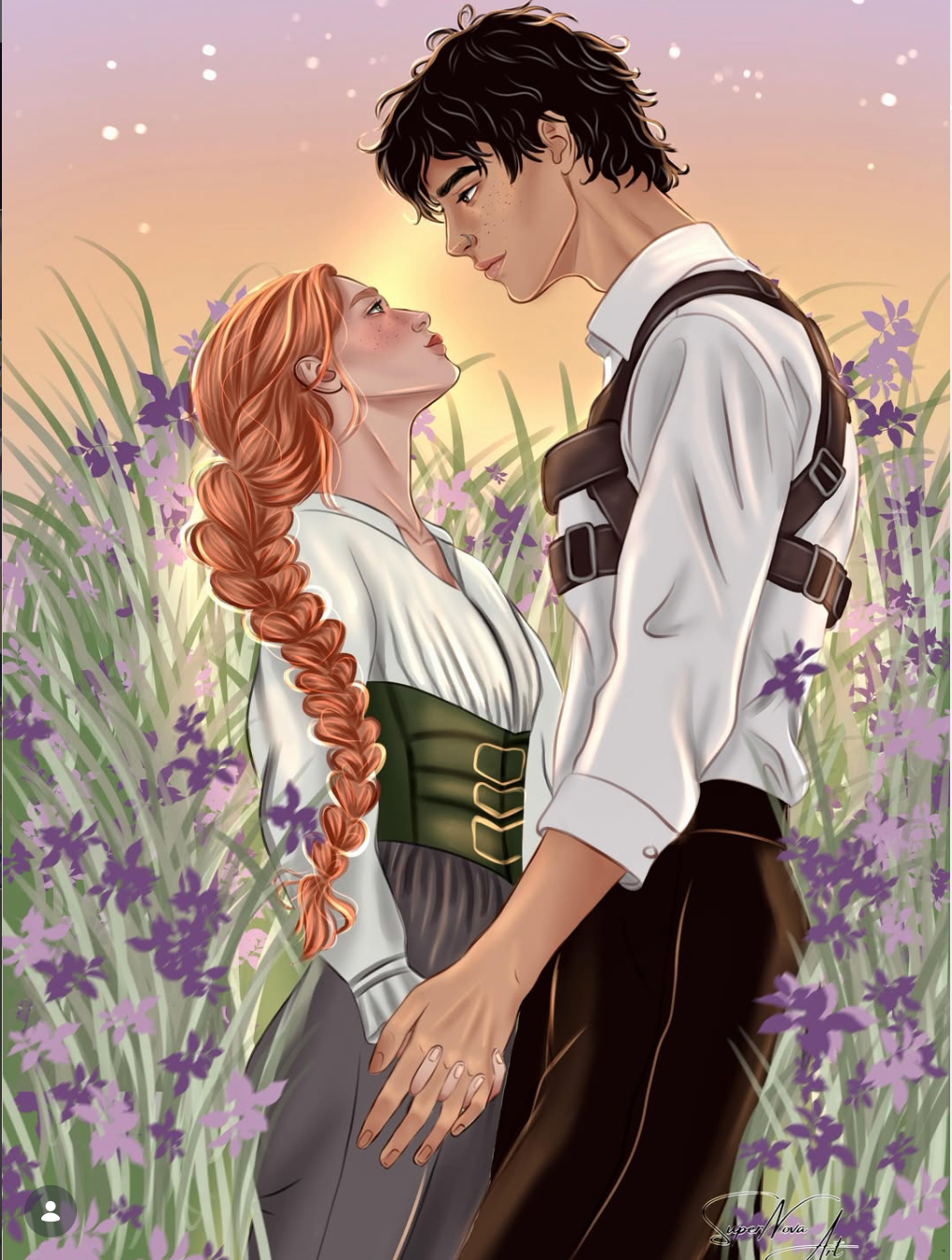
Jovinnia (Jovie)
The magic-wielding once-lost princess of Maile whose defiance ignited the war. Bound to Acker by both the telepathic Match Bond and a blood oath, she is tormented by memories of love betrayed and the costs of mercy. Her arc transforms her from guilt-ridden exile to a queen in her own right. Despite the strength of her forbidden Light Wielder magic, she is human at the core: weighed down by shame, longing, and the near-unbearable guilt of every soldier lost under her command.
Acker
Kenta's prince, son to a tyrant, bonded to Jovie. Scarred by four years of bitter war, he oscillates between fury and aching tenderness for Jovie. He is haunted by the carnage in his wake, agonized by the sensual and psychic leash that binds him to the woman who fled with his heart. Through trials, battle, and impossible choices, Acker grows from his father's pawn and the Bond's puppet into a man willing to risk everything (his crown, his pride, even his life) for love.
Messer
Jovie's childhood friend and greatest champion. A shifter whose wit and loyalty are matched only by his pain. Driven by longing and guilt (over love lost, over not always being the savior he wishes he were), he plays vital roles as spy, friend, and part-time guardian.
Fredrich
Once Jovie's quiet protector and later revealed to be a spy within her ranks, Fredrich is defined by boundaries, secrets, and ultimately by fierce loyalty. His gift, a nearly impenetrable shield, mirrors his internal world: closed off, powerful, called upon only in moments of dire need.
Beau
Acker's sister and Jovie's closest advisor. An oracle whose ability to see auras and manipulate perceptions is both gift and curse. Haunted by betrayals committed in the name of survival, she lives with the guilt of having hurt those she loves most. She survives the war. Her growth is marked by humility, grief, and unexpected moments of hope.
Irina
First forced into a marriage of political alliance with Acker, Irina's journey begins as victimhood and heartbreak. Her ability to craft illusions and withstand enormous humiliation speaks to both the cruelty of politics and the resilience found in endurance. She and Acker reach a quiet mutual respect by the end of the book.
Edmond
Kenta's king and Acker's father. The corrupt legacy of power: charming, brutal, and obsessed with strengthening his rule even at the cost of draining life and magic from his own people. His psychology is narcissism, control, and a hunger that will never be sated. The ultimate monster whose downfall is as ugly as his rule.
Chryse
King of Roison. A cunning survivor, always willing to trade loyalty for advantage. His alliances are transactional, and his care for others is subordinate to his sense of opportunity. He exemplifies the theme that war for power can strip even the greatest rulers of honor, leaving only calculations behind. He survives by switching sides at the right moment.
Wren
Captain of the Alaha and for years a mythic presence, Wren is at once savior and war criminal. With power over influence and a willingness to kill, betray, or reshape reality to suit his vision, he becomes the arch-antagonist whose death is hard-fought and richly deserved.
Kai
Wren's son. Both Jovie's childhood savior and her greatest trial. Friend, sometime lover from book one, and ultimately a leader in his own right. Torn between helping his people (the Alaha) and seeking personal power, he is marked by jealousy, desperation, and a willingness to gamble everything.
The Fire & Metal magic system, explained
If you came here Googling "what is a Light Wielder" or "how does the Match Bond work," this section is for you.
The Light Wielder. The rarest and most feared magic class in the Fire & Metal world. Light Wielders can manipulate light itself, weaponize it into searing force, and burn armies with a touch. The cost is severe: the gift burns friend and foe alike, and it tethers the wielder ever tighter to their Match. Jovie is one of the last surviving Light Wielders. Her power was suppressed her entire childhood with chains of mangi, and the full extent of what she can do is only revealed in the climax.
The Match Bond. A magical tether that connects two souls. The Bond cannot be chosen, cannot be predicted, and cannot be undone (except by the death of love itself). Matched pairs feel each other's emotions, sometimes thoughts, in waking life and in dreams. The Bond can be suppressed (mangi stones do it) but never severed. The dramatic engine of the duology runs on the Bond: forbidden lust, accidental psychic voyeurism, manipulation through dream-states, and the deeply human fear of never being truly free from another soul's hold. Jovie and Acker are Matched.
Blood oaths. Magical promises sealed by blood, unbreakable until love dies. Meant as protection, they become chains. Acker's blood oath to Jovie (made in Metal Slinger) strangles him with every hard choice the war forces on him. The blood oath is what makes the Bond between them lethal: each carries the other's choices in their own flesh.
Mangi stones. Magical suppressors. Worn as jewelry or sewn into clothing. They mute magical gifts (including Light Wielder fire) and dampen the Match Bond. Both Jovie and Acker spend most of Light Wielder wearing them. Removing them is the act that brings them back into each other's range.
Slatstones. The duology's most monstrous magical invention. Slatstones drain life and magic from their victims to fuel the weapons and rituals of those who would extract them. Edmond has been running an industrial-scale slatstone operation, draining his own people for power. The discovery of this is what tips Acker from passive Kenta heir to active rebel.
Hearthstone blades. Enchanted weapons that kill the flesh and the spirit of their target. They also poison their owner over time. Using a hearthstone blade is always a Faustian bargain: this kill, in exchange for a piece of yourself.
Shape-shifting. Some characters (notably Messer) can shift between forms. The gift requires bonding to a specific second shape and carries its own physical and emotional cost.
Aura reading. Beau's gift. She sees the emotional and intentional structure of every person she meets as colored auras. The gift makes her incapable of accepting comfortable lies. It also makes her painfully exposed to other people's pain.
Illusion magic. Irina's gift. She can craft visual illusions powerful enough to deceive entire courts. The gift is what lets her survive the politics of her unwanted marriage.
Mind manipulation. Wren's terrifying gift. He can reshape memory, suggestion, even reality itself in the minds of those around him. This is what makes him so dangerous and what makes his death the duology's most necessary.
The ending, explained
The Kentan palace siege ends in a tidal wave of violence. Edmond is killed by Acker (the symbolic and literal patricide the entire duology was building towards). Wren is killed by Jovie, who uses the full force of her Light Wielder magic for the first time without mangi. The light burns friend and foe. Messer dies covering Jovie's escape from the burning city. Fredrich dies shielding her from a hearthstone blade meant for her heart. Chryse surrenders. The tyrants are dead. The cost is monstrous.
Acker is grievously wounded but alive. Jovie carries him from the rubble. Beau survives, traumatized but with her sight intact. Irina survives and quietly walks away from her political marriage to claim a life of her own. Kai survives, having helped at the last moment, and the question of whether he is fully redeemed is left deliberately open.
The final chapters are a quiet movement of grief and rebuilding. Jovie and Acker travel from kingdom to kingdom, witnessing the work of rebuilding. They marry, eventually, without ceremony or politics. The Match Bond, freed from suppression, becomes a daily intimacy rather than a wartime weapon. They are bonded for life.
The epilogue shifts to a fresh perspective: a young woman, somewhere in the post-war world, who witnesses or experiences something that signals the story is not over. Schneider has confirmed in early author interviews that while Light Wielder closes the Fire & Metal duology, the world she has built is open to further stories. The epilogue is the door she left ajar.
What the ending refuses to do, and what makes it work, is offer a clean victory. Friends are still dead. The work of rebuilding is just beginning. Jovie and Acker are together, finally, but they will spend the rest of their lives carrying what the war cost. The book argues that hope is not the absence of grief but the willingness to keep building anyway.
My thoughts
After how much I enjoyed Metal Slinger, I was so excited for this to come out. And while I enjoyed it and had fun, it didn't fully live up to book one for me. That being said, I did have a great time! This picks up 4-ish years after the end of Metal Slinger and so many questions get answered. I definitely think the politics were a lot more intense in this book which I enjoyed.
There were so many good moments between Jo and Acker, but... things could have been fixed between them so much faster if they had just communicated better, which is of course easy to say from the outside. I love that we don't get another "women fighting each other over a man" moment. I think that aspect was so well done.
Book club discussion questions
- The Match Bond is both salvation and torment for Jovie and Acker. When you finished the book, did you read the Bond as a romantic gift or as a magical violation of consent? Where does the book sit on this question, and where do you?
- Jovie's mercy ignited the war. Is her defiance in Metal Slinger heroic, tragic, or both? Would you have made the same choice in her position?
- Acker spends four years complicit in his father's regime before he rebels. At what point did you stop forgiving him for his delay? Did the book ever fully ask him to atone for it, or did the Match Bond and the love story bypass that reckoning?
- Messer and Fredrich both die in the final battle. Were their deaths earned by the narrative or sacrificed for emotional effect? Which death felt more honest to the story Schneider was telling?
- Beau, the oracle, sees auras and cannot accept comfortable lies. What does it cost her to see the truth so clearly? Is her arc a tragedy, a triumph, or something the book refuses to label?
- Irina demands her freedom after years of suppression. Is her arc satisfying as written, or did you want the book to give her more room to choose her own ending? What does her resilience tell us about the duology's politics of marriage?
- Kai survives the war with his moral complexity intact. Did you forgive him by the end? Should we have?
- The Light Wielder magic burns friend and foe alike. Read this as a metaphor: what does Jovie's gift say about the leadership of women who cannot fully control what they unleash?
- The epilogue refuses a clean ending. Why do you think Schneider chose to leave the world open for further stories rather than closing the door entirely?
- The duology is structurally cyclical (feasts become executions, dreams become reality, letters become declarations). What does this say about the book's argument about history, trauma, and the possibility of breaking out of inherited patterns?
What to read next
Need the Metal Slinger ending explained in detail before re-reading? Metal Slinger Ending Explained: The Twist That Set Up Light Wielder walks through book one's final reveal, the Brynn/Jovinnia identity reveal, the original Match Bond between Jovie and Acker, and the betrayal that ignited the war. Built specifically for readers about to start (or just finished) Light Wielder.
Want the full magic system in one place? The Fire & Metal Magic System Explained: Light Wielders, Match Bonds, Slatstones, and More catalogs every magic class, every artifact, and every cost across both books. The companion to this reader's guide for the worldbuilding-deep readers.
Just finished the duology and need your next book? Books Like ACOTAR pairs the duology with twelve adjacent romantasy reads, including the latest Sarah A. Parker Crystal Bloom installment, Rebecca Yarros, and the Sarah J. Maas catalog reading orders.
In a romantasy phase right now? Our New Releases This Week: June 16, 2026 post covers every major book that dropped this week, including the Sarah A. Parker romantasy, Brandon Sanderson's new contemporary fantasy trilogy, and the full Kristin Hannah Week schedule.
Want coverage like this delivered weekly? The Weekly Bookmark is Ink & Imaginings's free book newsletter. Every Tuesday. Reading-order reminders before the big drops, Book vs. Show breakdowns, and Schneider news (including any Hollywood option chatter for Fire & Metal) the moment it lands. Zero spam.
Frequently asked questions
Is Light Wielder the last Fire & Metal book?
Yes. Light Wielder is the second book of the Fire & Metal duology and closes the main arc of Jovie and Acker's story. Rachel Schneider has signaled in early interviews that the world she has built is open to further stories, and the epilogue's fresh perspective deliberately leaves a door ajar, but there is no confirmed continuation as of this writing.
Does Acker die in Light Wielder?
No, Acker survives. He is grievously wounded in the climactic battle for the Kentan palace but Jovie carries him from the rubble. The Match Bond between them is one of the only psychic-romantic pairings in modern romantasy to survive its own series finale intact.
Does Jovie become queen?
Yes. Jovie inherits the throne of Maile from her guilt-shackled mother partway through the book and rules through the climax of the war. The end of the book finds her freed from the war that defined her early reign, married to Acker, and traveling the post-war world to witness the work of rebuilding.
Who dies in Light Wielder?
The major deaths in the climactic battle: Edmond (Acker's tyrant father, killed by Acker), Wren (Captain of the Alaha, the duology's arch-manipulator, killed by Jovie using the full Light Wielder), Messer (Jovie's shifter best friend, killed covering her escape), and Fredrich (Jovie's stoic shield, killed protecting her from a hearthstone blade). Beau, Irina, Kai, and Chryse all survive.
What is a Light Wielder?
A Light Wielder is the rarest and most feared magic class in the Fire & Metal world. Light Wielders can manipulate light itself, weaponize it into searing force, and burn armies with a touch. The cost: the gift burns friend and foe alike, and tethers the wielder ever tighter to their Match. Jovie is one of the last surviving Light Wielders, and her full power is revealed in the climax of Light Wielder.
What is the Match Bond between Jovie and Acker?
The Match Bond is a magical tether that connects two souls. Matched pairs feel each other's emotions and sometimes thoughts in waking life and in dreams. The Bond cannot be chosen, cannot be predicted, and cannot be undone except by the death of love itself. Mangi stones can suppress it. Nothing can sever it. Jovie and Acker are Matched, which is both the romance and the central magical engine of the duology.
What happens in the epilogue?
The epilogue shifts perspective to a young woman in the post-war world who witnesses or experiences something that signals the story is not over. Schneider has left the door ajar for further stories without confirming a continuation.
Will there be a Fire & Metal movie or TV adaptation?
Nothing announced as of this writing. Metal Slinger sparked a ten-way publisher auction and has accumulated 80,000+ Goodreads ratings, which is the kind of audience signal Hollywood watches. We will update this post (and our newsletter) the moment any option news breaks.