The Thorn Queen by Sasha Peyton Smith releases Tuesday, April 14, 2026, and if you're anything like me, you finished The Rose Bargain months ago in a daze and have been living with the faint hum of unanswered questions ever since.
Who is Bram, really?
What did Ivy actually agree to at the end?
What happened to Emmett?
Is Lydia okay?
Is anyone okay?
The answer to that last one is no. But this recap will at least get you to the starting line of book 2 with every detail in place.
This is a full spoiler recap of The Rose Bargain. Every bargain, every lesson, every reveal, and the ending in detail. If you haven't read book 1 yet, go do that first and come back. Everyone else, grab a drink, get comfortable and let's walk through the wreckage together.
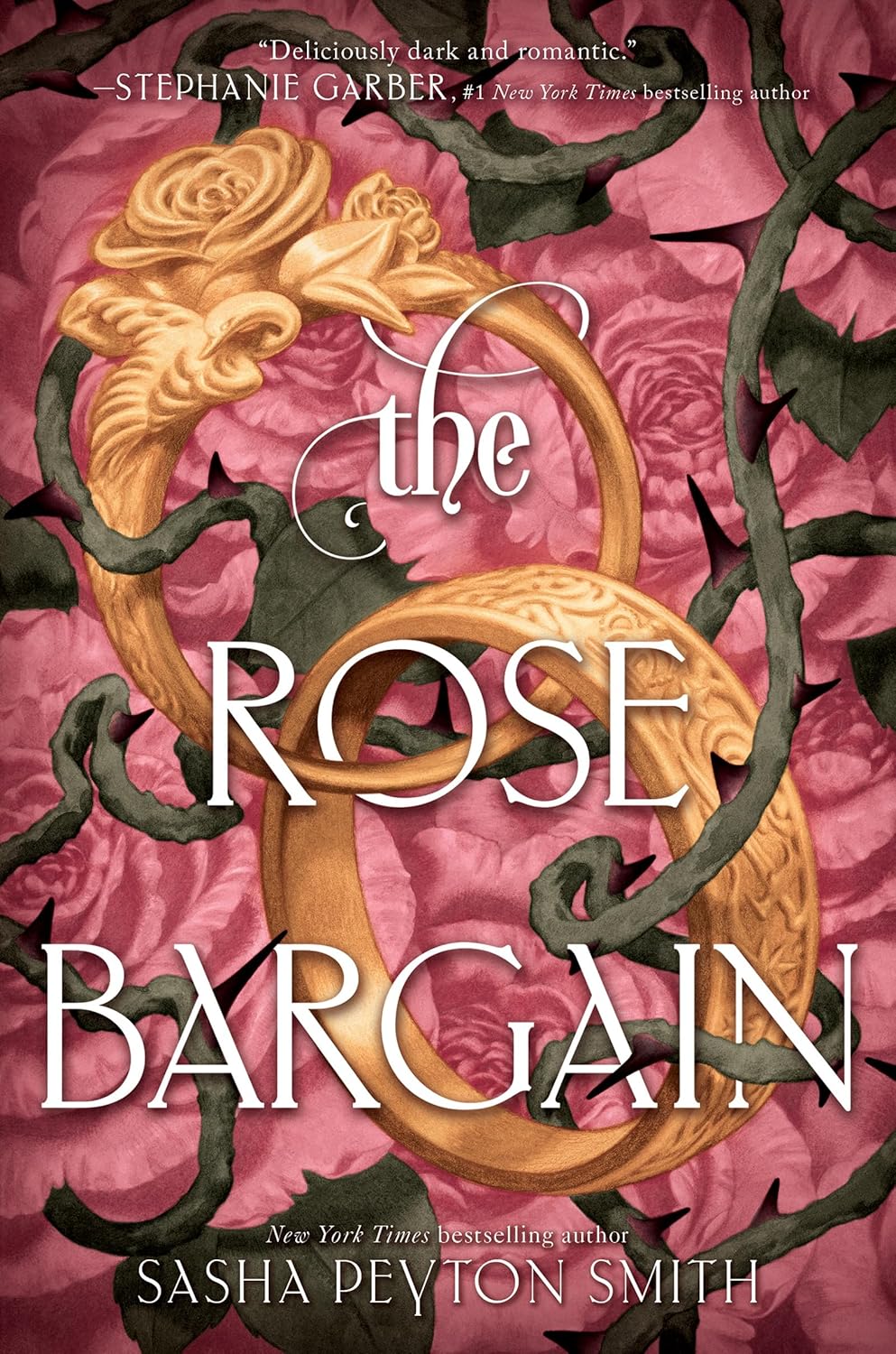
The Rose Bargain Book Cover
📖 Buy on Amazon | Buy on Bookshop.org | 🎧 Listen on Libro.fm
The Quick Summary
In an alternate 1848 England ruled by the immortal faerie Queen Moryen, seventeen-year-old Ivy Benton signs her name in blood to compete for the hand of Prince Bram, the queen's son, hoping a crown will save her ruined family and free her sister Lydia from the bargain that broke her.
Ivy survives the queen's cruel trials, falls for Bram's human half-brother Emmett, and gets pulled into a rebellion to end Mor's rule by breaking the original bargain that gave her the throne. In the final pages, Ivy wins the competition and marries Bram but the rebellion's plan shatters.
Bram is not the gentle prince he's been pretending to be. He's an ancient king of the Otherworld, he's the one who broke the queen's bargain, he opens the door between worlds, and he takes the throne himself.
Ivy is left queen of England beside a husband she cannot trust, her memories of Emmett altered, her sister trapped in the Otherworld, and the man she actually loved nowhere to be found.
It's fine. We're fine.
Major reveals at a glance
If you just want the bullet points before we get into it:
- Queen Moryen seized England in 1471 during the Wars of the Roses by striking a faerie bargain with King Edward IV, then claiming the throne for herself. She has ruled for nearly four hundred years.
- Every English citizen gets one bargain with the queen. Debutante girls usually trade beauty, talent, or memory for things that will win them a husband. The prices are always steeper than they look.
- Lydia Benton, Ivy's older sister, disappeared and came back broken. Her memories are gone. Her bargain is a mystery. Ivy's entire motivation is getting her sister free of whatever was done to her.
- Prince Bram is not who he says he is. He has been playing the part of the queen's gentle son for centuries. He is actually the ancient king of the Otherworld and the architect of the original bargain that put Mor on the throne.
- Prince Emmett de Vere is the queen's stepson a fully human boy raised in a faerie court, the son of Mor's consort, and the real romantic interest of the book. His rebellion is what drives the back half of the plot.
- The "twice-crowned" loophole: Mor's magical claim to England depends on her being the only twice-crowned sovereign. When Ivy is crowned May Queen and then queen-consort through marriage to Bram, the bargain breaks.
- Ivy wins the competition but the victory is a trap. Her memories of loving Emmett are stripped from her as the price of the crown.
- The queen is overthrown, but Bram takes her place. The door between worlds opens. The Others pour into England. Lydia is revealed to have been Bram's bride in the Otherworld. The rebellion technically succeeded and it changed nothing.
- Greer Trummer is dead. Or at least she appears to be. Her "suicide" after the tea-party truth-telling is one of book 1's most devastating losses and I do not trust that it's what it looked like.
The world: what you need to know about faerie-ruled England
Book 2 opens in a country that has been shaped by four centuries of faerie rule, so the world-building matters. Here's the short version.
In 1471, during the chaos of the Wars of the Roses, Queen Moryen of the Others appeared on a battlefield and struck a bargain with King Edward IV. She gave him his victory. Then she took his crown. Edward's reign was brief, Mor's was not, and for nearly four hundred years she has ruled England from London in a court that looks mostly human and is anything but.
Every English citizen is entitled to one bargain with the queen. This is sold to the public as benevolence. The queen will grant your deepest wish, in exchange for something of equal weight. In practice, the bargains are rigged.
The queen is old, bored, and endlessly cruel, and her bargains are designed to hurt. A perfect smile costs you the ability to taste. A talent for piano costs you your happiest childhood memory. A beautiful face costs you your capacity to feel pleasure. Nobody says no.
Debutante girls are particularly bound by this system. High society expects a girl to bargain for qualities that will win her a husband. Refusing to bargain marks you as unambitious, suspect, or poor. Bargaining badly marks you as desperate. The whole system is a pressure cooker designed to funnel young women into a specific shape, and Ivy enters her season knowing it.
The queen has two sons: Prince Bram, who is publicly understood to be her heir, and Prince Emmett de Vere, the human son of her consort. Bram is beloved. Emmett is the scandal nobody wants to talk about.
This is the world Ivy walks into on the first page.
Ivy Benton
Ivy is the second Benton daughter, the spare, in her own words. Her family was once prominent and is now close to ruin. Her older sister Lydia was the golden girl, the beautiful one, the one with prospects, and two years before the book opens Lydia vanished. When she returned, she was a shadow of herself: hollowed out, missing memories, unable or unwilling to explain what happened to her. Whatever bargain she made, it cost her almost everything.
Ivy loves her sister more than anything in the world. That love is the driving force of the entire book. Ivy doesn't want a crown because she's ambitious. She wants a crown because a crown is the only thing she thinks might be powerful enough to undo what was done to Lydia.
Keep that in mind. It matters in book 2.
The Pact Parade and the announcement that changes everything
The Pact Parade is the annual rite where debutante girls go to the queen's court and make their bargains. It's part coming-out, part ritual, part public spectacle. Ivy goes expecting to ask for the only thing she wants: the reversal of Lydia's bargain, whatever it was.
She never gets the chance, because the queen announces something nobody saw coming. Prince Bram is going to choose a bride. The selection will be drawn from the debutante class. Any girl who wants to compete must sign a contract in blood agreeing that if she does not win Bram's hand, she will never marry anyone. Ever.
The stakes are immediate and brutal. Win Bram and become queen of England. Lose Bram and become a spinster by magical contract, with no second chances, no fallback, no gentleman farmer in the country, nothing. For a family on the brink of ruin like the Bentons, this is less a competition and more a guillotine.
Ivy signs her name in blood first. She's wearing Lydia's altered gown. She doesn't tell her family before she does it.
The six finalists
Twenty-four girls sign the contract. The first trial is a maypole dance. An endurance contest staged as a public festival, where the girls have to keep dancing around the pole for as long as it takes for the queen to thin the field. It is humiliating, physically brutal, and specifically designed to break them in front of an audience.
Ivy survives it and wins the May Queen crown, which is both a personal triumph and a warning flag the size of a cathedral that she does not yet understand. The competition narrows to six girls, who move into the palace for the real contest.
The six finalists, so you have them straight going into book 2:
Ivy Benton: our narrator, the outcast front-runner, the girl who bargained for nothing selfish and got scrutinized for it. Defined by her love for her sister and her refusal to play the game the way the other girls play it.
Greer Trummer: Ivy's childhood best friend, pushed into the competition by a relentless, ambitious mother, secretly in love with a stable boy named Oliver whose existence she cannot admit publicly without destroying her family. Greer is the book's heart and its greatest casualty.
Faith Fairchild: a sharp, closed-off ballerina whose bargain forces her to always tell the truth. Her edge hides a vulnerability she doesn't want anyone to see, and she has a complicated past with Emmett that makes the competition weird for both of them.
Marion Thorne: daughter of a new-money duke, queer, quietly furious about the competition, and in love with Faith. Marion bargained for writing talent at the cost of her happiest memory, which tells you everything about her.
Olive Lisonbee: the youngest and the most sincerely romantic of the six. Bargained for a perfect smile and pays for it with her fingernails, which is the kind of detail that sticks with you. Olive is an easy character to underestimate, which is the point.
Emmy Ito: practical, dry, an artist, a middle-child skeptic who can see the whole rotten system for what it is but plays along anyway because the alternative is worse. Bargained for painting talent and gave up her ability to taste sweets.
These six girls become the emotional core of the book. Their friendships, rivalries, and betrayals are the real story. The competition is the container, the girls are the point.
The bargains, and what they cost
Each girl's bargain is slowly revealed over the course of book 1, and each one is designed to illustrate the queen's cruelty in miniature. Beauty costs pleasure. Piano skill costs happy memories. A perfect smile costs fingernails. Painting talent costs taste. Honesty costs the ability to lie, even when lying would save your life.
Ivy's bargain is the one that doesn't fit. She refuses to make a selfish trade. She asks instead for her sister's original bargain to be undone, whatever it was. The queen refuses her. The queen does not like being asked for things she did not pre-approve, and Ivy's refusal to bargain like everyone else marks her from the beginning. She is not playing the game the way the queen wants the game played.
This matters later. Every other girl has spent something to be in that palace. Ivy has spent nothing and is still a front-runner, which makes the queen notice her in a way none of the other girls are noticed. That attention is dangerous.
The trials, in order
The competition is structured as a series of "lessons" staged by the queen, ostensibly to prepare the girls for queenhood, actually to break and sort them. The trials are the skeleton of book 1's plot, and all of them matter in some way for book 2. Here they are in order.
The maypole dance. The endurance trial that eliminates eighteen of the twenty-four original girls and leaves Ivy with the May Queen crown. Public, physical, and designed to humiliate.
The hedge maze. The girls are drugged and dropped into a magical hedge maze where they must solve riddles, endure pain, and navigate a space designed to hurt them. Ivy makes it out through resourcefulness and sheer stubbornness. The scars are both physical and emotional, and the message is clear: the queen is willing to actually wound the girls she is supposed to be preparing for a crown. This is not a game. It is a culling.
The ranking. The girls are publicly ranked against each other throughout, their weaknesses exposed, their strengths weaponized against their friendships. This is the part of the book that feels most like The Selection and reads most like The Hunger Games. Alliances form and shatter in real time.
The tea party. Probably the most devastating set piece in the book, and the one that matters most going into The Thorn Queen. The queen enchants the girls' families to speak only the truth for the duration of a single tea, and the results are catastrophic. Old resentments spill. Private shames become public. Greer's mother exposes Greer's affair with Oliver the stable boy in front of everyone, and the social ruin is total. Greer disappears from the palace that night. Her body is found shortly after, and everyone is told she took her own life.
I am not convinced.
The truth-telling tea is the moment the competition stops being a competition and becomes a survival exercise. Ivy understands that the queen is not trying to pick a bride. She is trying to see how far she can push them before they break.
Emmett, Bram, and the rebellion
While the trials are happening, Ivy is quietly falling in love with the wrong prince.
Bram is the public-facing prince. He's beautiful, gentle, intelligent, charming in that slightly inhuman way faerie characters are charming when the author wants you to know something is off. He is kind to Ivy in ways that feel real. He laughs at her jokes. He seems genuinely interested. If you're reading the book for the first time, Bram feels like a love interest who might actually deserve her.
Emmett is the other one. Bram's human half-brother, the son of the queen's consort, the one nobody wants to talk about. He's rakish, he's a little mean, he's exhausted in a way that is specifically the exhaustion of being the only person in the room who sees what is happening. He initially offers to help Ivy win Bram's heart in exchange for a price, and the arrangement is cynical on both sides until it isn't.
Ivy and Emmett fall for each other slowly, and then all at once. It is the kind of romance that only works if you understand both characters are lonely in the same specific way.
And here is the plot turn that re-
contextualizes everything. Emmett and his father are working on a rebellion. They believe Mor's original bargain, the one that put her on the throne in 1471, has a loophole, and they believe they can break her rule by exploiting it.
Emmett tells Ivy the truth about the plan and asks her to help. Ivy is torn between her family, her feelings for Emmett, her growing suspicion of Bram, and her unshakable need to save Lydia.
She chooses the rebellion. She chooses Emmett. The back half of the book is her trying to play both sides. Competing for Bram publicly, loving Emmett privately, and feeding information to the rebels while the queen's trials escalate around her.
The twice-crowned loophole
Here is the bit that matters for book 2. The mechanism of Mor's power is that she is the only person in England to have been crowned twice. Once in the Otherworld and once in England and the magic binding her to the throne depends on that singularity. If another person is crowned twice, the bargain that gave her the throne breaks. The rebellion's whole plan rests on this.
Ivy's May Queen crown was the first crowning. If she marries Bram, she gets the second, a queen's crown, and the twice-crowned spell breaks.
The plan is to let Ivy win the competition. Let her be crowned queen. And in that moment, while Mor's power is cracking, strike.
It is a good plan, which is the first thing that should worry you. Every good plan in this book is a trap.
The ending, in detail
The final act of The Rose Bargain is a cascade of reveals that happen so fast it's genuinely hard to process the first time through. Here is what actually happens, in order.
Ivy wins the competition. The queen manipulates the outcome. Ivy is not sure the win is even hers by merit and she is crowned the queen-consort alongside Bram. The marriage happens. The second crowning happens. The twice-crowned spell breaks.
And then the plan goes sideways. Because Bram is not who he has been pretending to be.
Bram is revealed to be the ancient immortal king of the Otherworld. He is not Mor's son in any meaningful sense. He is older than Mor, he is the one who originally placed her on the throne of England as a puppet, and he has been playing the part of the gentle prince for centuries waiting for exactly this moment. The rebellion did not outmaneuver him. He has been steering it from behind the curtain. The twice-crowned loophole is real, but Bram is the one who benefits when it breaks. Mor's power snaps. Bram's expands. He takes the English throne for himself.
Bram opens the door between worlds. The boundary between England and the Otherworld, which Mor had kept sealed for centuries, is thrown open. The Others pour through. The palace fills with faerie courtiers. The human court is overrun. Book 2's world is this one.
Ivy's memories are altered. The price of her crown her real bargain, the one she didn't know she was making is her memories of loving Emmett. She wakes up on the other side of her coronation knowing intellectually that Emmett exists, but missing the emotional core of what he meant to her. This is one of the cruelest beats in the book and it is structurally important: Ivy begins book 2 with a gap inside her she does not know how to name.
Lydia is revealed to have been Bram's bride in the Otherworld. Lydia's mysterious bargain, her disappearance, her hollowed-out return...all of it was Bram. He took her, he married her, he kept her, he sent her back broken when he was done. When he opens the door, Lydia is pulled back to him. Ivy loses her sister to the same man she just married.
The rebellion technically succeeds and changes nothing. Mor is imprisoned in the Tower. The girls who survived the competition confront her in her cell and get nothing satisfying out of the encounter. No apology, no remorse, just the realization that they were pieces on a board and the game was rigged from before any of them were born. Mor is not the worst monster in the story. She never was.
The book ends with Ivy sitting beside Bram as queen of England. She knows something is wrong. She knows she used to love someone. She knows her sister has been taken and her world is full of faerie courtiers and her husband is a stranger who is older than her by more than a century. She does not yet know how to fix any of it, and Emmett is gone.
That is where The Thorn Queen picks up.
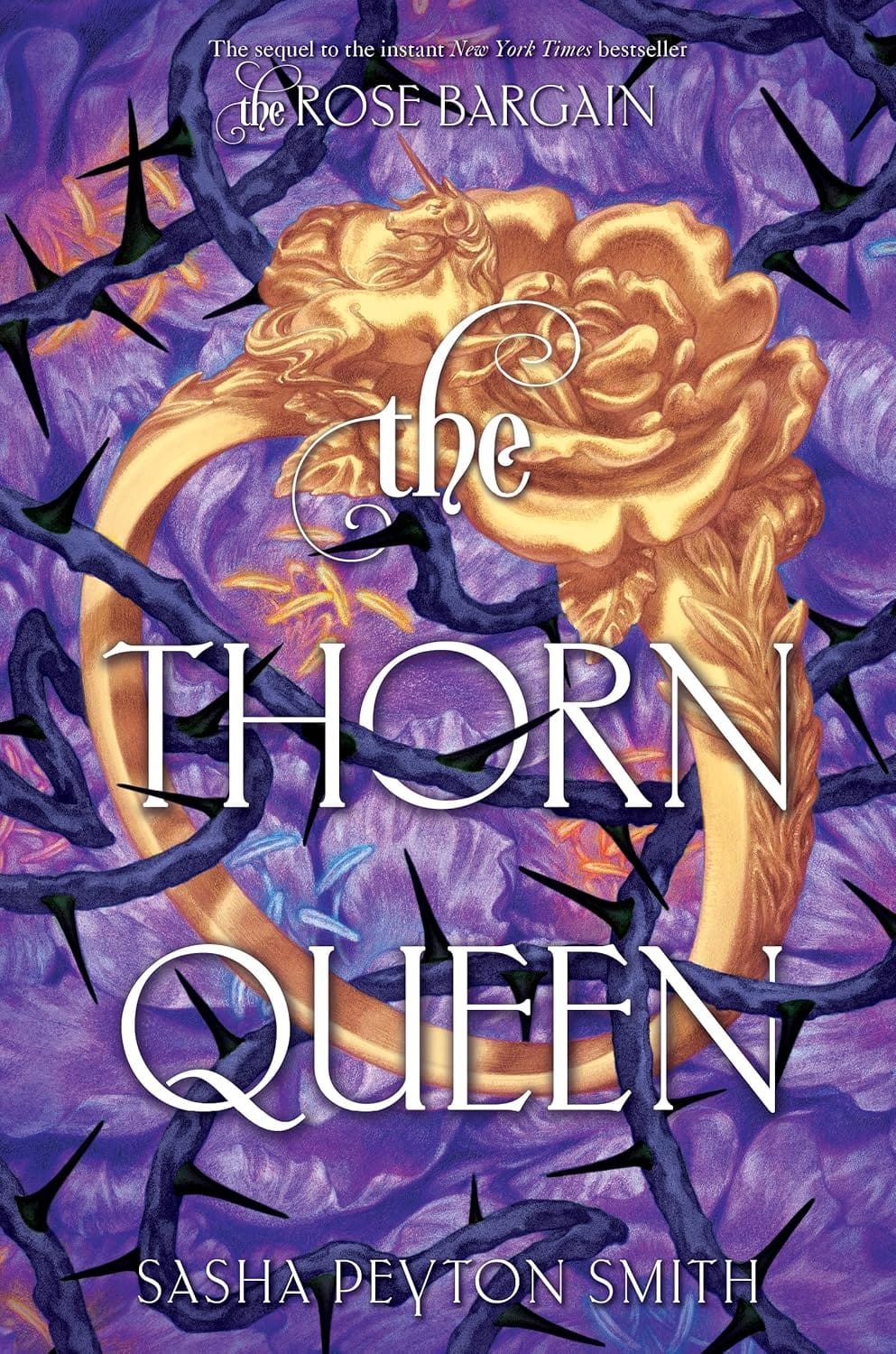
The Thorn Queen Book Cover
📖 Buy on Amazon | Buy on Bookshop.org | 🎧 Listen on Libro.fm
The Thorn Queen is gearing up to be one of the best romantasy sequels of the spring.
Character guide, quick reference
Ivy Benton
Our narrator. Second Benton daughter, May Queen, now queen of England. Signed the bargain to save her sister. Fell in love with Emmett. Had her memories of him stripped as the price of her crown. Starts The Thorn Queen missing pieces of herself she does not yet know are missing.
Lydia Benton
Ivy's older sister. The golden girl of the family before her disappearance. Revealed at the end of book 1 to have been Bram's bride in the Otherworld her mysterious earlier bargain was him. She is pulled back to him when the door between worlds opens. In The Thorn Queen, she is trapped in the Otherworld where time passes differently, and she and Emmett have been there for roughly two years by the time Ivy catches up with them.
Prince Bram
The villain the book spent 300 pages hiding in plain sight. Immortal king of the Otherworld, architect of the original bargain that put Mor on the throne, now king of England and the new tyrant. Married to Ivy. Obsessed with Lydia. Charming in public. Terrifying in private.
Prince Emmett de Vere
The real love interest. Fully human son of Mor's consort, raised in the faerie court, rebel. Betrayed by Bram at the end of book 1 and pulled into the Otherworld when the door opens. Ivy cannot remember loving him. He remembers everything. In The Thorn Queen, he and Lydia have been stuck in the Otherworld together for two years.
Queen Moryen (Mor)
The faerie queen who ruled England for four hundred years. Not the mastermind. Not the worst person in the book. Imprisoned in the Tower by the end of book 1. Still extremely dangerous, and almost certainly not finished with this story.
Greer Trummer
Ivy's childhood best friend. Secretly in love with Oliver the stable boy. Outed at the tea party. Presumed dead. I am personally reserving judgment on "presumed" until we are further into The Thorn Queen.
Faith Fairchild
Ballerina, forced-truth-teller. Complicated history with Emmett. In love with Marion by the end of book 1. Alive at book's end. One of the girls who I think matters a lot more in book 2 than her page count in book 1 suggests.
Marion Thorne
Writer, heiress, in love with Faith. The girl who most clearly understood the competition was a machine designed to grind her up. Alive at book's end and one of my favorites.
Olive Lisonbee
The youngest. Romantic, optimistic, fingernail-less. Survived the competition.
Emmy Ito
The dry-witted artist. Survived the competition by refusing to play along any more than she had to.
The Gold King... wait, wrong series
Ignore this.
What to watch for in The Thorn Queen
The publisher synopsis for The Thorn Queen is already out, so we know some of the ground rules going in. Ivy is queen of England and acting the part of the devoted wife while secretly plotting to banish Bram, save Lydia, and reunite with Emmett. Lydia and Emmett are trapped in the Otherworld, where time passes differently — about two years have gone by for them while only a short time has passed for Ivy. The Others are sweeping through the country taking their revenge on centuries of being kept out. This is the book where everything the rebellion didn't fix in The Rose Bargain has to actually get fixed, because it is the last book in the duology.
A few things I am watching for specifically.
What "two years in the Otherworld" has done to Emmett and Lydia. Two years is a long time to be trapped together in a place where the rules of time and magic do not work the way they do at home. Two years is also long enough for the relationship between Emmett and Lydia to become something friendship, alliance, dependency, or more that Ivy will not know how to feel about when she finally reaches them. The synopsis hints that the reunion is not going to be simple, and that's before you factor in Ivy's missing memories of the boy Lydia has been trapped with.
Whether Ivy's memories come back. Losing her memories of Emmett is a specifically faerie kind of cruelty, and the way faerie stories usually work, those memories are not gone — they are locked somewhere. How she gets them back, what she has to give up to get them back, and whether they return intact or broken are all live questions. I would bet money the answer involves Bram noticing before she wants him to.
Greer. Listen. Greer's "suicide" happened at a faerie tea party staged by a faerie queen in a book where nothing stays dead and nothing is ever quite what it looks like. I am not saying she is alive. I am saying I want to see a body, and I want to see the body in The Thorn Queen, not hear about it secondhand.
The Others in England. Peyton Smith has built a full faerie court and has spent a book telling us how much it wants to come across. Now it's here. What the Others actually do to English society which families bend, which break, which collaborate, which go underground.
Bram's real endgame. He has wanted something specific for a very long time, long enough to spend centuries pretending to be a gentle prince to set it up. Taking the throne of England is clearly only step one. Step two is what The Thorn Queen is about.
Frequently asked questions
Is The Rose Bargain a standalone? No. It is the first book in a duology. The Thorn Queen (book 2) releases April 14, 2026, and is the conclusion of the series.
Is The Thorn Queen the last book in the series? Yes. The Rose Bargain is a duology, and The Thorn Queen is the second and final book.
Does Ivy end up with Emmett in book 1? No. Ivy wins the competition and marries Prince Bram, and the price of her crown is her memories of loving Emmett. She starts book 2 married to Bram and unable to remember what Emmett actually meant to her, while Emmett is trapped in the Otherworld.
Who is Prince Bram, really? Bram is revealed in the final act of The Rose Bargain to be the ancient immortal king of the Otherworld — the actual architect of the bargain that put Queen Moryen on the throne in 1471. He has been playing the part of Mor's gentle son for centuries to engineer his own eventual takeover of England. At the end of book 1 he succeeds, and he is the new king of England heading into The Thorn Queen.
What happened to Lydia Benton? Lydia's mysterious bargain with the faerie queen — the one that destroyed her before book 1 started — was actually her being taken as Bram's bride in the Otherworld. When Bram opens the door between worlds at the end of book 1, Lydia is pulled back to him. She is trapped in the Otherworld at the start of The Thorn Queen.
Is Greer really dead? Greer Trummer appears to die by suicide after her affair with Oliver the stable boy is exposed at the queen's truth-telling tea party. Whether she is really dead or whether her apparent suicide is another faerie deception is one of the open questions going into The Thorn Queen. I am personally suspicious.
What is the "twice-crowned" rule? Queen Moryen's magical claim to the English throne depends on her being the only person in England ever to be crowned twice — once in the Otherworld, once on Earth. Ivy's May Queen crown and her marriage-crown as Bram's queen make her the second twice-crowned sovereign, which breaks Mor's binding spell. This is the loophole the rebellion weaponizes. It works, and it backfires, because Bram has been counting on it.
Do I need to re-read The Rose Bargain before The Thorn Queen? Honestly? A re-read will reward you — there are so many seeded details about Bram that hit differently when you know — but if you don't have time, this recap covers everything you need to hit the ground running on April 14.
When does The Thorn Queen come out? April 14, 2026. Next Tuesday. Publisher HarperCollins, 368 pages, the concluding book in the duology.
Further reading
- The Thorn Queen by Sasha Peyton Smith: Release Day Guide (April 14, 2026) your release-day hub
- April 14, 2026 New Book Releases everything landing the same week
- New Romantasy Releases Spring 2026 if you need your next faerie fix while you wait for delivery
If The Rose Bargain broke you, and especially if the Bram reveal rearranged your brain the way it rearranged mine, come talk about it with me on Instagram @inkandimaginings. I want to hear who you think is going to survive the Otherworld, what you think Bram's actual endgame is, and whether you, like me, refuse to believe Greer is dead until the Peyton Smith says so in writing twice.
The Thorn Queen releases April 14, 2026. I'll have a review, and a full spoiler discussion the week it drops. See you then.
