This post contains affiliate links. If you buy through them, I may earn a small commission at no extra cost to you. Thanks for supporting Ink & Imaginings.
Everything Was Beautiful and Nothing Hurt is Ben Reeves's luminous debut novel, narrated by Death himself, a gentle, lonely figure named Travis who moves through a modern city witnessing the endings of lives and the people left behind. It is tender, poetic, and openly devastating, a book about mortality and the beauty of ordinary moments, and it makes an unforgettable, deeply emotional book club pick.
A note before you start. This is one of the most emotionally intense books I have covered here. It centers on death and grief, and it includes the death of a child and the death of an infant, among other losses. Reeves handles all of it with tenderness rather than graphic detail, but it is genuinely hard to read at times. Please look after yourself, and check the full content notes below before you begin.
Below: what it's about (spoiler-free), the full story, the whole cast, the themes worth talking about, how it ends, twelve discussion questions, my honest take, and what to read next. Full spoilers once you reach the plot summary.
📚 Amazon | Bookshop | 🎧 Audible
Quick Facts
- Released: July 7, 2026
- Author: Ben Reeves (this is his debut novel)
- Publisher: Avid Reader Press / Simon & Schuster
- Genre: literary fiction, magical realism
- Setting: a contemporary British city, its canals, parks, allotments, and cemeteries, seen through the eyes of Death
- Length: about 256 pages
- Book Club Verdict: poetic, profound, and shattering. A powerful pick for a group ready to sit with big feelings about mortality, love, and loss.
- Content notes: death and grief throughout, the death of a child (from meningitis), the death of an infant, a fatal car accident, elderly death, addiction, and depression. Handled with tenderness and without graphic detail, but very heavy.
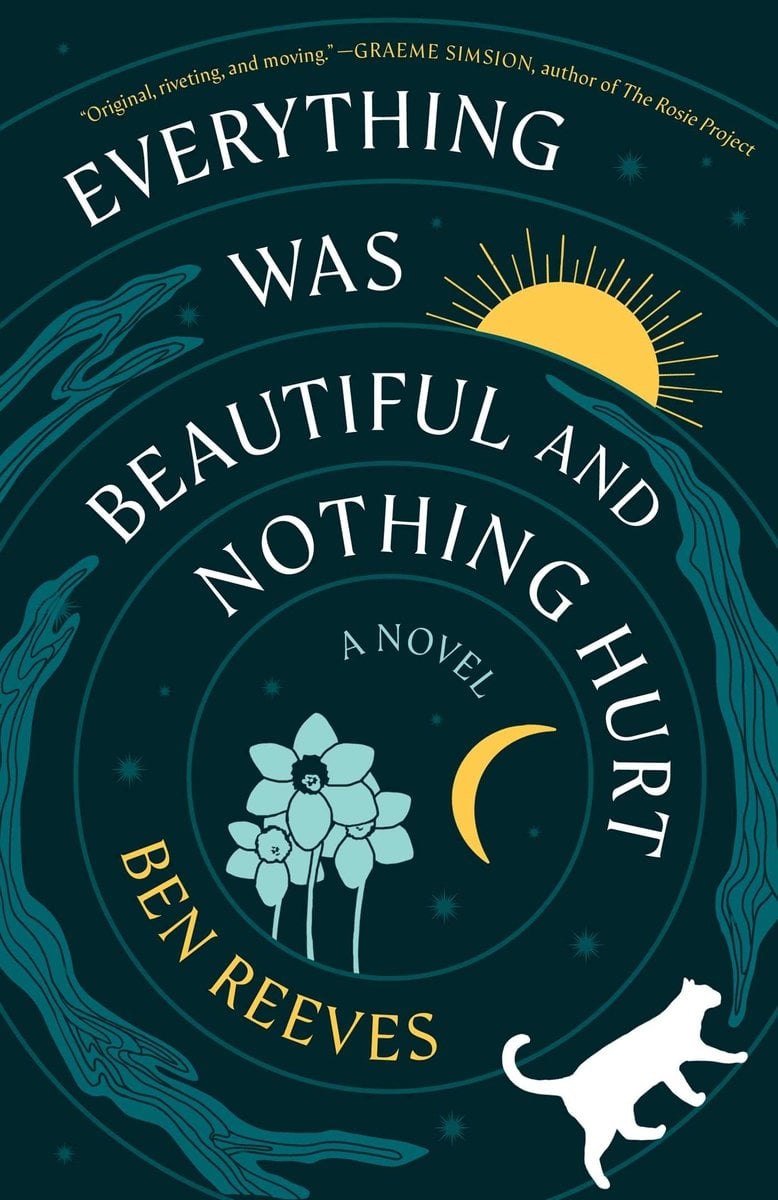
Everything Was Beautiful and Nothing Hurt by Ben Reeves Book Cover
What Everything Was Beautiful and Nothing Hurt is about (spoiler-free)
Travis is Death, though not the hooded figure with a scythe. He is quiet and compassionate, a companion to the dying rather than a punisher, and he moves unseen through a modern city, present at every ending. Between his duties he lives an almost ordinary life in an apartment building, restoring old photographs for his elderly neighbors, piecing back together the faces and moments that time has worn away.
Then two people begin to pull him toward something he has never really had: a life of his own. Dalia is a midwife, a woman who spends her days at the very beginning of life; her bright, curious eight-year-old daughter, Layla, befriends the strange, lonely man upstairs. As Travis is drawn into their orbit, his careful distance starts to fail him, and he finds himself wishing, for the first time, that he could change what he knows is coming. Everything Was Beautiful and Nothing Hurt is Ben Reeves's tender, lyrical meditation on mortality, memory, and the almost unbearable preciousness of being alive.
Full Story (Full Spoilers)
⚠️ Major spoilers ahead, including the ending. If you haven't finished the book, skip down to the Characters or Discussion Questions.
Death, and the city he watches
The novel opens with the car accident that kills Samuel Preston, a young man with a future, whose final moments Travis gentles rather than hastens. From there the book settles into its rhythm: Travis drifts through the city's overlooked corners, sits with the dying, and returns home to restore photographs. He accompanies an elderly poet, John Lamb, who is ready and even grateful to go, and later a baby who dies peacefully in his sleep, and an old woman weary of waiting. Each ending is rendered with tenderness, and each is a small essay on how differently people meet the same door.
A midwife, a child, and a life almost lived
Travis's careful solitude cracks when Layla, the young daughter of his neighbor Dalia, adopts him. She pulls him into games, questions, birthday invitations, and the ordinary chaos of a single-parent household. Dalia, Samuel's grieving sister, finds unexpected companionship with Travis at the local allotment, where they garden and talk and slowly heal. For a while the book becomes almost warm, a portrait of a fragile makeshift family, even as Travis carries the unbearable knowledge of what he is and what always comes.
The turn toward winter
The story threads other lives through Travis's, a printer named Mansoor, Layla's father Nick struggling with addiction, neighbors and strangers, alongside a recurring lyrical motif: the mayflies, who live a single ecstatic day. Everything builds, quietly and inexorably, toward the loss the reader has been bracing for since the first page.
How Everything Was Beautiful and Nothing Hurt ends
Layla's illness. After a school event, Layla falls ill, her early symptoms hidden beneath Halloween face paint. The diagnosis is meningitis. The hospital chapters are agonizing: Dalia's mounting guilt and terror, the bargaining, the fading hope, and Travis present as both comfort and the one thing he cannot stop being. For the first time, Death wishes he could refuse his own nature. He cannot. Layla dies, and the makeshift family Travis had let himself love is broken.
The long aftermath. The novel does not rush past the grief. Dalia is hollowed out, moving through numbed days, held together by her surviving younger daughter, Neda, and, unevenly, by Nick, who is trying to climb out of his addiction. Travis, too, is changed. His impartiality is gone; he has been altered by attachment, by having wanted, for once, a different ending.
The mayflies, and the gift. The book widens back out to its central image, the mayflies' single brilliant day, and carries Dalia forward into old age, where we glimpse her as an old woman surrounded by family, weary but grateful, ready at last for her own rest. The final pages turn to the reader with a question that is the whole book distilled: imagine you are at the end of your life and you are granted twenty minutes to return to an ordinary moment like this one. What would you do with it? The answer Reeves is reaching for is the title itself. Life hurts because it ends, and it is beautiful for exactly the same reason. It is a heartbreaking, strangely consoling close, the kind that leaves a room full of readers quiet.
Characters
Travis Smith (Death). Our narrator, Death personified as a gentle, weary, deeply lonely man. Not a judge but a companion, he restores photographs, collects stories, and eases people through their final moments. His growing love for Dalia and Layla cracks open his careful detachment and drives the emotional heart of the book.
Dalia Willard. A midwife and single mother, practical, loving, and fiercely protective, who spends her working life at the beginning of things. Samuel's sister, she becomes Travis's tentative companion, and after Layla's death she becomes the book's study of endurance and slow, fragile survival.
Layla. Dalia's bright, curious eight-year-old, the beating heart of the novel and the one who befriends the strange man upstairs. Her innocence, her questions, and her illness are the story's central tragedy and its source of light.
Samuel Preston. Dalia's younger brother, whose death in the opening pages ripples through the whole book, shaping Dalia's grief and Travis's reflections on unfinished lives.
John Lamb. An elderly poet who has lost his wife and his dog and meets death calmly, even gratefully. He embodies the possibility of making peace with an ending.
Nick. Layla's father and Dalia's former partner, loving but unreliable, wrestling with addiction and regret, and slowly trying to become someone his family can lean on.
Neda. Dalia's younger daughter, too small to grasp the full weight of the loss, and both a comfort and an ache, a reason to keep going.
Mansoor Gupta. A printer and widower whose interwoven story of ambition and grief meditates on the limits of achievement and the persistence of love across generations.
The mayflies. Not characters exactly, but a recurring presence, creatures of a single day whose brief, brilliant dance is the novel's governing metaphor for a human life.
Themes Worth Discussing
Mortality and the beauty of the ordinary. By narrating from Death's point of view, the book makes every ordinary moment, a bracelet, a scent, a shared garden, glow with significance. Its whole argument is that life is precious because it is brief.
Death as compassion, not punishment. Travis is tender, not terrifying. Reeves reimagines Death as a companion who eases and witnesses rather than judges, which reframes how we might think about endings altogether.
Grief and survival. The novel refuses to tidy grief. Dalia's long, numbed aftermath is drawn with unflinching honesty, and the book insists that surviving loss is its own slow, heroic work.
Ephemerality and the mayflies. The mayfly's single day threads through the book as a mirror for human life, brief, intense, and no less meaningful for being fleeting.
Memory and preservation. Travis's photograph restoration is the book's quiet counter-argument to loss: we hold on to the dead through the images and stories we tend, and love outlasts the moment.
Connection versus loneliness. Travis has spent eternity alone, and his reaching toward Dalia and Layla, at real cost to himself, is the book's tender case for loving anyway, even knowing how it ends.
Book Club Discussion Questions
These are the ones that will get your group talking, ordered from warm-up to heated. Be gentle with each other; this is a tender book.
- Death narrates the whole novel as Travis, a gentle companion rather than a punisher. How did that perspective change the way you experienced the story?
- The title, borrowed from Kurt Vonnegut, is doing a lot of work. What did it come to mean for you by the end?
- Travis restores old photographs for his neighbors. Why do you think Reeves gave Death that particular hobby, and what did it say about memory and loss?
- Dalia is a midwife, someone who works at the very beginning of life, and she is bound to Death. What did you make of that pairing?
- The book opens with Samuel's death and returns often to different ways of dying, the ready, the resistant, the unknowing. What did those varied endings add up to for you?
- Layla befriends Travis before anyone else will. What did her innocence and curiosity draw out of him?
- Travis, who has always been impartial, begins to wish he could change what is coming. Did his growing attachment feel earned to you?
- The novel does not soften Layla's death or its aftermath. Did you find the honesty of the grief overwhelming, cathartic, or both?
- The mayflies recur throughout as a metaphor for a brief, brilliant life. Did that image comfort you or unsettle you?
- Nick struggles with addiction and tries to become a better father. How did his arc sit alongside Dalia's grief?
- The book ends by asking you directly what you would do with twenty minutes back in an ordinary moment. How did you answer?
- Reeves seems to argue that life is beautiful because it ends. Do you find that idea consoling, and did the book earn it?
My Honest Take
I will be straight with you: this was a heavy, powerful read, and I want you to go in with your eyes open. It is emotional, heartbreaking, and very hard to read in places, especially if you are a parent. This is not a book to hand someone in a fragile week, and I would not blame anyone for setting it down and coming back later.
But the writing. Reeves writes with a poetic, aching tenderness, and he has built something rare here: a book about death that leaves you more alive to your own ordinary Tuesday. The ending is beautiful, quietly, devastatingly so, and it is the kind of last chapter that reorders how you look at the people in your house. If your group is up for feeling everything, and for a long, warm, teary conversation afterward, this is a remarkable pick. Bring tissues, and maybe pick something lighter for the month after. For readers who want more shattering, gorgeously written literary fiction, my A Little Life guide is a natural next stop, with the same caution about heavy content.
If You Liked Everything Was Beautiful and Nothing Hurt, Read These Next
Want to stay in the Ink & Imaginings world? Every one of these has a full guide right here.
📚 A Little Life by Hanya Yanagihara: another shattering, beautifully written literary novel about love and loss, with the same caution about heavy content. The closest read-alike we have covered.
📚 The Midnight Train by Matt Haig: a tender, hopeful meditation on mortality and what makes a life worth living, and a gentle palate cleanser after all the tears.
📚 Kin by Tayari Jones: a quiet devastation of a novel about family, loss, and the people who become our own, if you want more beauty wrung from grief.
📚 The Correspondent by Virginia Evans: a warm, moving portrait of one woman's life in letters, tender and full of the ordinary moments this book taught you to treasure.
📚 Heart the Lover by Lily King: a gorgeously written literary novel about love, memory, and the people who mark us, for readers who want more aching, beautiful prose.
📚 Looking for your next book club pick? Book of the Month sends you a new book every month for the price of a coffee. Try your first month for $5 →
Want more book club picks like this in your inbox every Tuesday? Subscribe to The Weekly Bookmark, the books I'd text a friend about, plus the new releases worth catching this week.
Frequently Asked Questions
What is Everything Was Beautiful and Nothing Hurt about?
It's Ben Reeves's 2026 debut literary novel narrated by Death, personified as a gentle, lonely man named Travis who eases people through their final moments and restores old photographs. When he is drawn into the lives of a midwife named Dalia and her young daughter Layla, he begins, for the first time, to wish he could change the endings he knows are coming. It's a lyrical meditation on mortality, grief, and the beauty of ordinary life.
How does Everything Was Beautiful and Nothing Hurt end?
Layla, Dalia's eight-year-old daughter, dies of meningitis, an unbearable loss for the makeshift family Travis had let himself love. The novel follows Dalia through her long grief and eventually into old age, where she is shown surrounded by family and at peace. It closes by asking the reader what they would do with twenty minutes returned to an ordinary moment, landing on the idea that life is precious precisely because it ends.
Who is the narrator of Everything Was Beautiful and Nothing Hurt?
The narrator is Death, personified as Travis Smith, a compassionate rather than frightening figure who accompanies the dying, witnesses the lives of the living, and, over the course of the book, is changed by his attachment to Dalia and Layla.
What are the content warnings for Everything Was Beautiful and Nothing Hurt?
The novel deals with death and grief throughout, including the death of a child from meningitis, the death of an infant, a fatal car accident, elderly death, addiction, and depression. It is handled with tenderness and without graphic detail, but it is emotionally intense and can be very hard to read.
Why is the book called Everything Was Beautiful and Nothing Hurt?
The title comes from Kurt Vonnegut's Slaughterhouse-Five. In Reeves's novel it captures the book's central idea: that life's beauty and its pain are inseparable, and that ordinary moments are precious exactly because they do not last.
Who wrote Everything Was Beautiful and Nothing Hurt?
Ben Reeves, in his debut novel, published by Avid Reader Press / Simon & Schuster in 2026.
