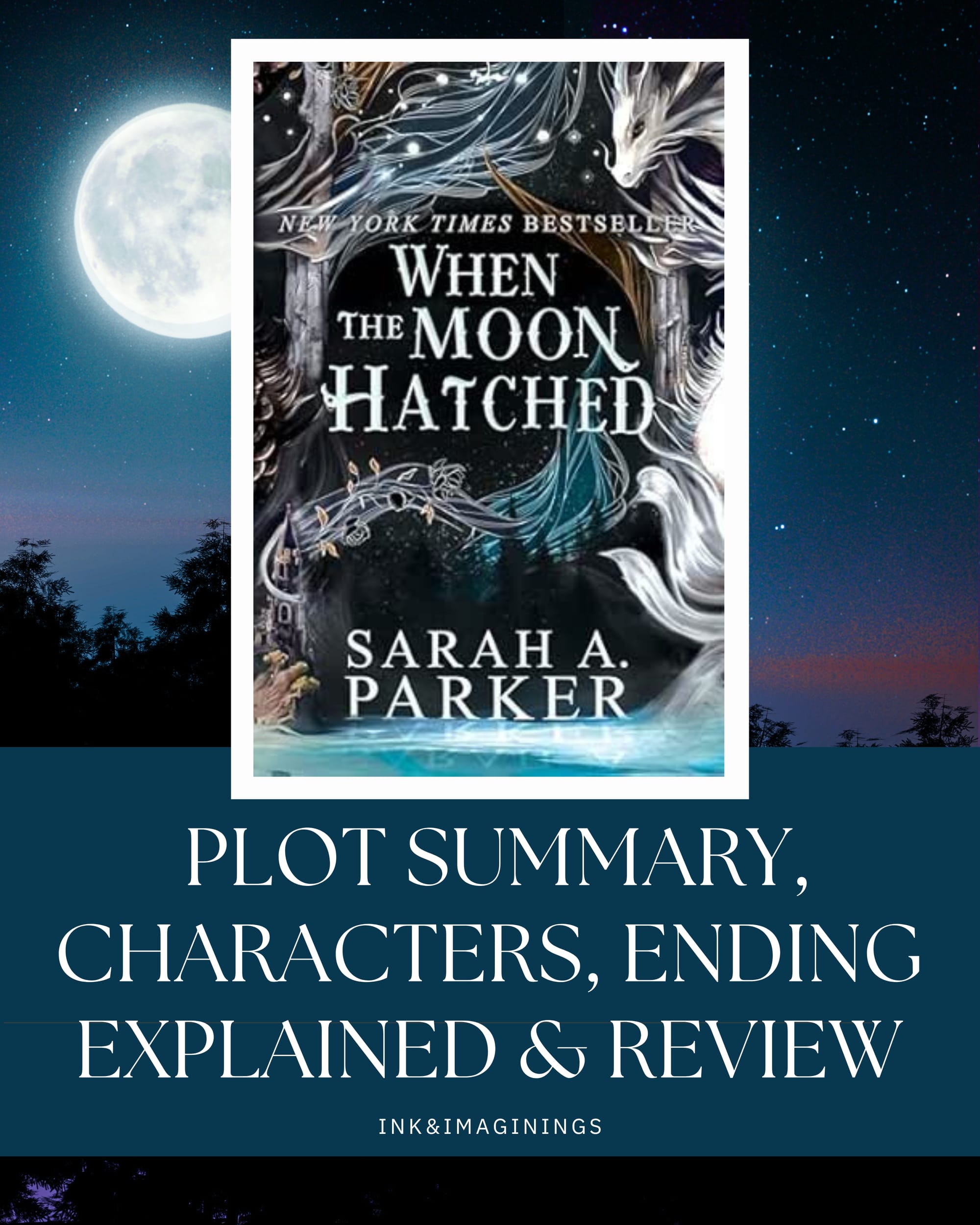
How does When the Moon Hatched end? Raeve discovers she is Elluin Neván, Kaan Vaegor's presumed-dead great love. She kills the bounty hunter Rekk Zharos in revenge for her friend Essi's death, then chooses to leave Kaan and Dhomm because the vulnerability of staying terrifies her more than anything else.
Does Raeve end up with Kaan in When the Moon Hatched? No. By the final chapter, Raeve has learned she's Elluin Neván, Kaan's presumed-dead great love and chooses to leave Dhomm. The vulnerability of staying with him terrifies her more than walking away. Book 2 picks up the unfinished story.
Who is Kyzari's father? Kaan Vaegor is Kyzari's biological father, though both Kaan and Kyzari believe his brother Tyroth is her father. Kyzari can hear the god Caelis. This is a major thread heading into book 2.
What is a moonfall? When dragons die, they ascend and solidify into moons in the sky. A moonfall is when those moons fall. These are catastrophic events tied to the trapped god Caelis. The Ballad of Falling Dragons centers on the most devastating moonfall yet.
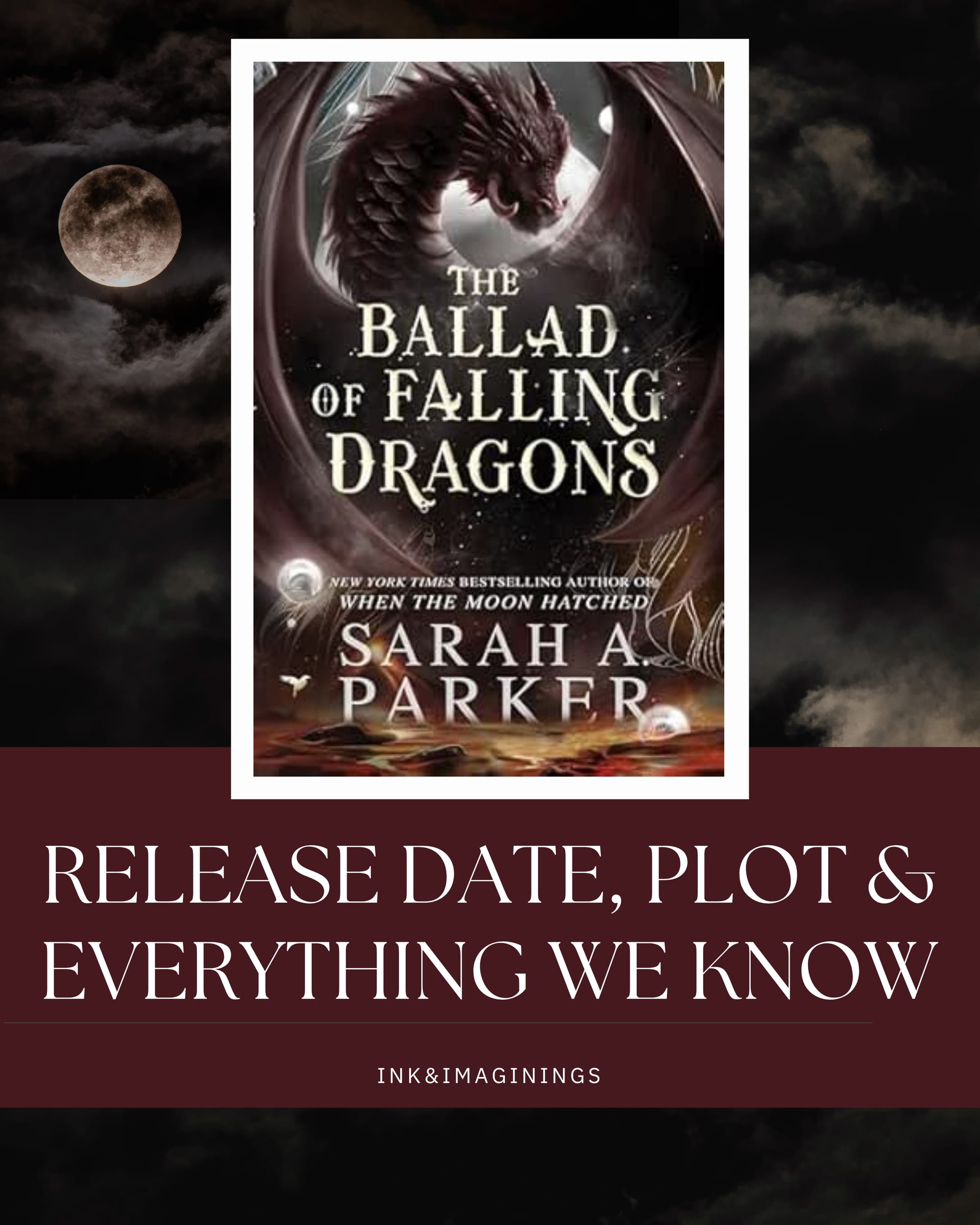
The Ballad of Falling Dragons drops May 19, 2026, and if you finished When the Moon Hatched a year ago (or two years ago, or last week in a frantic catch-up), you're probably staring at 576 pages of sequel wondering if you remember enough to dive in.
You don't. None of us do. Sarah A. Parker built one of the most intricate fantasy worlds in recent romantasy, and the details matter.
Which kingdom is which, what the elemental songs actually do, who Elluin Neván is, what the Aether Stone contains, and why Raeve walked away from Kaan at the end.
This is the recap. Every kingdom, every character, every reveal, and the ending explained. Grab your coffee and settle in.
⚠️ FULL SPOILER WARNING: This post contains complete spoilers for When the Moon Hatched by Sarah A. Parker. Every major reveal, the ending, and what it means for The Ballad of Falling Dragons are discussed in detail. If you haven't read the book yet, this is your sign to go read it then come back.
The Ballad of Falling Dragons guide is now live.
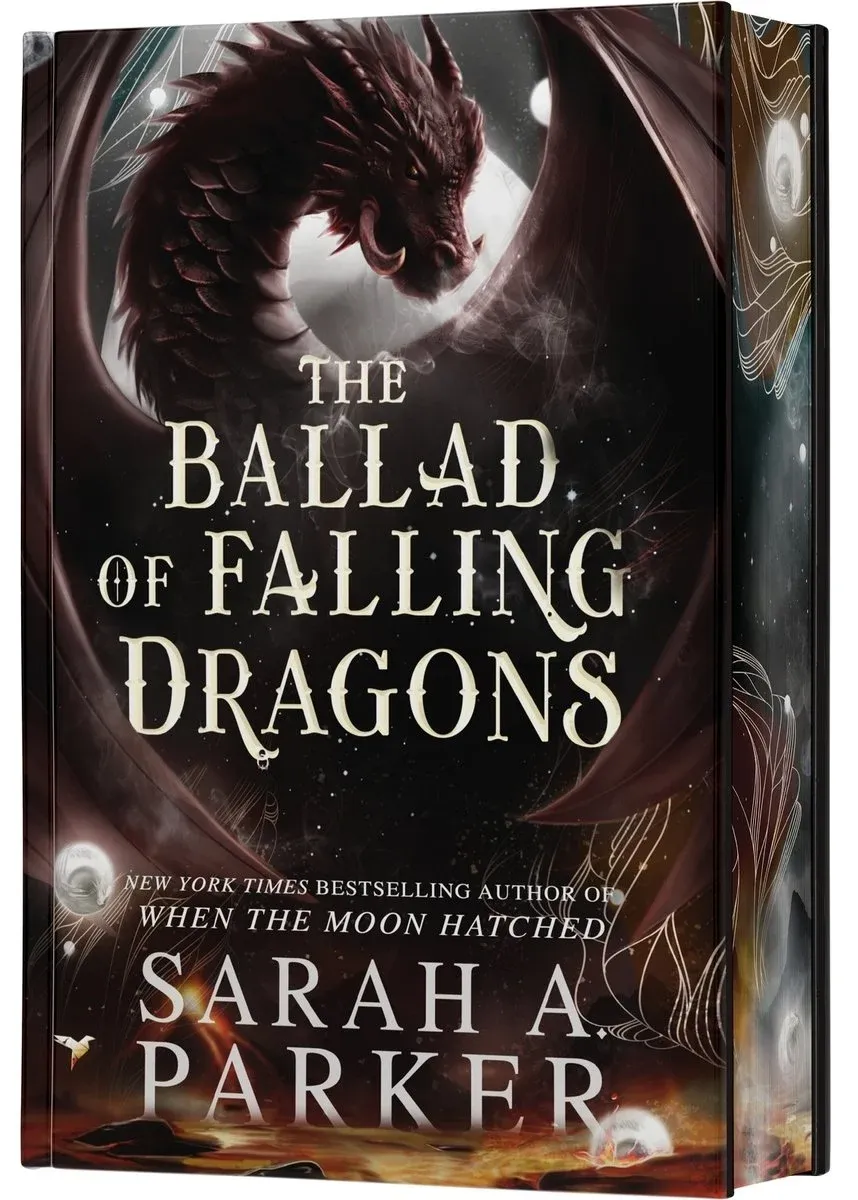
The Ballad of Falling Dragons Book Cover
📖 Buy The Ballad of Falling Dragons: Amazon | Bookshop.org
What happens in When the Moon Hatched?
Raeve is a skilled assassin living a double life in The Fade, one of three kingdoms ruled by the Vaegor brothers. She poses as a null, someone with no elemental abilities while secretly wielding the songs of two elemental gods. She's a member of the Fíur du Ath, a resistance movement fighting against King Cadok's tyranny.
A mission goes wrong when bounty hunter Rekk Zharos captures her. Raeve is sentenced to death by Moltenmaw dragon in a public execution, but a mysterious king intervenes. Kaan Vaegor, ruler of The Burn. Before the execution can proceed, the queen of The Fade disrupts the arena with elemental chaos, and a Sabersythe dragon snatches Raeve from the coliseum.
Raeve ends up in Dhomm, Kaan's kingdom, where she discovers warmth, community, and freedom she's never known.
She also discovers Kaan's fierce protectiveness, his honor, and his connection to a woman named Elluin Neván. A royal who was Kaan's great love and is presumed-dead.
Through a diary, Raeve learns the truth: she IS Elluin Neván. Her memories have been suppressed, her identity hidden. She has a child named Kyzar who she doesn't remember. The manipulative Arkyn, the Scavenger King, has been exploiting Kyzari and scheming to claim the throne.
Raeve confronts Rekk Zharos in Bothaim, exacting brutal revenge for the death of her friend Essi. She reclaims her power, her agency, and her identity. But at the end, despite her bond with Kaan, despite the málmr that symbolizes their commitment, despite the truth of who she is Raeve chooses to leave. She walks away from Kaan and Dhomm, unwilling to risk the pain of attachment.
Kaan accepts her choice. And we're left knowing that Raeve's journey is far from over.
The world: three kingdoms and five gods
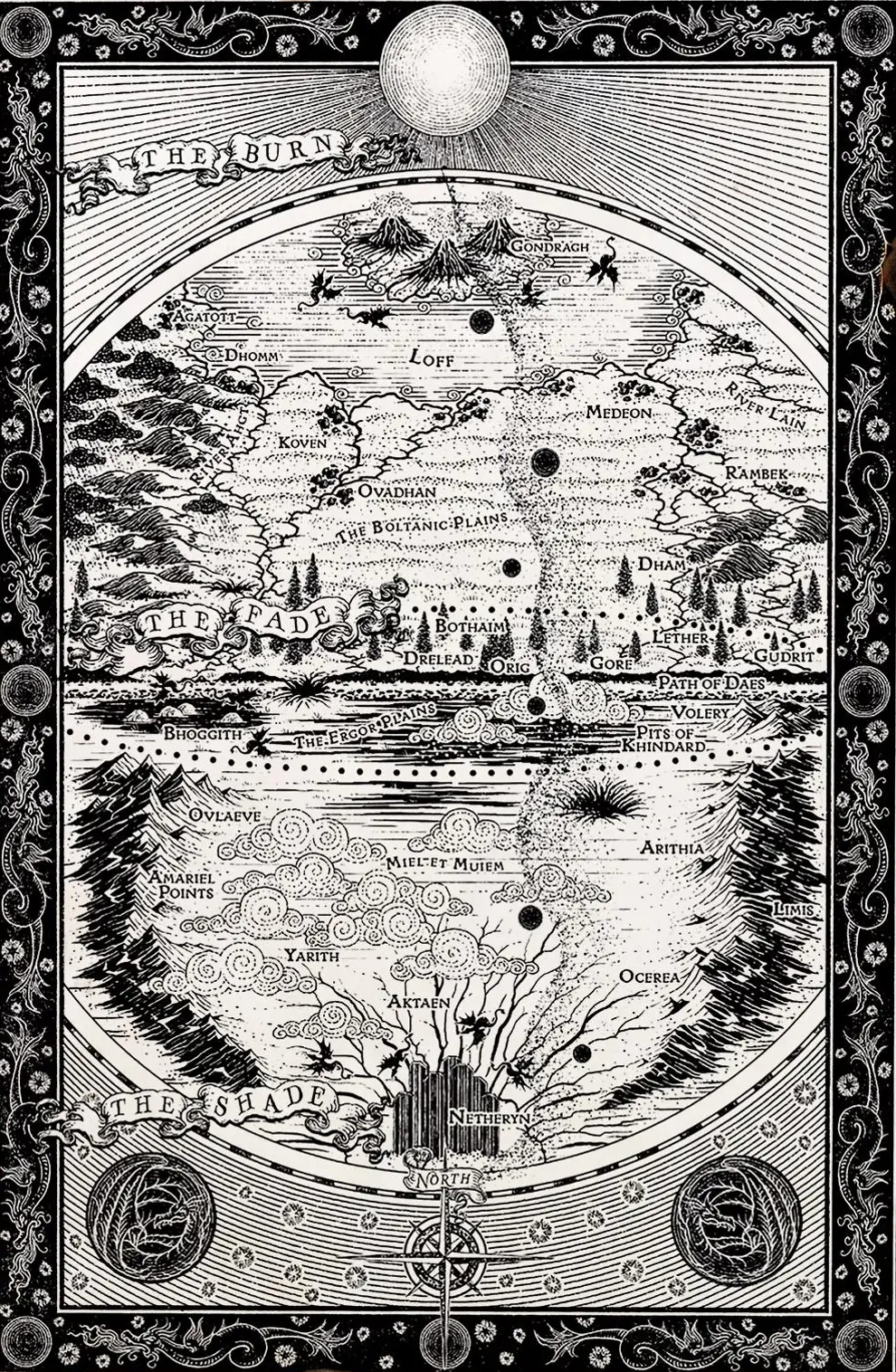
Before we get into the plot, you need the world map in your head. Sarah A. Parker built a world shaped by five elemental gods, populated by humans and dragons, and divided into three kingdoms. This matters because all of it comes back around.
The five elemental gods
The world runs on five elemental gods, and you need to know all five because they all come back around:
Caelis the god of Aether: the most mysterious and powerful of the five. Caelis's essence is trapped inside the Aether Stone, a powerful artifact that grants immense abilities while imprisoning the god who created it. Raeve's connection to Caelis is one of the central mysteries of the book.
Bulder the god of Ground: Raeve can hear Bulder's song, giving her the ability to manipulate earth and stone. This is one of the two elemental songs she hides.
Rayne the god of Water: Elemental rain plays a critical role in the story. It's a manifestation of Rayne's power that forces Raeve to confront emotions she's buried for years. When it rains, Raeve breaks.
Clode the god of Air: Raeve can also hear Clode's song, giving her wind manipulation abilities. The fact that she can hear TWO gods' songs is extraordinary and dangerous. It marks her as someone powerful enough to attract the wrong kind of attention.
Ignos the god of Fire: Fire elementals are common in The Burn, Kaan's kingdom, where volcanic activity and heat shape the landscape and its people.
The three kingdoms
The Burn: Ruled by Kaan Vaegor. Volcanic, warm, and free. Sabersythe dragons nest here. Kaan's capital city of Dhomm is vibrant, welcoming, and the opposite of what Raeve expects. This is where Raeve discovers what life looks like without oppression.
The Fade: Ruled by Cadok Vaegor. The tyrannical kingdom where Raeve has been living undercover. Moltenmaw dragons nest here. Cold, cruel, and politically corrupt Cadok rules through fear. The Fíur du Ath resistance operates in the shadows.
The Shade: Ruled by Tyroth Vaegor. The most mysterious of the three kingdoms. Moonplume dragons nest here. Connected to the Neván family and by extension, to Raeve's true identity. Less is revealed about The Shade in book 1, but it's clearly being set up for a much larger role in the sequel.
The three Vaegor brothers share a history of rivalry, conflict, and betrayal that runs deeper than political borders. Their relationships with each other and with the women in their lives is one of the series' most complex threads.
What are Sabersythes, Moltenmaws, and Moonplumes?
Sabersythes: The dragons of The Burn. Fierce, powerful, and loyal to Kaan's kingdom. A Sabersythe is the dragon that snatches Raeve from the coliseum during her execution.
Moltenmaws: The dragons of The Fade. Used by Cadok as instruments of execution. Raeve was sentenced to be fed to a Moltenmaw before Kaan intervened.
Moonplumes: The dragons of The Shade. Beautiful, ethereal, and connected to the moon. Líri, the injured Moonplume that Raeve bonds with, is one of the most important creatures in the book. Líri symbolizes suffering and resilience and her bond with Raeve mirrors Raeve's own journey toward healing.
Raeve's journey: the full plot
The double life in The Fade
When we meet Raeve, she's living in Gore, a city in The Fade, posing as a null. She's a member of the Fíur du Ath, a resistance movement working to overthrow King Cadok's regime. She's their best assassin. Fast, lethal, and running on a vendetta.
She hides two critical abilities: she can hear the songs of Clode (Air) and Bulder (Ground), giving her elemental powers that should be impossible for a null. If anyone finds out, she's dead.
Her handler is Sereme, a high-ranking member of the Fíur du Ath whose methods are often questionable. Her closest friend is Essi, a brilliant inventor and the person Raeve trusts most in the world. Her resource contact is Ruse, owner of The Curly Quill.
The capture and the coliseum
Raeve's mission takes her into the Undercity, where she runs into Rekk Zharos, a sadistic bounty hunter working for The Crown. Rekk captures her and taunts her with the news that Essi has been killed.
This is the emotional detonation that drives the rest of the book. Essi's death transforms everything Raeve's resistance work, her careful neutrality, all of it into a personal vendetta.
Raeve is brought before the Guild of Nobles for trial. She's unrepentant. They sentence her to execution by Moltenmaw in the public coliseum.
But the execution goes sideways. A mysterious king later revealed to be Kaan Vaegor intervenes. Before anything can be resolved, the queen of The Fade uses her elemental powers to disrupt the arena. In the chaos, a Sabersythe dragon swoops in and carries Raeve away.
Dhomm and Kaan
Raeve wakes up in Dhomm, Kaan's capital in The Burn. Everything she expects about captivity cruelty, control, punishment doesn't happen. Instead, Dhomm offers warmth, community, freedom, and a king who treats her with respect she's never experienced.
Kaan Vaegor is the emotional center of the romance. He's protective without being possessive, honorable without being naive, and fiercely committed to Raeve's safety even when she pushes him away. His second-in-command, Grihm, is loyal and strong. His sister, Veya, is initially hostile toward Raeve she's protective of Kaan and skeptical of his feelings.
The slow-burn romance builds beautifully across the Dhomm chapters. Kaan doesn't demand anything from Raeve. He gives her space, resources, and choice three things no one has ever given her. Their connection deepens through shared meals, training sessions, and the quiet moments where Kaan's stoic exterior cracks just enough.
The málmr, a physical symbol of commitment and honor represents their bond. Kaan gives it to Raeve as a promise. She struggles to accept it because accepting it means accepting vulnerability.
The storm and the breaking point
One of the most devastating scenes in the book. A storm hits Dhomm, and the elemental rain a manifestation of Rayne's power overwhelms Raeve. Every defense she's built comes down. All the grief she's been carrying for Essi, for the life she's lost, for the identity she doesn't understand pours out of her.
Kaan finds her in the storm. He doesn't try to fix her. He holds her. They share a song, a melody that means something to both of them, though neither fully understands why yet.
This is the scene where everything shifts. And it's the scene where you start to realize that Raeve's emotional walls aren't just personality, they're survival mechanisms built on top of memories she can't access.
Vruhn and the Mindweft revelation
Raeve encounters Vruhn, a Mindweft, someone who can delve into thoughts and uncover hidden truths. He sees things in her mind that she can't access herself: suppressed memories, grief she doesn't remember earning, and an identity buried so deep that even Raeve doesn't know it's there.
Vruhn's revelations force Raeve to confront the possibility that she is not who she thinks she is. Her entire self-understanding as an assassin, null, orphan, resistance fighter... starts to fracture.
Elluin's diary and the identity reveal
This is the biggest reveal in the book.
Raeve discovers a diary belonging to Elluin Neván a woman who was presumed dead, who was Kaan's great love, and who had a child named Kyzari. As Raeve reads the diary, she learns about Elluin's struggles, her love for Kaan, and the sacrifices she made.
The gut-punch: Raeve IS Elluin Neván.
Her memories have been suppressed. Her identity has been hidden possibly by her own choice, possibly by someone else's manipulation. She has a child she doesn't remember. She has a love story she lived but can't recall. Everything about her life in The Fade, the assassin work, the resistance, the isolation, was built on top of an erased past.
This reframes the entire book. Every interaction between Raeve and Kaan takes on new meaning. His protectiveness isn't just attraction it's recognition. The song they shared in the storm wasn't coincidence it was memory bleeding through.
The Tookah Trial
Raeve is forced into the Tookah Trial, a tradition of the Johkull Clan that tests a person's worth. The trial strips away pretense and reveals who someone truly is. For Raeve, it becomes a crucible she must confront not just the physical challenge but whether she's willing to let anyone see the real her.
Kaan intervenes, risking political consequences to protect Raeve. His willingness to defy tradition for her says everything about how far he'll go.
Revenge in Bothaim
Raeve tracks Rekk Zharos to Bothaim and exacts brutal, methodical revenge for Essi's death. Disguised, she infiltrates his quarters and unleashes everything she's been holding back. The scene is violent and cathartic Raeve is reclaiming her power, her agency, and her right to grieve on her own terms.
After Bothaim, she's no longer the woman who lived in shadows. She's something fiercer, something freer, something dangerous in a way that has nothing to do with her elemental songs.
Arkyn and the political threat
Running beneath the romance and the identity reveal is a political thriller. Arkyn, the Scavenger King, is manipulating events behind the scenes. He's cunning, ruthless, and ambitious. He's been exploiting Kyzari Raeve and Kaan's child and scheming to claim the throne.
Arkyn represents the kind of threat that can't be solved by one woman with two songs and a vendetta. He's the systemic corruption the sequel will have to reckon with.
How does When the Moon Hatched end?
Here's how When the Moon Hatched ends, and why it matters for The Ballad of Falling Dragons.
Even after everything, learning she's Elluin Neván, bonding with Kaan, killing Rekk, reclaiming her identity...Raeve chooses to leave.
She walks away from Kaan. She walks away from Dhomm. She walks away from the málmr, the bond, the possibility of a life built on love instead of vengeance.
Why? Because Raeve has spent her entire remembered life losing people. Essi. Her old identity. Every connection she's ever made has been severed by violence or circumstance. The idea of staying, building something permanent, loving someone fully and risking the annihilation of losing them is more terrifying to her than any Moltenmaw.
Kaan accepts her decision. He doesn't chase her. He doesn't beg. He lets her go because he respects her autonomy, even when it breaks him.
The ending is ambiguous on purpose. Raeve isn't rejecting Kaan she's rejecting the vulnerability that loving him requires. The question The Ballad of Falling Dragons has to answer is whether Raeve can learn to choose love over self-protection, identity over erasure, and staying over running.
Who is Elluin Neván?
Elluin Neván is Raeve's true identity. She is a royal from The Shade, connected to the Neván family and to the Moonplume dragons. Before the events of the book, Elluin was Kaan Vaegor's great love. She was presumed dead.
In reality, her memories were suppressed and she lived for years as Raeve, an assassin in The Fade with no knowledge of who she had been. Elluin and Kaan have a daughter together: Kyzari. Raeve does not remember being pregnant or giving birth.
The diary that ultimately unlocks Raeve's identity is Elluin's own, and reading it is the moment Raeve learns who she really is. The Ballad of Falling Dragons centers on Raeve embracing her identity as Elluin and reconnecting with the people who knew her in that life.
The key artifacts and lore
The Aether Stone: Contains the essence of Caelis, the Aether god. Grants immense power but also imprisons Caelis. Raeve's connection to it is tied to her Neván family heritage and will almost certainly be central to the sequel.
The Málmr: A physical symbol of the bond between Raeve and Kaan. Commitment, honor, love. Raeve struggles to accept it because of what it represents emotionally.
Elemental Songs: The ability to hear and wield the songs of the five gods. Raeve can hear Clode (Air) and Bulder (Ground). The fact that she can hear two songs makes her extraordinarily rare and extraordinarily dangerous.
Lírí: The injured Moonplume dragon Raeve bonds with. Shared suffering and the possibility of healing. Their bond is one of the most tender relationships in the book.
Characters to remember before The Ballad of Falling Dragons
Raeve / Elluin Neván: Assassin, elemental wielder, and the presumed-dead royal who was Kaan's great love. She doesn't remember being Elluin. She left Kaan at the end of book 1.
The Other: A separate part of Raeve's consciousness that emerges during extreme distress or trauma. The Other takes over while Raeve essentially blacks out. Confirmed to recur in The Ballad of Falling Dragons.
Kaan Vaegor: King of The Burn. Warrior, protector, and the man who's been mourning Elluin for years without knowing she was alive the whole time. His crown has never felt heavier.
Rekk Zharos: Dead. Raeve killed him in Bothaim. His blood is still fresh on her hands as book 2 opens.
Essi: Dead. Raeve's closest friend, killed by Rekk. Her memory drives Raeve's vendetta arc.
Arkyn: The Scavenger King. Manipulative, ambitious, and dangerous. He's been exploiting Kyzari and scheming for power.
Kyzari: Raeve and Kaan's biological daughter, though both Kyzari and Kaan believe Tyroth is her father. She can hear the god Caelis and is in love with him. Her parentage, her connection to Caelis, and her safety are major unresolved threads heading into book 2.
Nee: A sentient parchment letter with a distinct personality, secretly penned by Kyzari to her believed-dead mother. Nee is a key thread connecting Kyzari to Raeve/Elluin.
Veya Vaegor: Kaan's protective sister. Initially hostile toward Raeve. Her loyalty is to family above all.
Grihm: Kaan's second-in-command. Loyal, strong, steady.
Vruhn: The Mindweft who uncovered Raeve's suppressed memories. The catalyst for the identity reveal.
Sereme: Raeve's handler in the Fíur du Ath. Questionable methods. Her loyalty to the cause may not extend to loyalty to Raeve.
Cadok Vaegor: King of The Fade. Tyrant. The brother Raeve's resistance was fighting against.
Tyroth Vaegor: King of The Shade. The least-revealed brother. Connected to the Neván family and the Moonplumes.
Líri: The injured Moonplume. Bonded with Raeve. A symbol of resilience.
What to watch for in The Ballad of Falling Dragons
Based on the ending and the official blurb, here's what book 2 has to resolve:
Raeve's identity as Elluin Neván. The blurb confirms Raeve will embrace her "forgotten identity" and confront her past as Kaan's long-lost love. This is going to be the central emotional arc.
The most devastating moonfall yet. A moonfall is coming and it's going to be catastrophic. Raeve has to choose between chasing death and choosing life.
Kaan's unanswered messages. His "larks" to friends and family have gone unanswered. Something is wrong in the wider world beyond The Burn, and Kaan is running out of time.
Allies and enemies converging. New threats with "bloodlusting agendas" are emerging. The political landscape is shifting.
The truth in the icy depths. The blurb hints at secrets nesting in Raeve's forgotten past secrets that may be more powerful than anything the elemental gods created.
If When the Moon Hatched was about Raeve learning who she is, The Ballad of Falling Dragons is about her deciding what to do with that knowledge.
What to Read Next
📚 The Ballad of Falling Dragons: Ending Explained A full spoiler breakdown of book 2.
📚 Fury Bound Ending Explained If you need another devastating romantasy ending to process.
📚 Dire Bound Complete Guide Another sequel prep recap for the Wolves of Ruin trilogy.
📚 This Week's New Releases Everything else dropping alongside Ballad of Falling Dragons.
📚 Lady Tremaine by Rachel Hochhauser was Reese's March 2026 pick. A literary reimagining of Cinderella from the so-called wicked stepmother's point of view, with falconry as central metaphor and a royal court hiding a genuinely sordid secret. Full guide here.
Still processing that ending?
If you need someone to scream about Raeve and Kaan with, I am right here. Drop a comment below or come find me on Instagram @inkandimaginings where I will be counting down to May 19 with you.
If you want to be the first to know when the Ballad of Falling Dragons review drops and when I inevitably lose my mind over whatever Sarah A. Parker does with Raeve and Kaan next The Weekly Bookmark has you covered.
Frequently Asked Questions
What is When the Moon Hatched about?
When the Moon Hatched follows Raeve, a skilled assassin hiding elemental powers in a world of dragons and warring kingdoms. After a failed execution, she's swept into the kingdom of The Burn, where she discovers freedom, love, and the devastating truth that she's actually Elluin Neván — a presumed-dead royal and the long-lost love of King Kaan Vaegor.
How does When the Moon Hatched end?
Raeve learns she is Elluin Neván, kills the bounty hunter Rekk Zharos in revenge for her friend Essi's death, and then chooses to leave Kaan and Dhomm despite their deep bond. Kaan accepts her decision. Raeve isn't rejecting Kaan, she can't yet accept the vulnerability that staying requires.
Who is Elluin Neván?
Elluin Neván is Raeve's true identity a royal from The Shade who was Kaan Vaegor's great love. Elluin was presumed dead, but her memories were suppressed and she lived as Raeve, an assassin in The Fade. She has a child named Kyzari with Kaan that she doesn't remember.
What are the three kingdoms in When the Moon Hatched?
The Burn (ruled by Kaan Vaegor, home of Sabersythe dragons), The Fade (ruled by Cadok Vaegor, home of Moltenmaw dragons), and The Shade (ruled by Tyroth Vaegor, home of Moonplume dragons). Each kingdom has a distinct climate and culture shaped by elemental forces.
What is a moonfall?
A moonfall is a catastrophic event in the Moonfall series. The details of what triggers a moonfall and its full consequences become central to The Ballad of Falling Dragons.
Does Raeve end up with Kaan?
Not at the end of book 1. Raeve chooses to leave despite their deep connection because she's afraid of the vulnerability that love requires. The sequel picks up with Raeve embracing her identity as Elluin and reconnecting with Kaan.
Who is Rekk Zharos?
A sadistic bounty hunter who captured Raeve and killed her friend Essi. Raeve tracks him to Bothaim and kills him in revenge. His death is confirmed, the sequel's blurb references his blood being "still fresh on her hands."
Is When the Moon Hatched spicy?
Yes, though the romance is a slow burn. The tension between Raeve and Kaan builds through emotional intimacy before physical intimacy. The spice is meaningful and tied to character development.
When does The Ballad of Falling Dragons come out?
May 19, 2026. Barnes & Noble has a deluxe limited edition with sprayed edges and full-color endpapers.