Propaganda, Profit, and the Gamification of Genocide
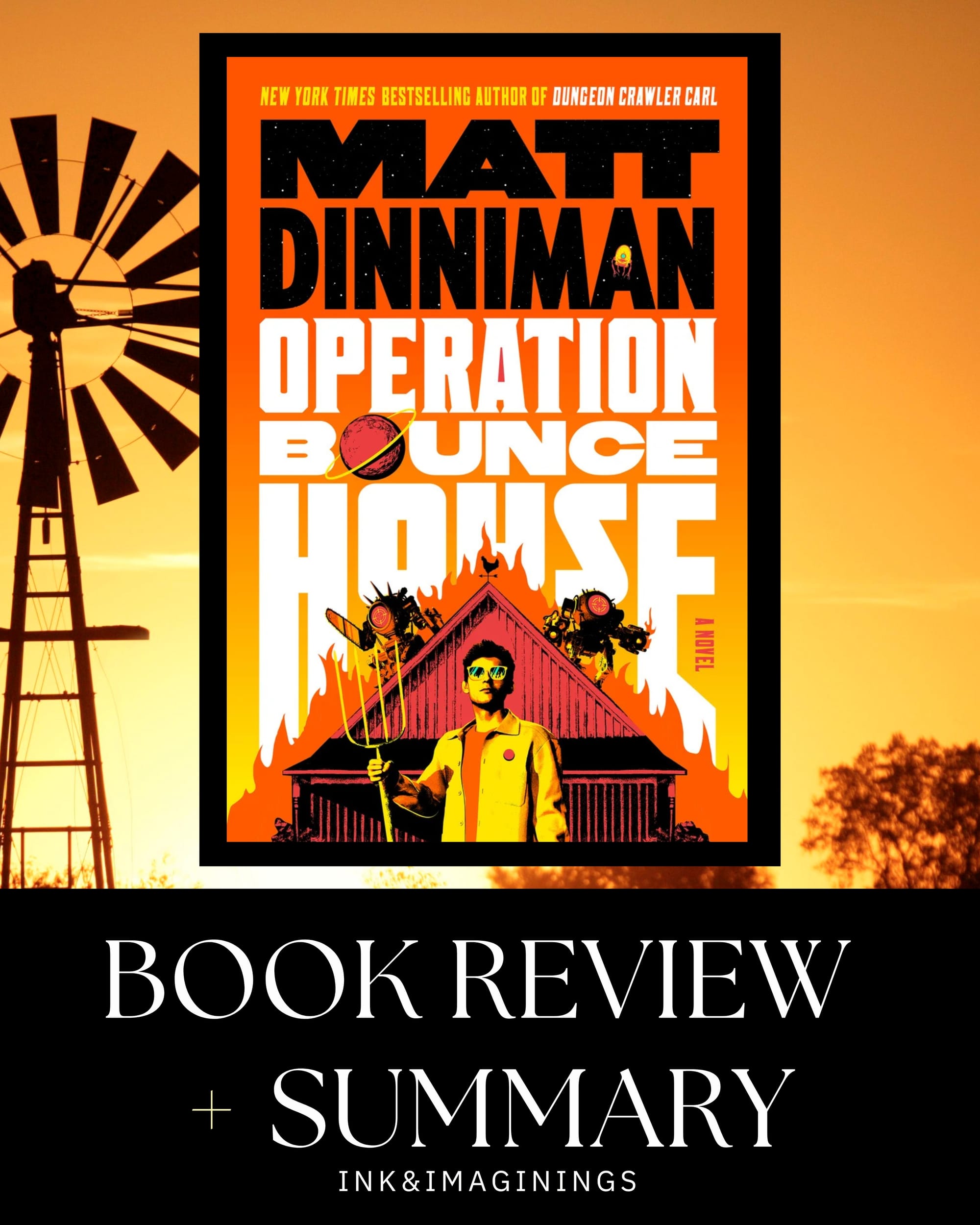
Operation Bounce House is a fast-paced standalone sci-fi thriller that turns entertainment culture into a weapon. When a mega-corporation transforms planetary eviction into a pay-to-play video game, a small farming community must defend their home using ingenuity, hacked agricultural robots, and sheer will to survive.
Book: Operation Bounce House
Author: Matt Dinniman
Genre: Science Fiction / Satire / Dystopian Thriller
Format Read: Digital ARC
Recommended for fans of: Dungeon Crawler Carl, Red Dawn, Ready Player One (with sharper teeth)
What Is Operation Bounce House About?
A man must fight for his planet against impossible odds when gamers from Earth attempt to remotely annihilate it.
Operation Bounce House is a fast-paced standalone science fiction novel that feels absurd at first glance and deeply unsettling once it gets going.
Oliver Lewis is a colonist on New Sonora, an Earth-like planet settled generations ago. His ambitions are small and deeply human: keep the family farm running, maintain the aging agricultural robots his grandfather refused to decommission, and play music with his friends. When a faster-than-light transfer gate finally reconnects New Sonora to Earth, it should mark a new chapter of opportunity.
Instead, it marks the beginning of a massacre.
Earth’s government outsources an “eviction action” to the mega-corporation Apex Industries, which decides it’s far more profitable to turn planetary extermination into a pay-to-play PvP experience. Civilians back on Earth can purchase access to design and pilot war machines remotely.
The game is called Operation Bounce House.
For Earth, it’s entertainment.
For New Sonora, it’s extermination.
Where to Buy Operation Bounce House
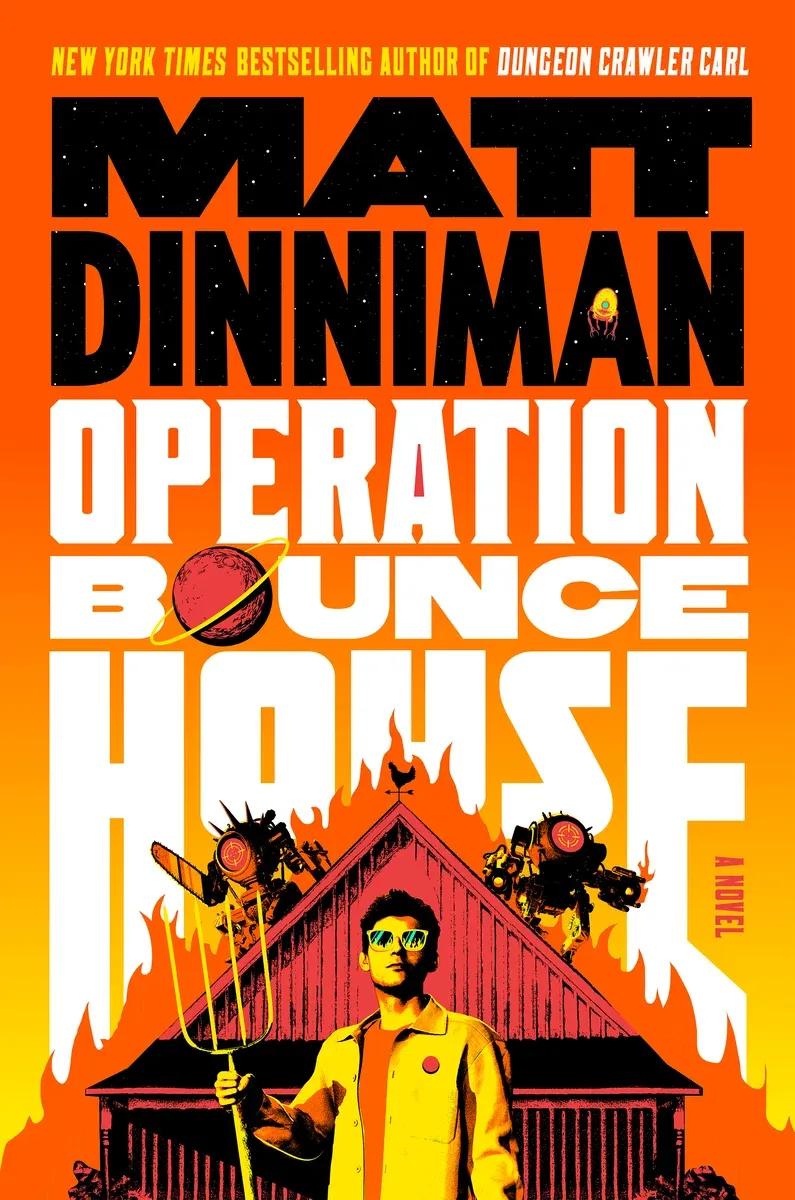
Operation Bounce House is a fast-paced standalone sci-fi thriller that turns entertainment culture into a weapon. When a megacorporation transforms planetary eviction into a pay-to-play video game, a small farming community must defend their home using ingenuity, hacked agricultural robots, and sheer will to survive.
Perfect for readers who love:
- Sharp social commentary
- Reluctant heroes
- Dark satire with real emotional weight
- Sci-fi that feels uncomfortably close to reality
Support local bookstores when you purchase.
First Impressions: Confusion by Design
The opening chapter is intentionally disorienting.
Readers meet Oliver in a compromised state, being rushed around by a robot that scolds him like a disappointed teacher. Nothing quite makes sense yet and that confusion is deliberate. You are lost because Oliver is lost. Information is withheld, context is limited, and the reader learns only what Oliver learns, when he learns it.
It’s an effective narrative choice. Instead of easing the reader into the world, the book drops you directly into the chaos, mirroring what it would actually feel like if reality suddenly fractured. By the time clarity arrives, you’re already fully invested.
A Scathing Commentary on Propaganda and “Fun”
Let’s be clear:
Operation Bounce House is not fun.
Frankly, it’s terrifying.
Beneath the action and dark humor is a ruthless critique of:
- Social media as propaganda
- The dehumanization enabled by distance and anonymity
- Corporations merging entertainment with warfare
- Profit incentives replacing moral accountability
Earth’s players don’t see New Sonora as a real place with real people. They see avatars. Targets. Content. Gamertags replace names. Leaderboards replace consequences. Apex Industries exploits existing prejudice, framing New Sonorans as lesser, altered, or expendable and turns that bias into profit.
The satire lands hard because it feels disturbingly plausible. Too much of this story already exists in the world we live in.
Like Alchemised, Operation Bounce House interrogates systems that turn violence into enteraintment, asking who benefits when suffering becomes gamified.
World Building: New Sonora and the Illusion of Safety
New Sonora initially feels comforting: breathable air, fertile land, tight-knit communities. It’s easy to forget this isn’t Earth at all. That illusion is intentional.
The farm relies heavily on agricultural robots brought on the original generation ships. These bots were meant to be decommissioned long ago, but Oliver’s grandfather kept them running and now they form the backbone of the farm’s survival. A hive-based system oversees everything, coordinating labor, maintenance, and logistics.
As the story unfolds, readers learn how Earth’s population has developed a deep bias against New Sonorans, viewing them as inferior genetic offshoots rather than fellow humans. Apex Industries leans into that narrative, using propaganda to justify extermination as progress.
The Game: How Operation Bounce House Works
Instead of deploying soldiers, Apex:
- Sells mech access to civilians
- Allows players to fully customize war machines
- Enables remote piloting from Earth
- Turns extermination into a competitive, time-limited event
Players pay premium prices for better weapons, advanced classes, and higher kill potential. The extermination window lasts five days. With each passing hour, more players log in, more money flows, and the violence escalates.
For New Sonora’s residents, survival depends on adaptation, ingenuity, and sheer desperation.
Operation Bounce House Audiobook
Audiobook Recommendation
If you’re an audiobook reader, Operation Bounce House is practically begging for this format. Dinniman’s sharp pacing, quick tonal shifts, and alternating perspectives are tailor-made for dual narration. The contrast between the chaos of the game, the propaganda broadcasts, and the grounded humanity of New Sonora translates incredibly well to audio.
If you like audiobooks that feel immersive, cinematic, and relentless, this one belongs high on your listen list.
Main Characters
Oliver Lewis
Oliver is not a chosen one or a natural hero. He doesn’t crave power, rebellion, or glory. He wants his home to survive.
When the extermination begins, Oliver becomes a leader by necessity. He understands the systems keeping the farm alive, and others begin to look to him for guidance. With that leadership comes an unbearable burden: every decision costs lives.
Dinniman excels at portraying leadership as trauma rather than triumph. Oliver’s guilt accumulates. The emotional weight never resets. Survival comes at a personal cost that the novel refuses to downplay.
Oliver fits into a lineage of reluctant protagonists forced into leadership, a theme that also defines the emotional core of Until I Die.
Lulu Lewis
Lulu, Oliver’s younger sister, is his emotional anchor and moral counterweight. She had planned to return to Earth once the gate reopened. Earth had other plans.
Fiercely protective of her family and community, Lulu brings urgency and resolve when hesitation could mean death. Her grief is raw and present, and the novel never allows loss to fade quietly into the background. The sibling relationship feels authentic—messy, loving, and unbreakable.
Roger
Roger is the hive queen robot overseeing the farm’s agricultural bots. Programmed by Oliver and Lulu’s grandfather, Roger doesn't just to manage labor, but to protect the family at any cost.
Dry, sassy, and unexpectedly endearing, Roger becomes far more than comic relief. As the extermination escalates, he enables the transformation of farm equipment into a makeshift defense force:
- Scout bots become stealth reconnaissance units
- Heavy agricultural bots become armored defenders
- Drones form the colony’s primary fighting force
Roger is the logistical heart of the resistance and one of the novel’s most intriguing mysteries.
Combat and Strategy: Farming Tools vs. War Machines
There’s no magic system here just bullets, explosives, and improvisation.
Each Apex mech comes with customizable classes, weapons, and abilities. As new waves of players descend on New Sonora, Oliver and his community must rapidly learn each mech’s weaknesses while under active assault.
The five-day extermination clock adds relentless tension. With every passing wave, the enemy grows more numerous, better equipped, and more ruthless. Victory is never guaranteed only delayed.
Why Operation Bounce House Works
What makes this novel stand out is its balance of:
- Relentless pacing
- Dark, biting satire
- Emotional grounding
- Escalating dread
Unlike Dungeon Crawler Carl, this story is less irreverent and far less nihilistic. These characters want to live. They’re not joking about survival, they’re desperate for it. The humor doesn’t soften the message; it sharpens it.
The world of New Sonora feels fragile and worth defending, which raises the stakes far beyond spectacle.
My Review
Rating: 5 / 5
A sharp, relentless sci-fi thriller that lingers long after the final page.
Operation Bounce House is smart, fast, and deeply unsettling. It uses absurdity not to distract from its message, but to make it land harder.
This is a novel about how easily violence becomes entertainment when profit is involved and how thin the line is between satire and reality.
If this truly remains a standalone, it’s a strong one. But if Matt Dinniman ever returns to New Sonora, I’ll be there immediately.
If you’re drawn to stories where survival is not the same as victory, Until I Die and Alchemised both explore the cost of endurance in systems designed to break people.
Frequently Asked Questions About Operation Bounce House
Is Operation Bounce House connected to Dungeon Crawler Carl?
No. This is a standalone novel, though fans will notice a few subtle Easter eggs and Dinniman’s signature voice.
Is this book funny?
It has dark humor, but it’s far less irreverent than Dungeon Crawler Carl. The comedy sharpens the horror rather than softening it.
Is Operation Bounce House more sci-fi or satire?
Both. It’s science fiction with razor-sharp satirical teeth, especially when it comes to corporate power, propaganda, and entertainment culture.
Is it action-heavy?
Yes. The pacing is relentless, especially during the five-day extermination window, but the action is always grounded in emotional stakes.
Does it have a hopeful ending?
It has a survival ending, not a comfort ending. Hope exists, but it’s fragile and earned.
Would I like this if I don’t usually read sci-fi?
If you enjoy dystopian fiction, social commentary, or morally complex stories, absolutely. The tech never overwhelms the human story.
